
Light
Direct Sun
Demands at least 6 hours of direct sunlight daily; low light causes weak, stretched growth.
 Reference image
 Reference image
Relict Hedgehog Cactus
Echinocereus relictus is a perennial succulent subshrub belonging to the Cactaceae family, remarkably adapted to the arid and temperate conditions of southwestern North America.
Classified under the genus Echinocereus, this species has been recognized in recent botanical literature as a distinct evolutionary lineage 1. The specific epithet relictus refers to its biogeographical status as a relict population that has survived in isolated pockets since past geological eras.
This species is primarily native to the Southwestern United States, specifically in Utah and surrounding temperate, semi-arid regions 2. It thrives in gravelly soils, limestone slopes, and rocky crevices exposed to harsh winds and intense sunlight.
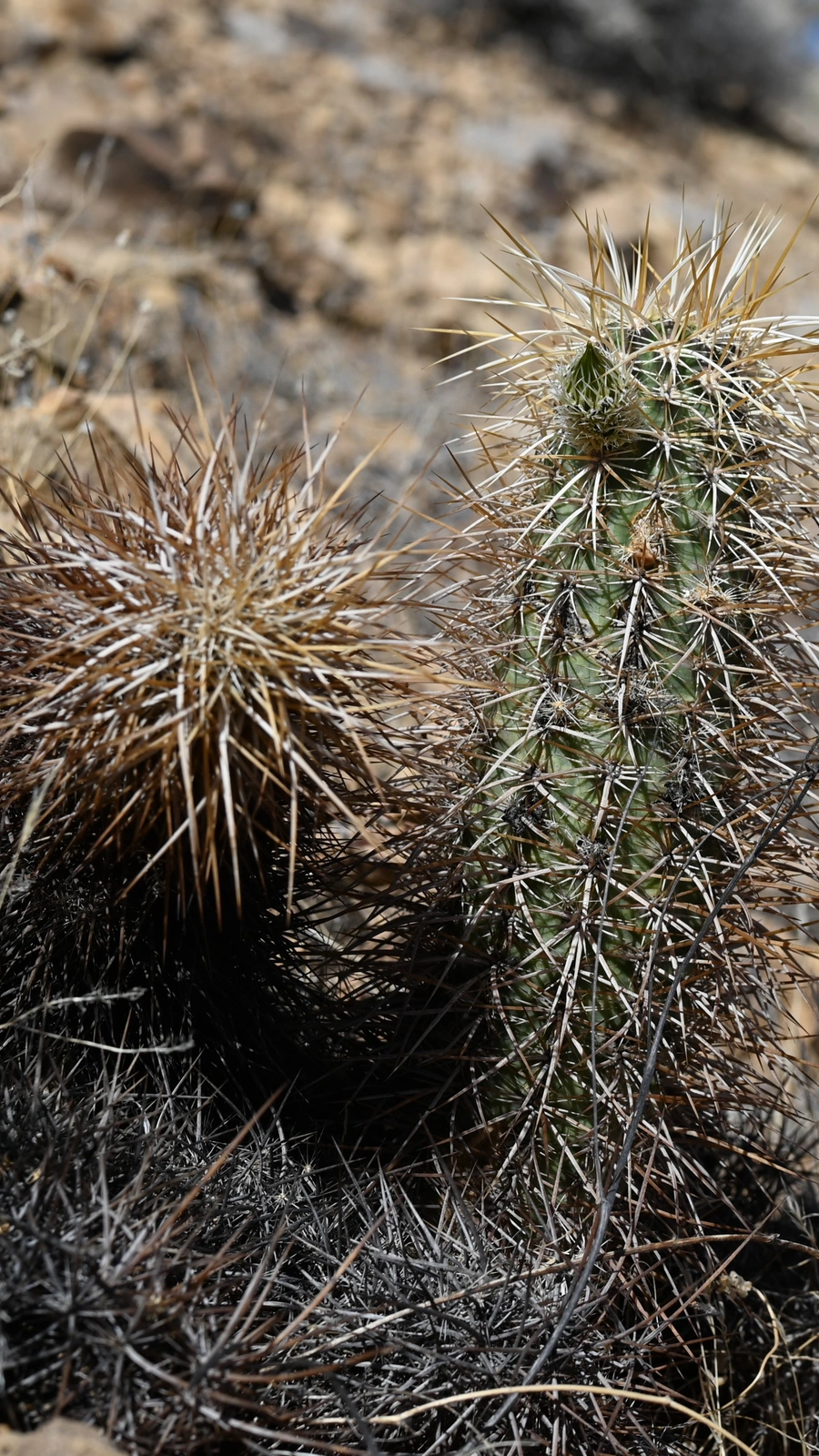
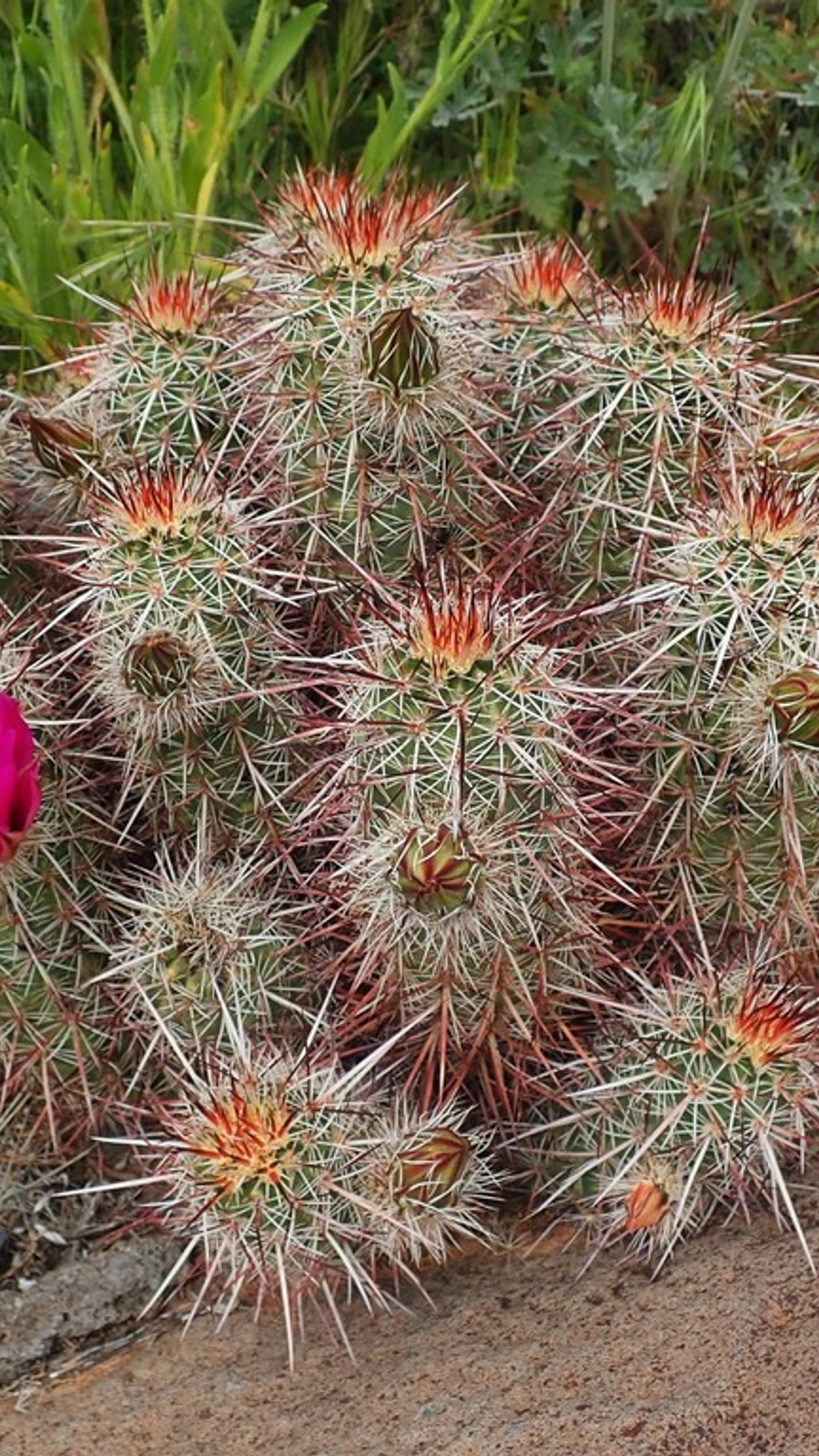
Echinocereus relictus features cylindrical stems with well-defined ribs densely lined with spine-bearing areoles. In late spring, it produces magnificent, funnel-shaped flowers, typically in shades of pink to magenta, which attract native pollinators. The epidermis is a dull green that may turn slightly reddish-purple under intense sun.
In cultivation, the species requires maximum sunlight and exceptionally porous soil. It exhibits remarkable frost hardiness (down to -15 °C) provided that the substrate remains absolutely dry during the cold winter months 1. In summer, watering should follow a soak-and-dry cycle.
The most frequent mistake is overwatering or using heavy, organic-rich soil that retains moisture. Lack of a dry winter dormancy period often leads to root rot or failure to bloom in spring.
Demands at least 6 hours of direct sunlight daily; low light causes weak, stretched growth.
Water only when the substrate is bone dry. Suspend watering during winter cold.
Requires an inorganic, highly draining mix rich in pumice, gravel, and coarse sand.
Equipped with sharp spines; keep out of reach of children and companion animals.
Very easy; extremely resilient to neglect as long as overwatering is strictly avoided.
Indigenous to the high-elevation rocky steppes and limestone outcrops of the Southwestern United States, particularly within the state of Utah.
