
Light
Direct Sun
Requires at least 6-8 hours of direct, unfiltered sunlight daily.
 Reference image
 Reference image
Santa Rita Hedgehog Cactus
Echinocereus santaritensis, commonly known as the Santa Rita hedgehog cactus, is a robust and highly drought-resistant member of the Cactaceae family. This succulent subshrub is adapted to harsh arid climates and is highly prized for its brilliant reddish-orange spring blossoms and dense, protective spination 1.
Belonging to the diverse genus Echinocereus, this species was historically grouped under or confused with the Echinocereus coccineus complex. However, based on its distinct morphology and geographic isolation in the mountain ranges of the Southwest, it is recognized as a separate species in contemporary botanical taxonomies 12.
The natural range of this species spans the southwestern United States (specifically southern Arizona) and northwestern Mexico. It thrives in desert biomes, dry shrublands, gravelly slopes, and canyon walls, typically growing in rocky crevices at moderate to high elevations where drainage is superb 2.
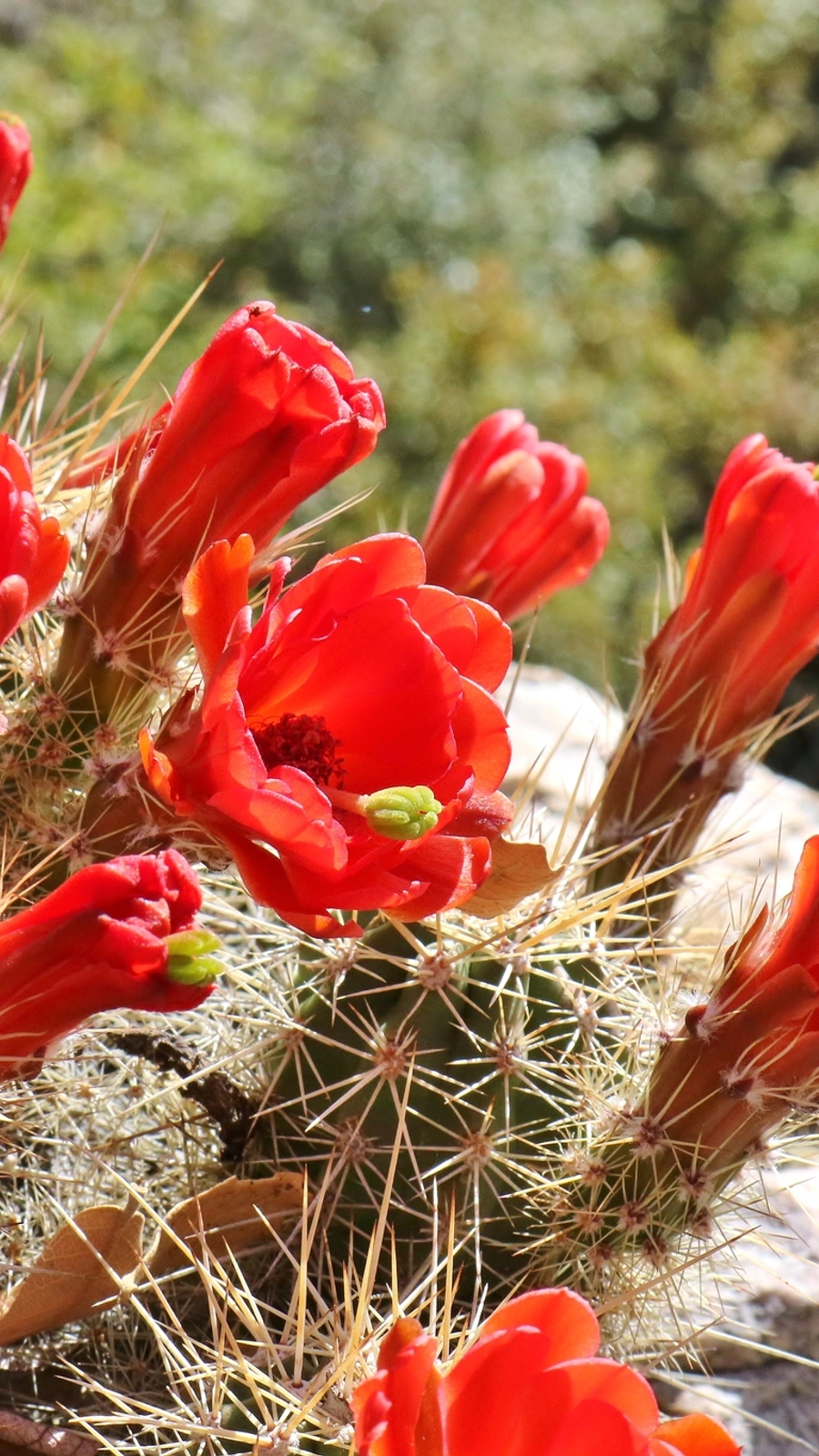
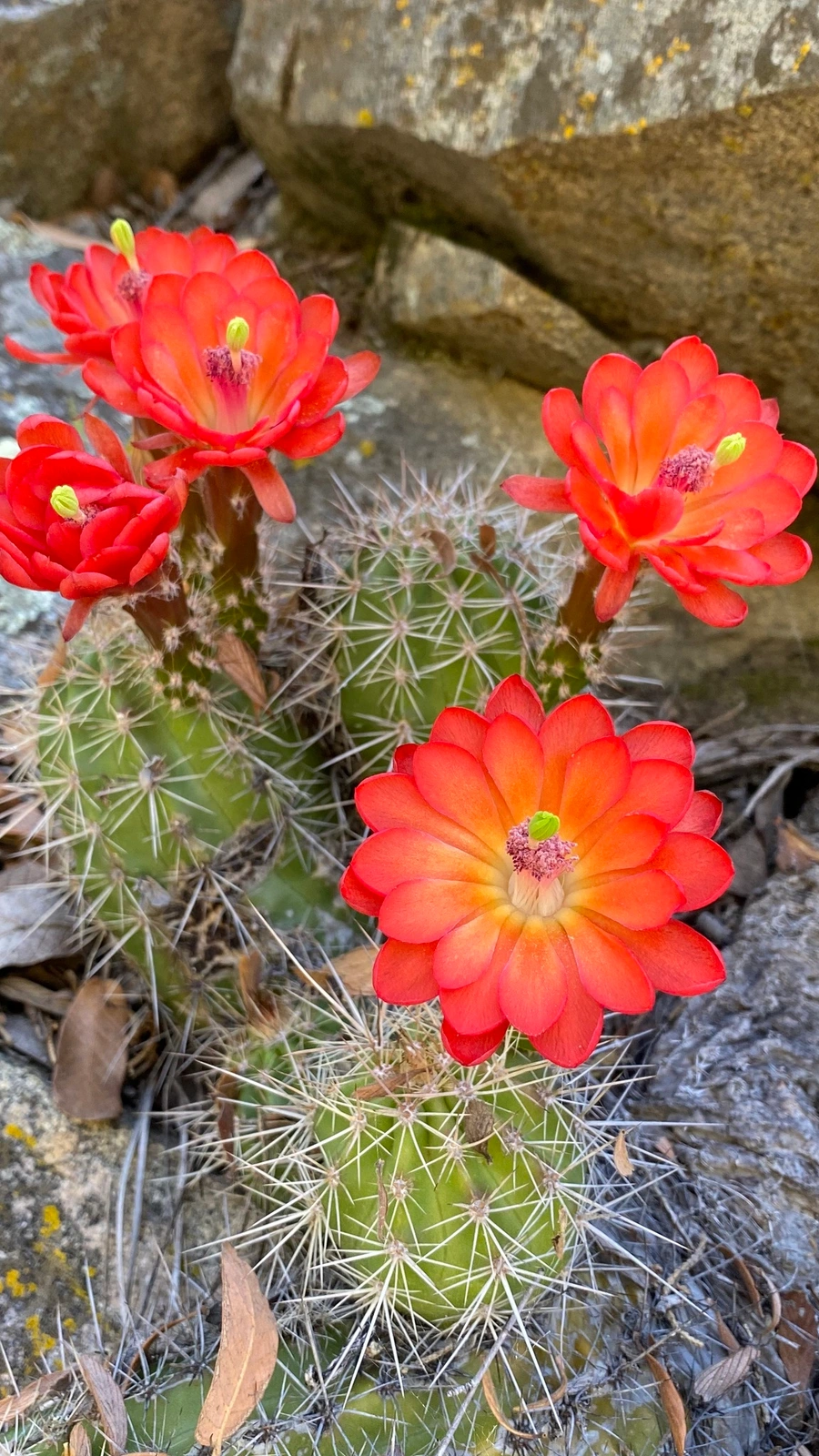
Echinocereus santaritensis features cylindrical green stems that readily clump from the base to form dense mounds. The stems have well-defined ribs lined with small areoles. From these areoles, stiff, needle-like spines emerge, varying in color from yellowish-tan to greyish-brown. Its funnel-shaped flowers appear in late spring, showing off vivid orange-red hues with bright green stigmas.
This cactus requires full sun exposure and extremely well-draining, mineral-heavy substrate to replicate its native mountain habitat. While it can tolerate cold winter temperatures well below freezing, it must remain completely dry during its winter dormancy to prevent crown or root rot 1.
The most frequent mistakes are overwatering and utilizing dense, moisture-retentive potting soils, which inevitably result in root rot. Insufficient sunlight will cause the stems to stretch weakly (etiolation) and completely inhibit the formation of its spectacular spring flowers.
Requires at least 6-8 hours of direct, unfiltered sunlight daily.
Water thoroughly only when the soil is bone-dry; keep dry in winter.
Excellent drainage is vital; use mineral-rich grit with very little peat.
Non-toxic, but features sharp, stiff spines that require careful handling.
Low-maintenance if overwatering is strictly avoided.
Native to the rocky canyons and dry mountains of southern Arizona and northern Mexico, growing in gravelly soils and rock crevices.
