
Light
Bright Indirect Light
Bright indirect light or morning sun is best; shield from intense midday summer sun.
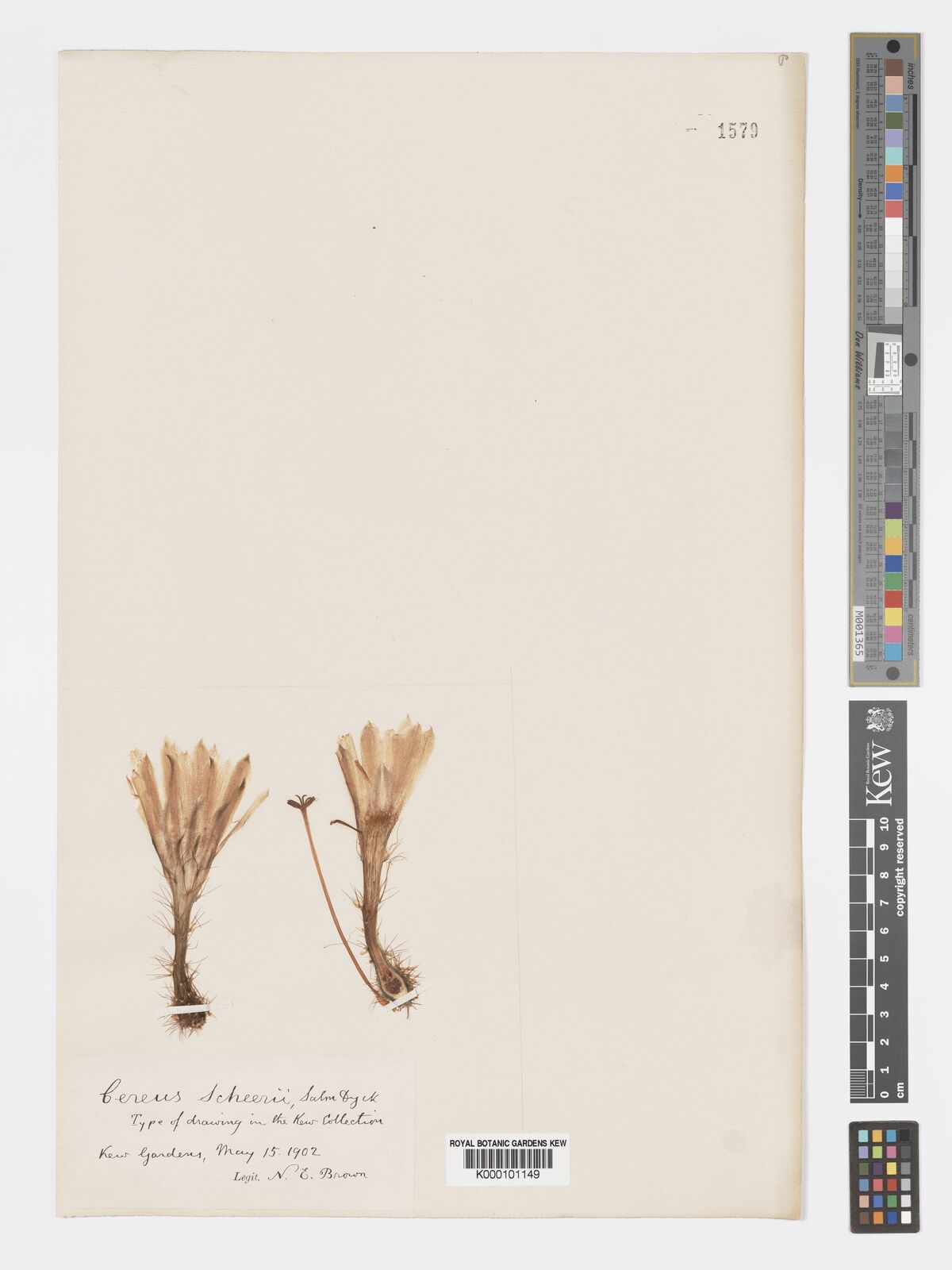 Reference image
Scheer's Hedgehog Cactus
Echinocereus scheeri is a succulent subshrub in the family Cactaceae, characterized by its decumbent to semi-erect stems. Renowned for its magnificent, trumpet-shaped pink to orange-red flowers, this species is a favored ornamental among succulent collectors worldwide.
The species was formally described in the mid-19th century. The genus name Echinocereus derives from the Greek "echinos" (hedgehog) and the Latin "cereus" (candle), referring to the spiny, columnar growth. The specific epithet "scheeri" honors the prominent 19th-century German botanist and plant collector Frederick Scheer 1.
Native to northwestern and central Mexico, its range spans states such as Sonora, Chihuahua, Durango, and Sinaloa 2. It thrives in desert and dry shrubland biomes, clinging to steep volcanic cliffs, rocky outcrops, and slopes under the partial shade of nurse plants.
The stems are cylindrical, pale to bright green, reaching lengths of 10 to 70 cm with 7 to 10 distinct ribs. The areoles bear thin, needle-like spines varying from yellowish-white to brown. In late spring, it produces spectacular, elongated tubular flowers up to 12 cm long in shades of magenta, pink, or salmon 3.
In cultivation, it requires bright, filtered light or partial sun. While highly drought-tolerant, it benefits from regular watering during the active growth season of spring and summer, provided the substrate dries out completely between waterings.
The most prevalent failure is root rot caused by poor soil drainage or overwatering. Keeping the plant too warm and wet during winter prevents the essential dormancy period, which can significantly inhibit spring flowering.
Bright indirect light or morning sun is best; shield from intense midday summer sun.
Allow the potting mix to dry completely before watering. Suspend watering in winter.
Use a mineral-rich cactus soil mixed with plenty of pumice, perlite, or gravel.
Non-toxic, but the sharp spines can cause physical injury to curious pets and children.
Very easy and resilient, provided it is not subjected to wet soil and freezing temps.
Native to the rocky cliffs, volcanic slopes, and semi-arid shrublands of northern and northwestern Mexico.
