
Light
Direct Sun
Requires at least 6 hours of direct sunlight daily; otherwise, it will stretch and lose color.
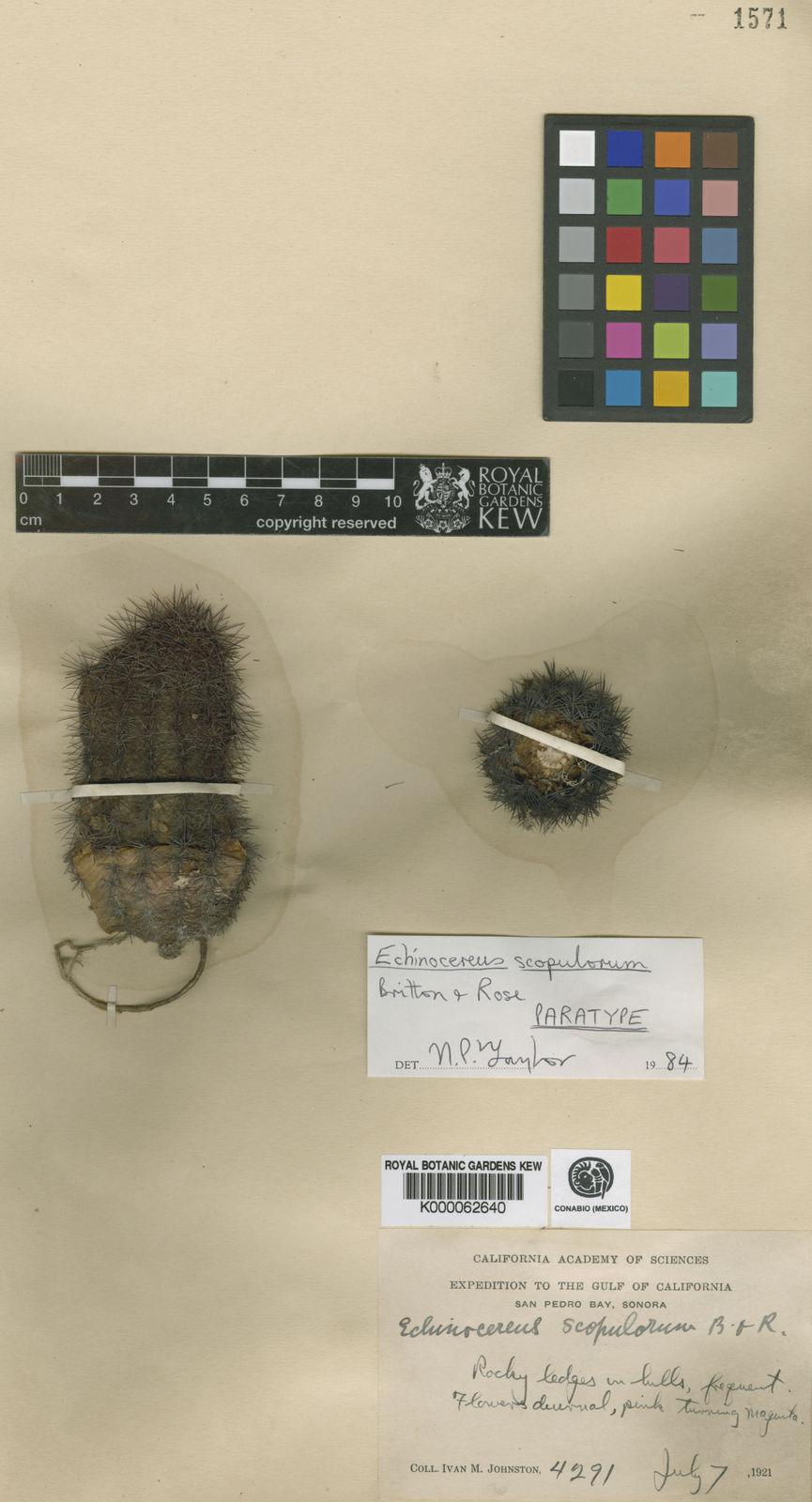 Reference image
Rock Hedgehog Cactus
Echinocereus scopulorum, commonly known as the Rock Hedgehog Cactus, is an iconic desert-dwelling succulent subshrub native to northwestern Mexico. Highly valued by collectors, this plant is celebrated for its highly defensive, attractive spine configurations and its spectacular, fragrant magenta-pink blossoms that emerge in late spring 1.
Belonging to the family Cactaceae, the species was described under the genus Echinocereus. The specific epithet "scopulorum" originates from Latin, meaning "of rocky places," directly referencing the plant's typical micro-habitat preference. It is colloquially known as the coastal hedgehog cactus in parts of its range 12.
This species is primarily native to northwestern Mexico, including the states of Sonora, Sinaloa, Baja California, and Chihuahua. It thrives in arid scrublands, rocky volcanic slopes, and gravelly coastal plains, demonstrating exceptional tolerance to intense heat and prolonged drought 2.
It forms cylindrical stems that usually grow solitary or clump sparingly from the base, reaching heights of 10 to 40 cm. The stems feature 10 to 15 distinct ribs densely covered in colorful radials and central spines ranging from greyish-pink to dark brown. The funnelform flowers are large, up to 10 cm in diameter, exhibiting bright pink to lavender petals with yellow centers 2.
In cultivation, it requires a very bright position with maximum direct sunlight. It thrives in gritty, inorganic mineral substrates with superb drainage. Water thoroughly during the hot summer months only after the soil has completely dried out, and keep entirely dry throughout the winter dormancy 1.
The most frequent issue is root rot due to overwatering, especially during winter when the plant is dormant. Lack of direct sunlight leads to etiolation, causing the stems to stretch weakly and fail to bloom. Poor ventilation also promotes fungal infections.
Requires at least 6 hours of direct sunlight daily; otherwise, it will stretch and lose color.
Strictly soak-and-dry. Keep completely dry in winter to mimic its natural desert habitat.
Highly mineral substrate containing pumice, gravel, and minimal organic matter.
Non-toxic to pets, but the sharp spines pose a physical hazard; place out of reach.
Moderate. Easy if kept in full sun and dry conditions, but unforgiving of overwatering.
Native to the dry coastal and inland desert regions of northwestern Mexico, where it grows embedded in cracks of volcanic rocks, on steep gravelly hillsides, and within arid shrubland ecosystems.
