
Light
Direct Sun
Requires full sun or bright direct light. Etiolation occurs easily in shaded conditions.
 Reference image
Spiny Bud Hedgehog Cactus
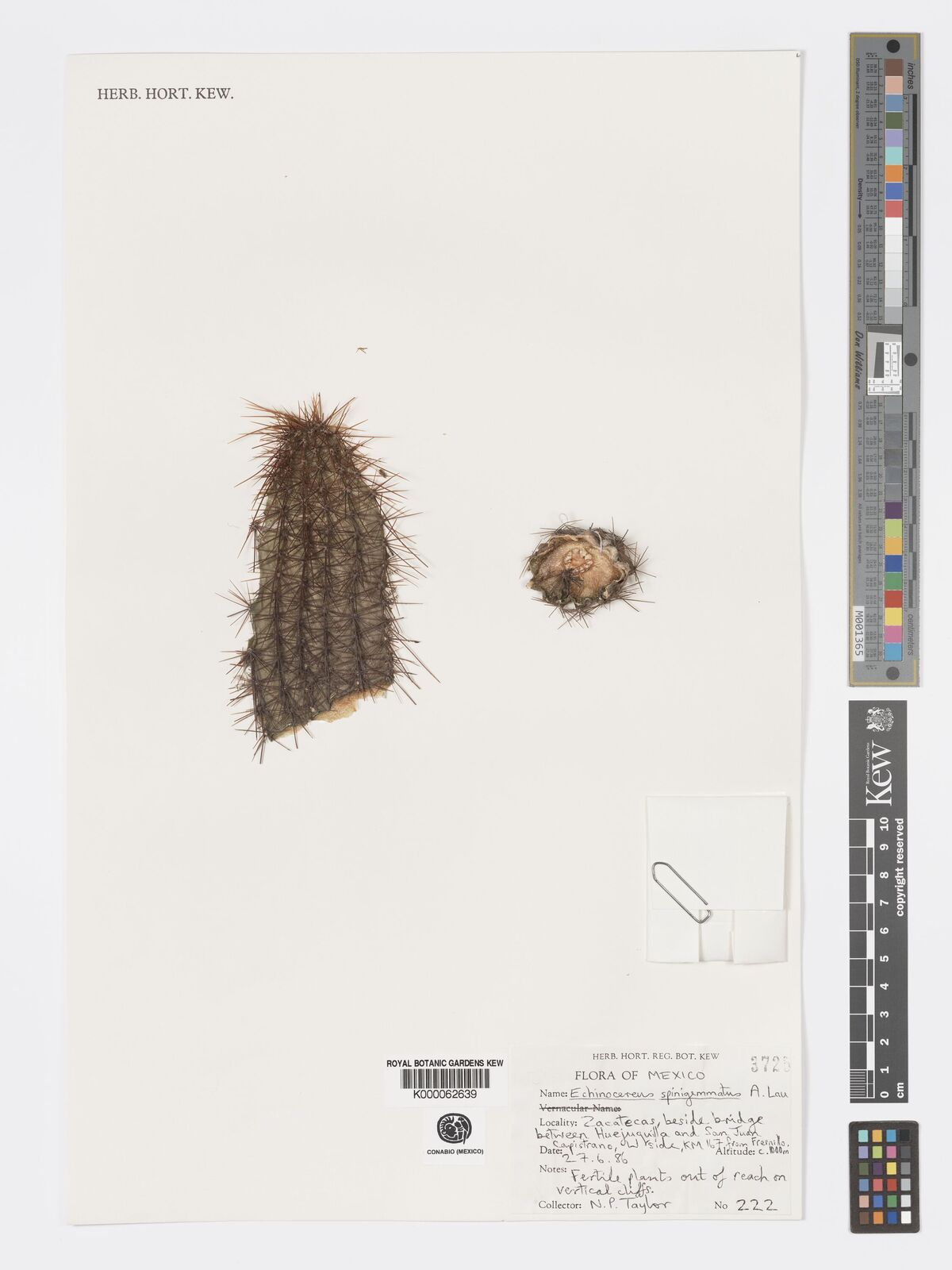
Echinocereus spinigemmatus is a charming and highly sought-after member of the Cactaceae family. This succulent subshrub is characterized by its cylindrical stems and highly protective, spiny flower buds, from which its specific epithet is derived. It is prized by succulent collectors for its beautiful symmetry and brilliant floral display 1.
Belonging to the genus Echinocereus, the name blends the Greek word 'echinos' (hedgehog) and the Latin 'cereus' (wax candle). The species epithet 'spinigemmatus' directly translates to 'with spiny buds,' highlighting the unique botanical feature of the protective spines surrounding its emerging flower buds 2.
Native to northern and central Mexico, its range spans areas like Jalisco, Durango, Coahuila, and Zacatecas. It thrives in desert habitats, dry shrublands, and rocky slopes, typically growing in limestone-rich, well-draining soils under intense direct sunlight 1.
The stems are cylindrical, pale to grayish-green, and tend to branch from the base as they mature. Ribs are well-defined and adorned with dense radial spines. In late spring, funnel-shaped flowers in vivid shades of pink to magenta emerge from the heavily armed buds, creating a striking contrast with the spiny body.
In cultivation, this cactus requires maximum sunlight to maintain its compact form and heavy spine coverage. Watering should follow a strict soak-and-dry method during the active spring and summer growth phases. In winter, keeping the plant completely dry is essential to prevent rot 2.
The most prevalent issue is overwatering, especially in low-temperature or low-light conditions, which triggers fatal root rot. Insufficient sunlight leads to etiolation, causing the stems to stretch, weaken, and fail to produce flowers.
Requires full sun or bright direct light. Etiolation occurs easily in shaded conditions.
Water thoroughly when soil is dry in summer; keep completely dry in winter.
Requires excellent drainage. Use a highly mineral mix with pumice, grit, and sand.
Non-toxic, but the sharp spines can cause physical injury. Handle with care using gloves.
Moderate. Easy if watering is controlled and maximum direct sunlight is provided.
Native to the dry shrublands and rocky mountain slopes of northern and central Mexico, including regions like Durango, Jalisco, and Coahuila, where it grows in limestone gravel.
