
Light
Direct Sun
Requires at least 6 hours of direct sunlight daily; insufficient light causes weak, stretched growth.
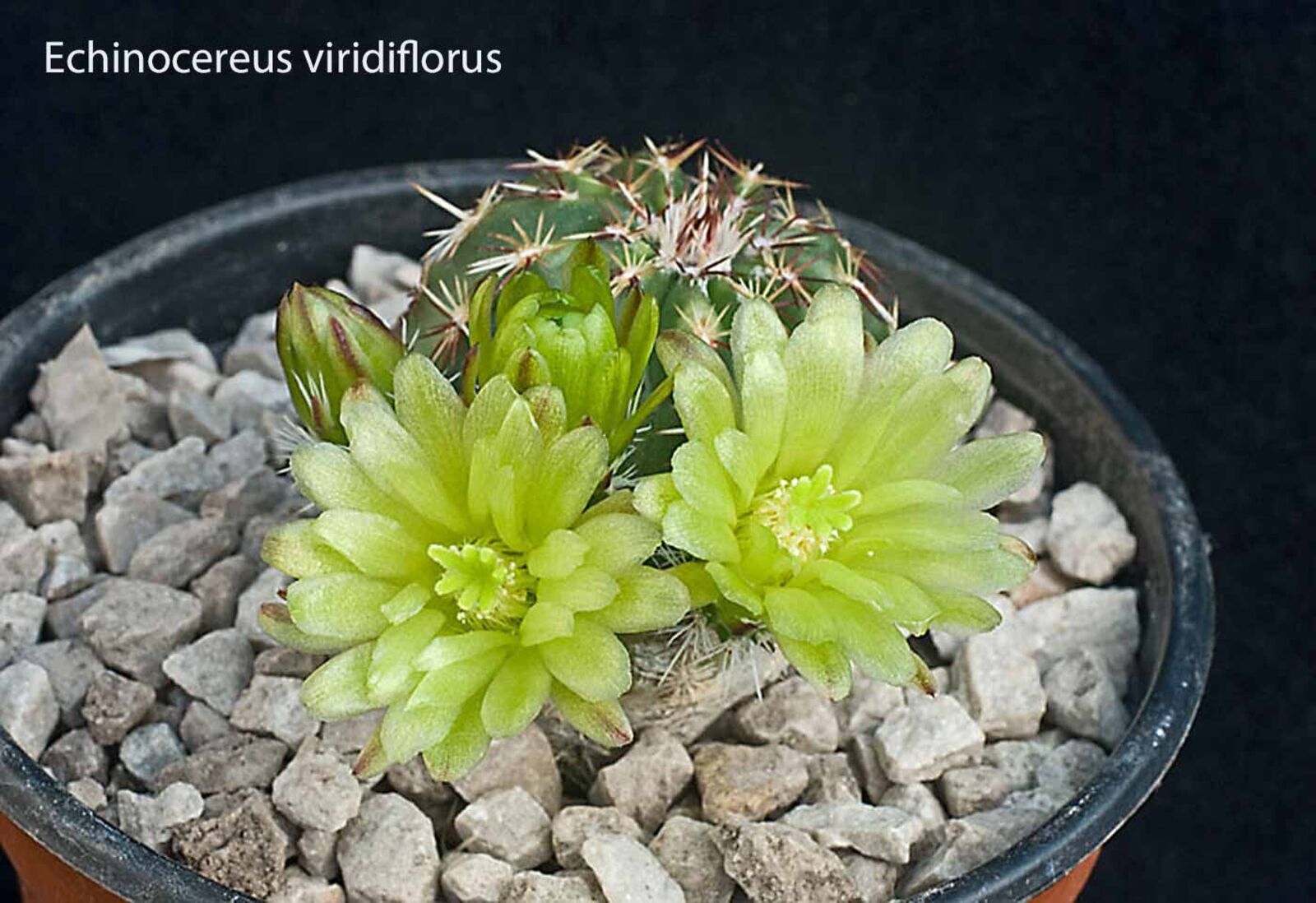 Reference image
Nylon Hedgehog Cactus
Echinocereus viridiflorus, commonly known as the Nylon Hedgehog Cactus, is a small, cold-hardy succulent highly prized for its unique greenish-yellow blossoms and distinct citrus-like fragrance. Its compact growth habit makes it an excellent candidate for alpine gardens and container cultivation.
This species belongs to the genus Echinocereus within the Cactaceae family. First described by the prominent botanist George Engelmann 1, the specific epithet viridiflorus derives from Latin, meaning 'green-flowered', pointing directly to its unusual petal coloration which is relatively rare among cacti.
The species boasts a wide native range across North America, extending from Wyoming, South Dakota, Colorado, and Nebraska down through Kansas, Oklahoma, New Mexico, and Texas, reaching into northern Mexico 2. It thrives in temperate grasslands, gravelly hillsides, and rocky outcrops at elevations between 1,000 and 2,700 meters.
Echinocereus viridiflorus features small, cylindrical stems that grow singly or in small clusters, reaching up to 15 cm in height. The stems have 10 to 15 ribs, adorned with neat clusters of spines displaying variegated bands of red, yellow, brown, and white. In late spring, lemon-scented, chartreuse-green flowers emerge from the sides of the stem.
In cultivation, this species is exceptionally resilient. It requires maximum direct sunlight to maintain its compact form and dense spine coloration. Soil must be highly porous and mineral-heavy. During the active spring and summer growing season, water thoroughly only when the substrate is bone dry. In winter, keep the plant completely dry in cold conditions.
The most frequent mistake is overwatering, particularly in autumn and winter, which invariably leads to root rot. Keeping the cactus in a warm indoor environment during winter prevents the essential dormancy period, resulting in a failure to bloom in spring.
Requires at least 6 hours of direct sunlight daily; insufficient light causes weak, stretched growth.
Water only when the soil is completely dry in summer. Keep absolutely dry from October to March.
Use a mineral-rich grit mix consisting of pumice, coarse sand, and lava rock with minimal organic matter.
Spines are sharp and rigid; always use thick gardening gloves or tongs when repotting.
Extremely easy to care for, provided it receives plenty of sun and is never left in wet soil.
Native to the Great Plains and rocky slopes of the central and southwestern United States, stretching from Wyoming and South Dakota down to Texas and New Mexico.
