
Light
Direct Sun
A spot receiving at least 6 hours of direct sunlight daily is ideal. Indoors, a south or west-facing windowsill is suitable.
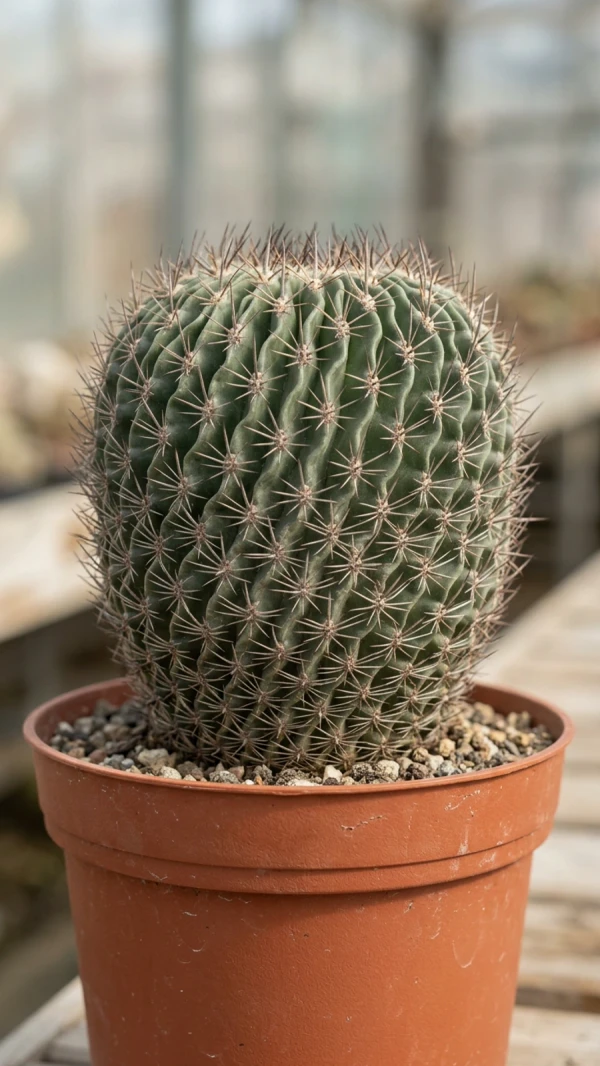
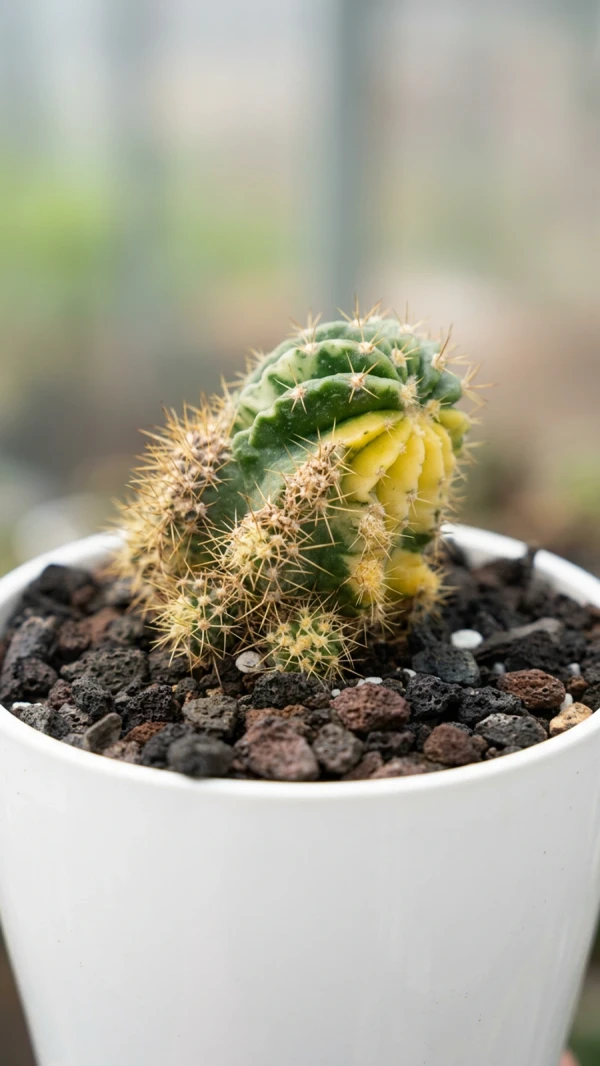
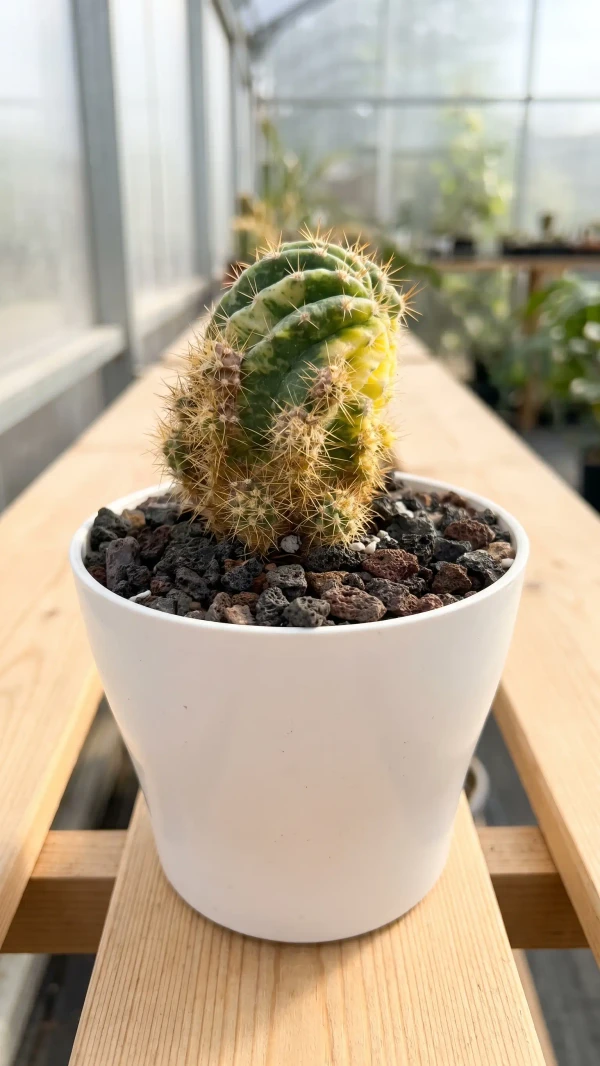
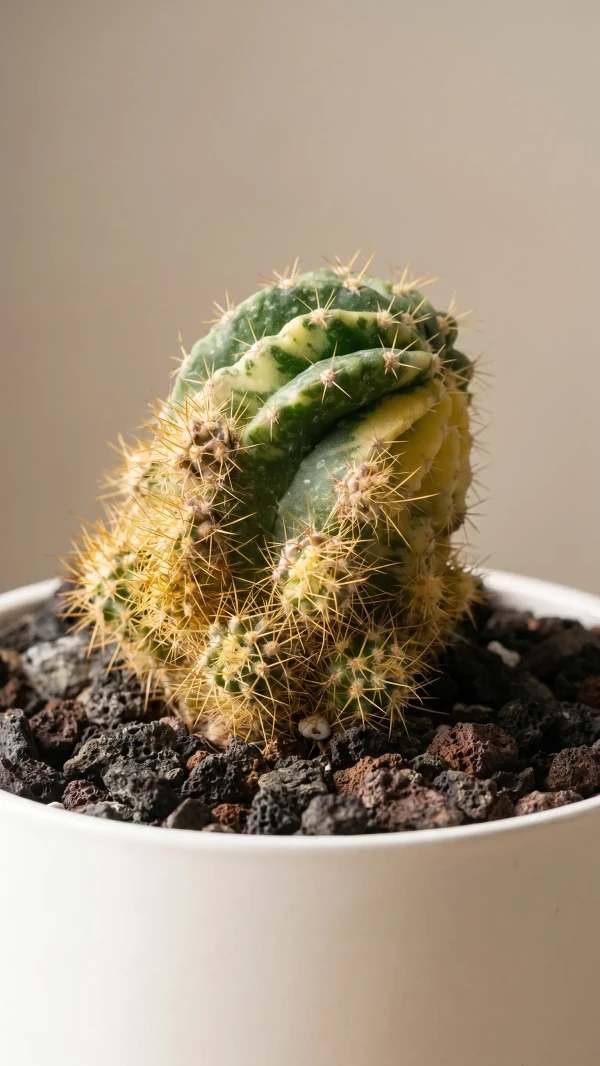
Echinofossulocactus micracanthus is a distinctive small cactus species belonging to the Cactaceae family, known for its unique wavy ribs and delicate flowers. In scientific literature, it is often referred to as Stenocactus micracanthus, as recent taxonomic revisions have placed this species within the genus Stenocactus 1. This reflects the complex classification history often associated with cacti.
This cactus typically features a globular or slightly flattened spherical stem, which can grow up to 10 cm in diameter. Its most striking feature is the numerous (between 30 and 60) sharp, wavy ribs that run vertically along the stem. These ribs have earned the plant nicknames such as "brain cactus" or "sea shell cactus." The spines emerging from the areoles on top of the ribs are generally short and slender, lending the species its name "micracanthus," meaning "small-spined." Central spines are usually solitary, sometimes 2-4, while radial spines are more numerous and spread parallel to the stem 2.
Echinofossulocactus micracanthus typically blooms in the warmer seasons, usually late spring or early summer. Flowers emerge from new areoles near the apex of the stem. Their colors can vary from white to pale pink or purple, often with a darker midstripe. These diurnal flowers provide a vibrant contrast to the cactus's plain stem, attracting pollinators. The fruits are small and greenish, containing seeds when mature.
Naturally, it is found in the arid and semi-arid regions of Mexico's Hidalgo, Querétaro, and Guanajuato states, typically in calcareous, mineral-rich soils 1. They may prefer semi-shaded areas in rock crevices and under shrubs. For home cultivation, well-draining soil and ample sunlight are essential. Being sensitive to frost, they require protection during winter. It is relatively easy to care for and is a popular species among collectors.
A spot receiving at least 6 hours of direct sunlight daily is ideal. Indoors, a south or west-facing windowsill is suitable.
In summer, water thoroughly when the soil is completely dry, allowing excess water to drain. In winter, wait for the soil to dry out completely and water very sparingly, or not at all.
Use a highly draining soil mix specifically formulated for cacti, with a high proportion of sand and perlite.
The plant's spines can be sharp, so handle with care. It is generally not toxic to pets, but the spines can cause injury.
This is an easy-to-care-for cactus species, suitable for beginners, especially once watering habits are learned.
*Echinofossulocactus micracanthus* is native to the central regions of Mexico. It naturally occurs in the arid and semi-arid lands, typically on calcareous and rocky soils, particularly in the states of Hidalgo, Querétaro, and Guanajuato. The climate in these areas is characterized by abundant sunlight and low humidity.
