
Light
Bright Indirect Light
Prefers bright sunlight, ideally 4-6 hours of morning sun or filtered afternoon light.
 Reference image
Backeberg's Echinopsis
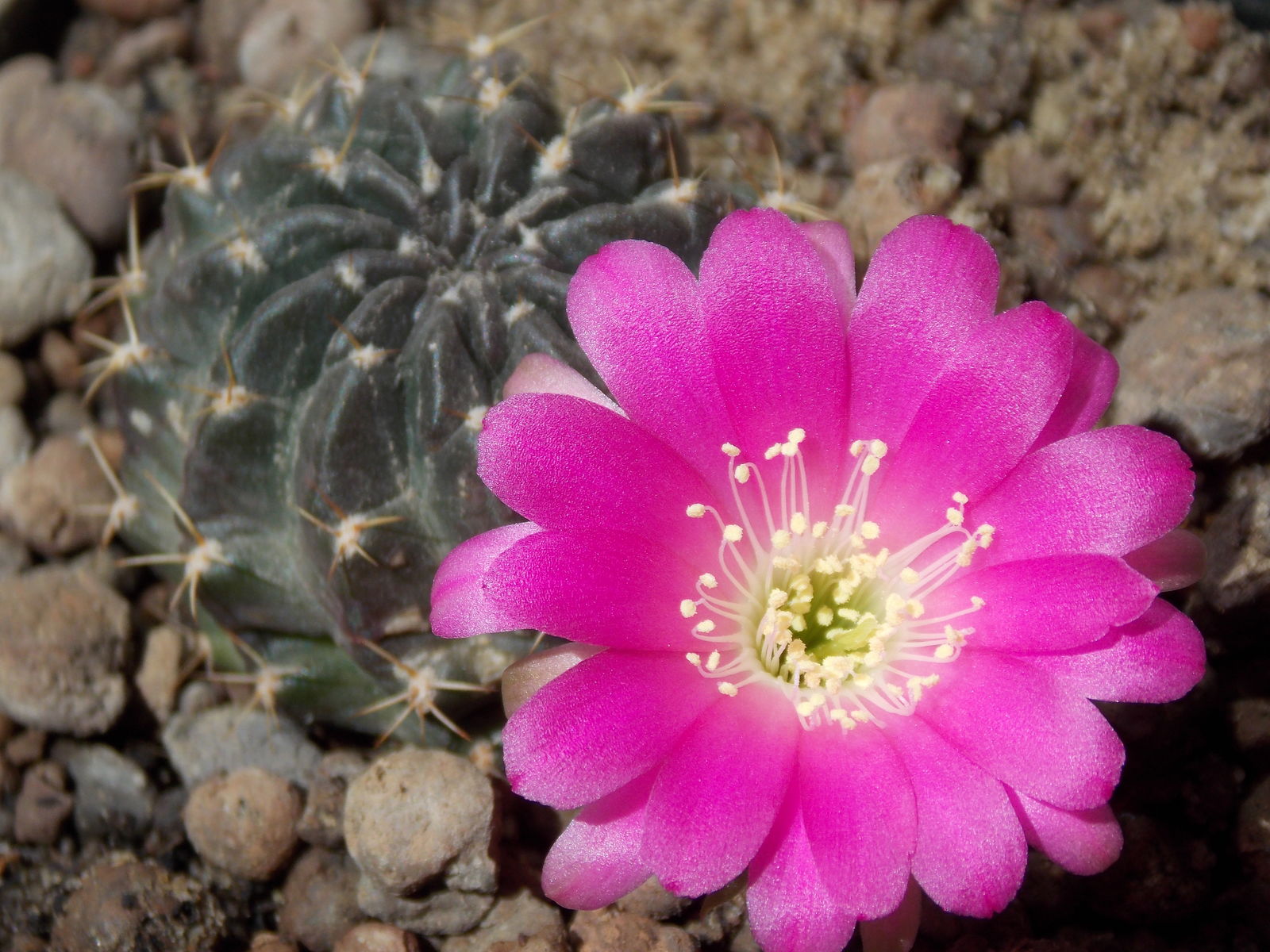
Echinopsis backebergii is a small, globose to shortly cylindrical cactus species within the Cactaceae family, highly appreciated for its showy carmine-red to purplish-pink flowers. It forms small clumps and functions as a succulent subshrub in its natural habitat, making it a favorite for container gardening 1.
The species was named in honor of Curt Backeberg, a prominent German cactus taxonomist and collector. Although currently classified under the massive genus Echinopsis, it was historically widely known and traded under the genus Lobivia as Lobivia backebergii 2.
Native to Western South America, specifically Bolivia and Peru, this cactus thrives in high-altitude dry shrublands and semi-deserts. It is typically found growing on rocky, steep slopes at elevations of 2,000 to 3,000 meters above sea level, where soil drainage is exceptional 1.
The stem is dark green, reaching about 4-5 cm in diameter. It features around 15 shallow ribs spiraling slightly, adorned with small areoles and flexible, brownish to grayish spines. During late spring and summer, it produces spectacular, funnel-shaped flowers that are vivid red or deep pink, often with a lighter throat 2.
In cultivation, it requires bright, indirect sunlight with some direct morning sun. The watering regimen should follow the soak-and-dry method. During the winter, the plant enters a dormant phase and must be kept dry and cool, as this temperature drop stimulates the production of next season's flower buds 3.
The most prevalent issue is root rot triggered by overwatering or poorly draining soil. Additionally, insufficient light leads to etiolation, where the plant stretches unnaturally towards the light source, losing its compact round shape and failing to bloom 3.
Prefers bright sunlight, ideally 4-6 hours of morning sun or filtered afternoon light.
Allow soil to dry out 100% between waterings. Keep nearly dry in winter.
Highly porous mineral mix with pumice, grit, and minimal organic matter.
Non-toxic to pets, but features sharp spines that can cause mechanical injury.
Very easy to care for, provided it receives bright light and a cool winter rest.
Endemic to the high-elevation rocky slopes of the Andes in Bolivia and Peru, where it grows in dry shrublands under intense solar radiation and sharp diurnal temperature drops.
