
Light
Bright Indirect Light
Prefers bright, indirect light or filtered morning sun.
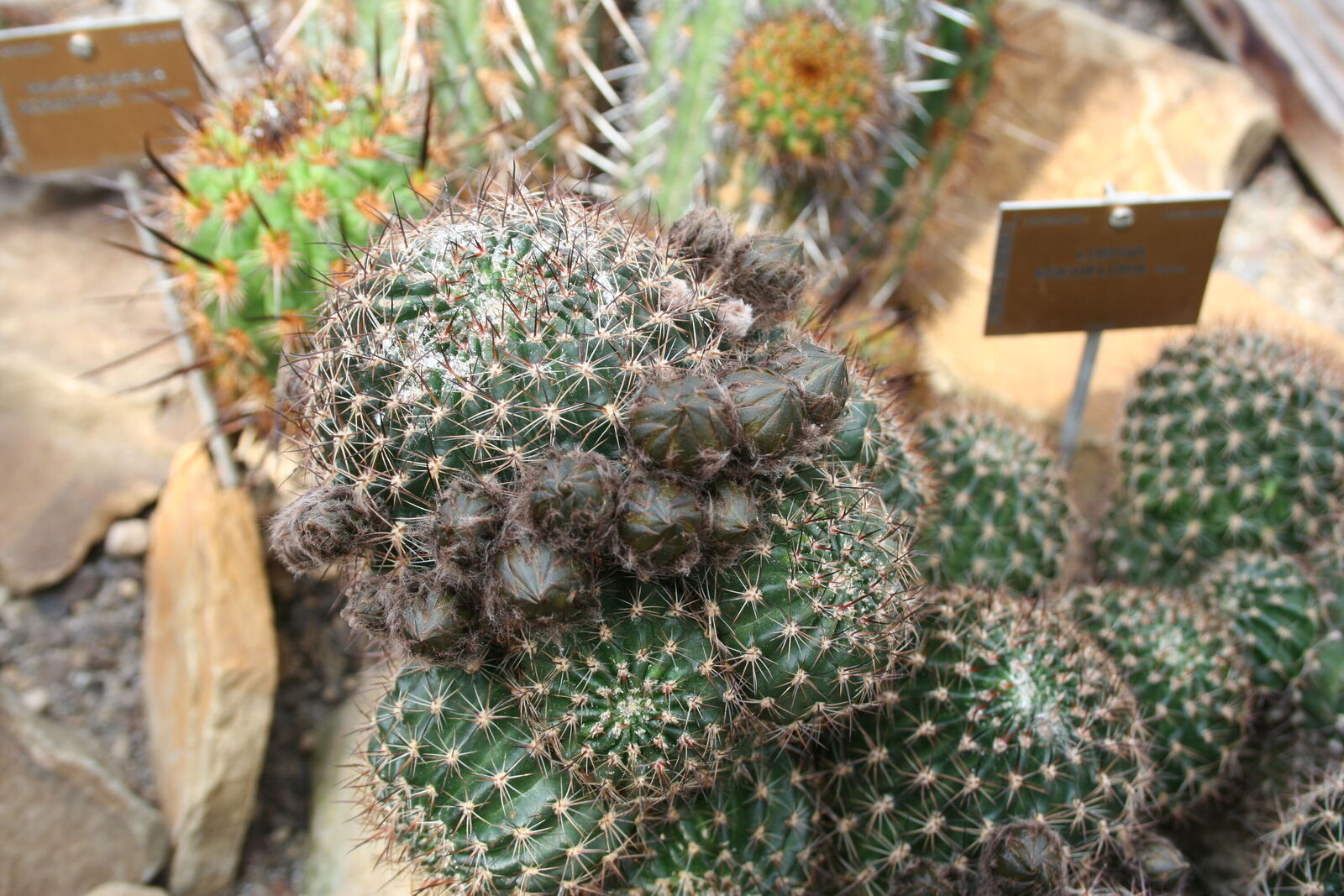 Reference image
Short-flowered Sea Urchin Cactus
Echinopsis breviflora is a compact, attractive cactus species belonging to the family Cactaceae. Recognized for its structural beauty and showy flowers, this succulent subshrub is highly valued by horticulturists and beginner gardeners for its resilience to drought and ease of cultivation [1].
Classified under the major genus Echinopsis, the specific epithet breviflora is derived from the Latin roots "brevis" (short) and "flos" (flower), referencing the shorter floral tubes compared to some other long-tubed species in the genus [2].
This species is native to southern South America, specifically the arid and semi-arid desert regions of northwestern Argentina, including the provinces of Catamarca, Mendoza, San Juan, Salta, and Tucumán. It thrives in well-draining, gravelly soils on rocky slopes alongside drought-tolerant shrubs [1].
Echinopsis breviflora has a globose to short-cylindrical, green to grayish-green stem with prominent ribs. Spines emerge from felted areoles along the ribs. The funnel-shaped, relatively short-tubed flowers open near the crown, showcasing brilliant white, cream, or yellowish petals that attract native pollinators during the blooming season [1][2].
This species prefers bright, indirect sunlight or filtered sun. It requires a highly porous gritty potting medium and minimal watering. Water thoroughly only when the soil has completely dried out. During winter, enter a strict dry period to trigger healthy spring blooms [2].
Overwatering is the single most common cause of failure, leading to root rot. Lack of adequate light results in etiolation, where the stem becomes pale and weak. Utilizing pots without drainage holes or organic-heavy soils should be strictly avoided.
[1] Royal Botanic Gardens, Kew. Plants of the World Online (POWO): Echinopsis breviflora. [2] Hunt, D. (2006). The New Cactus Lexicon. DH Books, Milborne Port, UK.
Prefers bright, indirect light or filtered morning sun.
Water only when the soil is completely dry. Keep dry in winter.
Thrives in mineral-rich, highly porous cactus soil mixes.
Non-toxic to pets, but sharp spines can cause mechanical injury.
Easy; very forgiving if kept on the drier side.
Mainly distributed in the arid western provinces of Argentina, where it inhabits rocky foothills, scree slopes, and dry shrublands under conditions of low humidity and intense sunlight.
