
Light
Bright Indirect Light
Requires bright filtered light with some direct morning sun exposure.
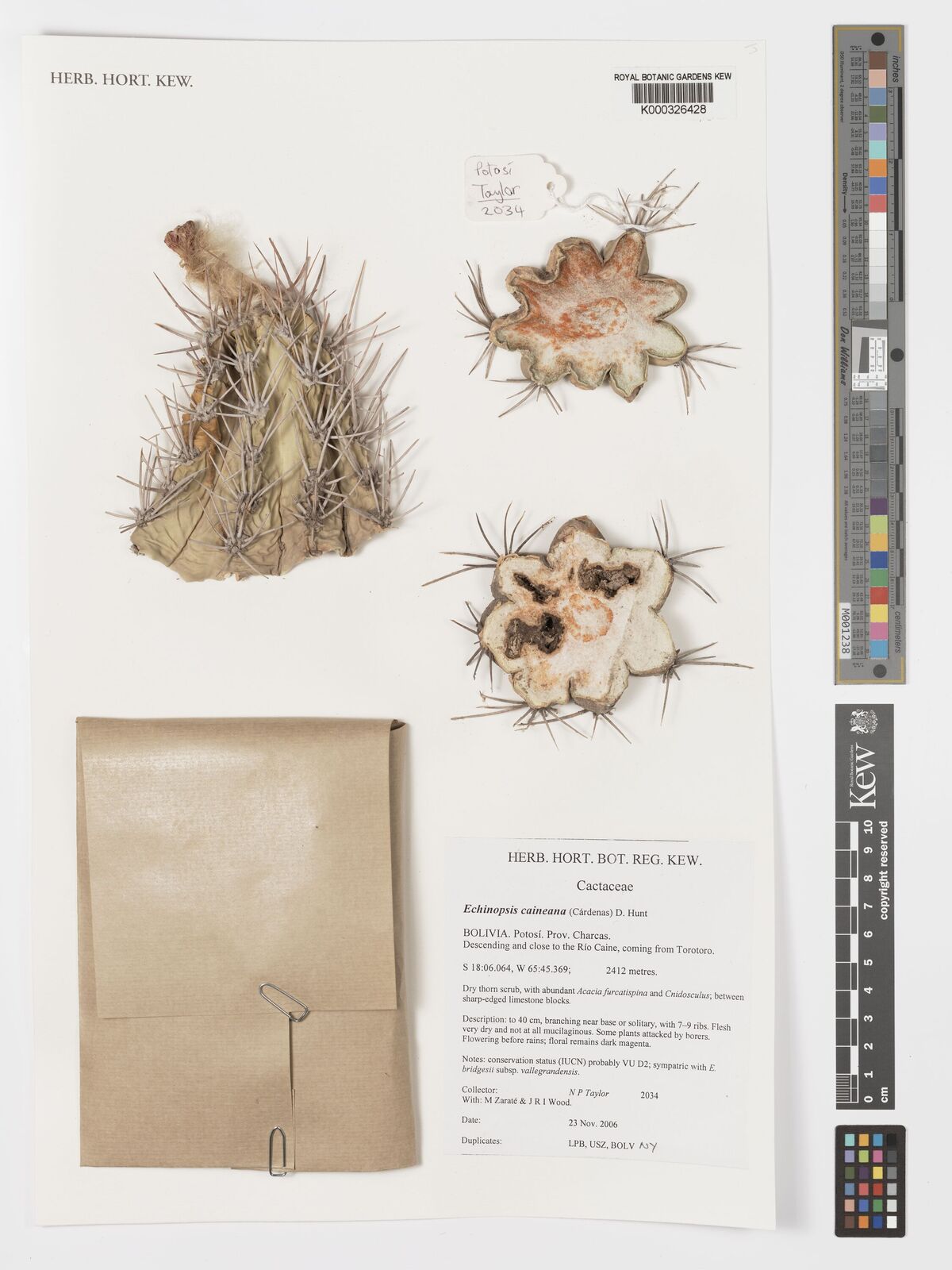 Reference image
Caineana Cactus
Echinopsis caineana is a succulent subshrub in the family Cactaceae, native to the arid valleys of Bolivia. Highly sought after by collectors, it is celebrated for its spectacular magenta to pink flowers 1.
Classified under the vast genus Echinopsis, this species is sometimes associated with the genus Lobivia in historical classifications. The specific epithet "caineana" directly refers to its collection site near the Caine River in Bolivia 2.
This cactus is endemic to the dry valleys of Bolivia, thriving in subtropical rocky environments. It predominantly grows in mineral-rich soils, limestone cracks, and steep slopes where water drains rapidly 1.
The stems are cylindrical, light green, and tend to form small clusters from the base over time. Coarse, grayish-yellow spines arise from neat woolly areoles along the ribs. The most striking feature is the large, funnel-shaped flowers that bloom in vibrant shades of pink and purple 2.
It prefers bright, filtered sunlight and highly porous, mineral soils. During the active growing season in spring and summer, it should be watered thoroughly only after the soil has completely dried out. In winter, keep it cool and dry to induce dormancy.
Overwatering and using heavy, moisture-retaining soil are the leading causes of root rot. Keeping the plant in warm rooms during winter prevents the essential dormancy period needed for spring flowering 1.
Requires bright filtered light with some direct morning sun exposure.
Water thoroughly only when dry in summer; keep completely dry in winter.
Highly porous, fast-draining cactus mix with pumice or perlite.
Spines can cause physical injury; non-toxic to pets but keep out of reach to avoid pricks.
Very easy to care for, highly resilient to drought and minor neglect.
Native to the rocky cliffs and dry subtropical slopes surrounding the Caine River basin in Bolivia.
