
Light
Bright Indirect Light
Needs at least 6 hours of bright indirect sunlight daily; avoid scorching midday sun.
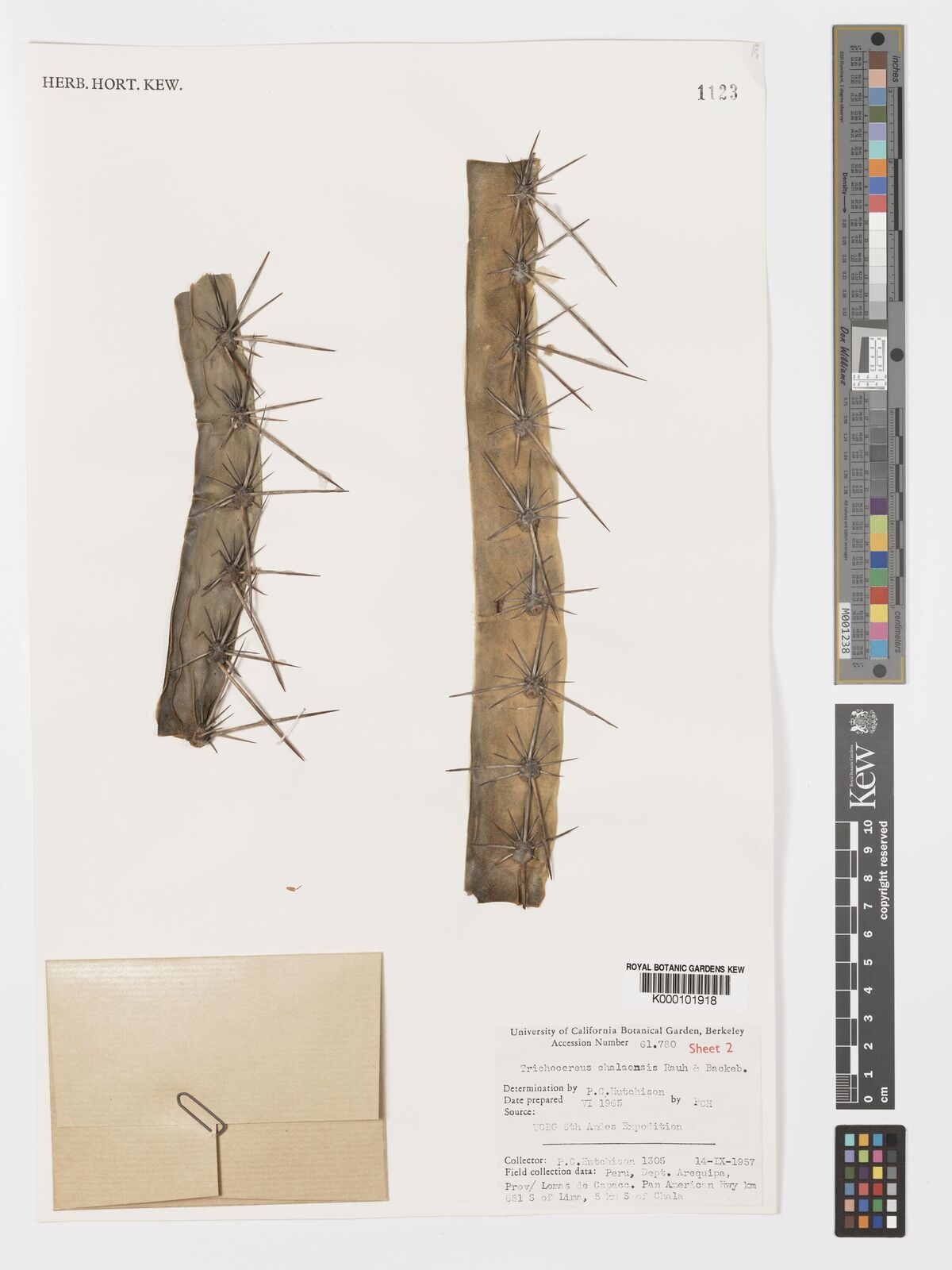 Reference image
Chala Cactus
Echinopsis chalaensis is a columnar, shrubby succulent perennial belonging to the family Cactaceae. Native to the coastal deserts of Peru, this resilient cactus is popular among collectors for its upright growth habit and spectacular, night-blooming white flowers 1.
Originally described by Friedrich Ritter, the species was named after its type locality, the coastal town of Chala in the Arequipa region of Peru. It is classified under the genus Echinopsis, though some botanical databases and collectors still refer to it by its synonym Trichocereus chalaensis 2.
The species is endemic to the dry coastal slopes and desert shrublands of southern Peru. It is typically found growing on rocky hillsides at elevations ranging from 100 to 800 meters. The arid climate of this habitat is characterized by low rainfall, but gets moisture from coastal fog 1.
This cactus produces green to slightly glaucous-green stems that branch from the base, reaching up to 3-4 meters in height and about 15 cm in diameter. It has 8 to 12 ribs with woolly areoles bearing greyish-yellow spines. In summer, it produces large, funnel-shaped white flowers up to 20 cm long that open at night and emit a sweet fragrance.
In cultivation, Echinopsis chalaensis thrives in a highly porous, mineral-rich substrate. During the active growing season (spring and summer), it should be watered thoroughly only after the soil has completely dried out. In winter, it enters a dormant phase and requires minimal to no water. It prefers bright, filtered sunlight.
Overwatering is the most common cause of failure, quickly leading to root and stem rot. Another mistake is keeping the plant too warm during winter, which prevents it from entering the necessary cold dormancy required to initiate flower buds in the spring.
Needs at least 6 hours of bright indirect sunlight daily; avoid scorching midday sun.
Water thoroughly in summer only when soil is dry. Keep completely dry in winter.
Use a well-draining mineral mix with high pumice, perlite, and coarse sand content.
Non-toxic, but features sharp spines that can cause physical injury to pets and children.
Very easy to care for, making it an excellent choice for beginner succulent enthusiasts.
Found on the rocky coastal hillsides of southern Peru, adapting well to arid climates with fog condensation.
