
Light
Direct Sun
Requires full, direct sunlight to maintain its compact growth and produce flowers.
 Reference image
Cinnabar Cactus
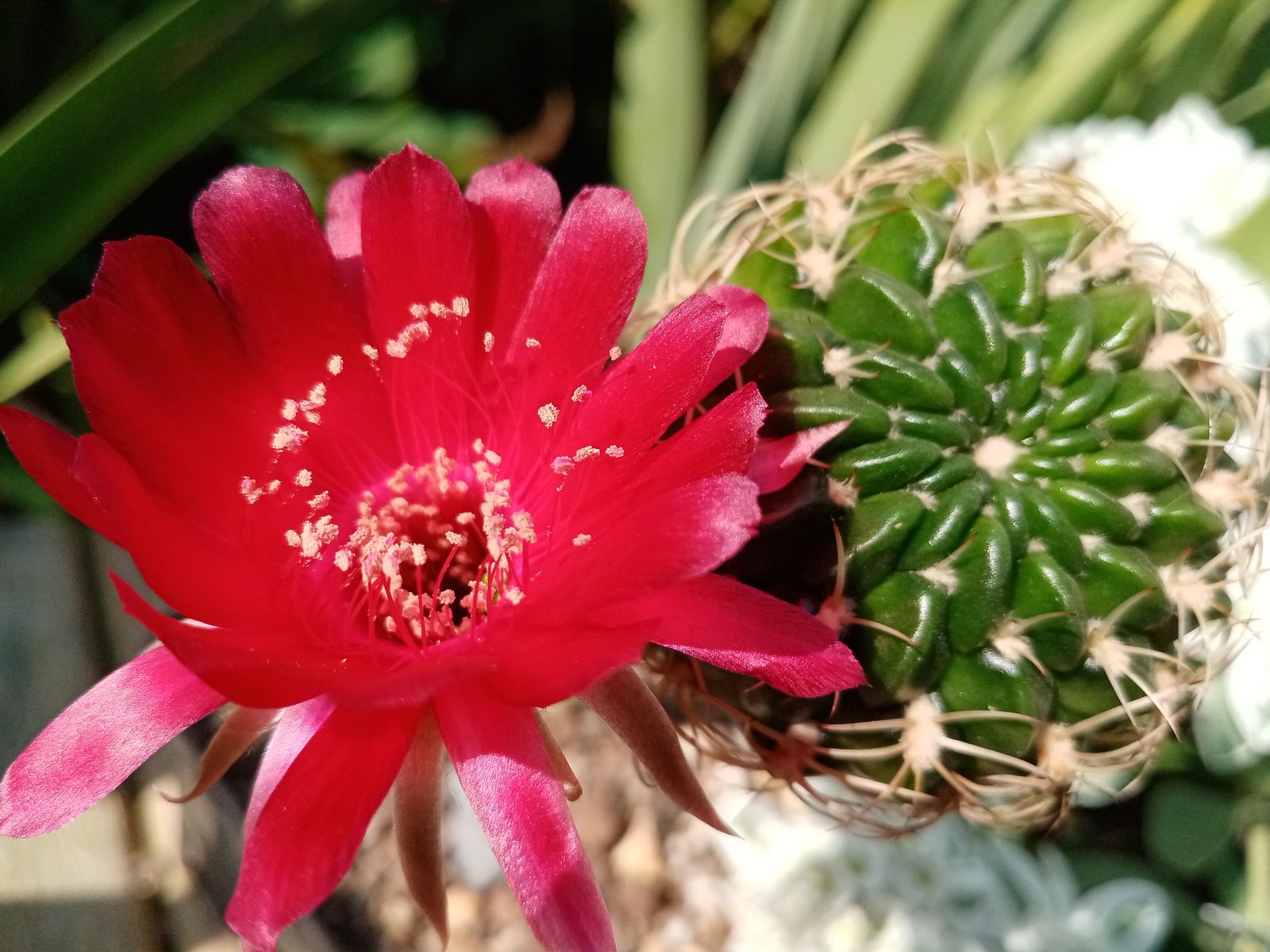
Echinopsis cinnabarina is a highly sought-after, flattened-globose cactus species famous for its stunning, vibrant scarlet flowers 1. Growing primarily as a solitary succulent subshrub, it is highly valued by growers for its compact size and prolific seasonal blooms.
Belonging to the Cactaceae family, this species is frequently classified under its synonym Lobivia cinnabarina. The specific epithet cinnabarina is derived from the bright red pigment cinnabar, directly referencing the intense color of its showy blossoms 2.
This species is native to the high-altitude regions of the Bolivian Andes, typically growing at elevations between 2,500 and 4,000 meters above sea level 1. In these mountainous habitats, it thrives on rocky slopes and dry grasslands, adapted to intense solar radiation and sharp temperature drops.
The stem is dark green, flattened-globose, and can reach up to 15 cm in diameter. It features spiraled, pronounced ribs adorned with clusters of curved, greyish-to-brownish spines. The magnificent, cup-shaped flowers emerge from the crown, displaying brilliant shades of cinnabar-red or orange-red.
Maximum sunlight is crucial for maintaining its compact shape and encouraging healthy bud development 2. Water thoroughly during the active spring and summer growing seasons, but only after the potting medium has dried completely. During winter dormancy, keep the plant dry and cool.
Overwatering in poorly draining soil or placing the plant in low-light conditions are the most common errors. This quickly leads to root rot or etiolation, causing the cactus to stretch and weaken.
Requires full, direct sunlight to maintain its compact growth and produce flowers.
Allow the soil to dry out completely between waterings. Suspend watering during winter.
Highly porous mineral substrate containing pumice, gravel, and minimal organic matter.
The sharp spines can cause skin irritation. Keep out of reach of pets and children.
Very easy to care for as long as overwatering and low-light conditions are avoided.
Naturally occurs in the high-elevation rocky grasslands of the Andean slopes under intense sunlight and cool nights.
