
Light
Bright Indirect Light
Prefers bright, indirect light or filtered sun. Avoid intense midday direct summer sun.
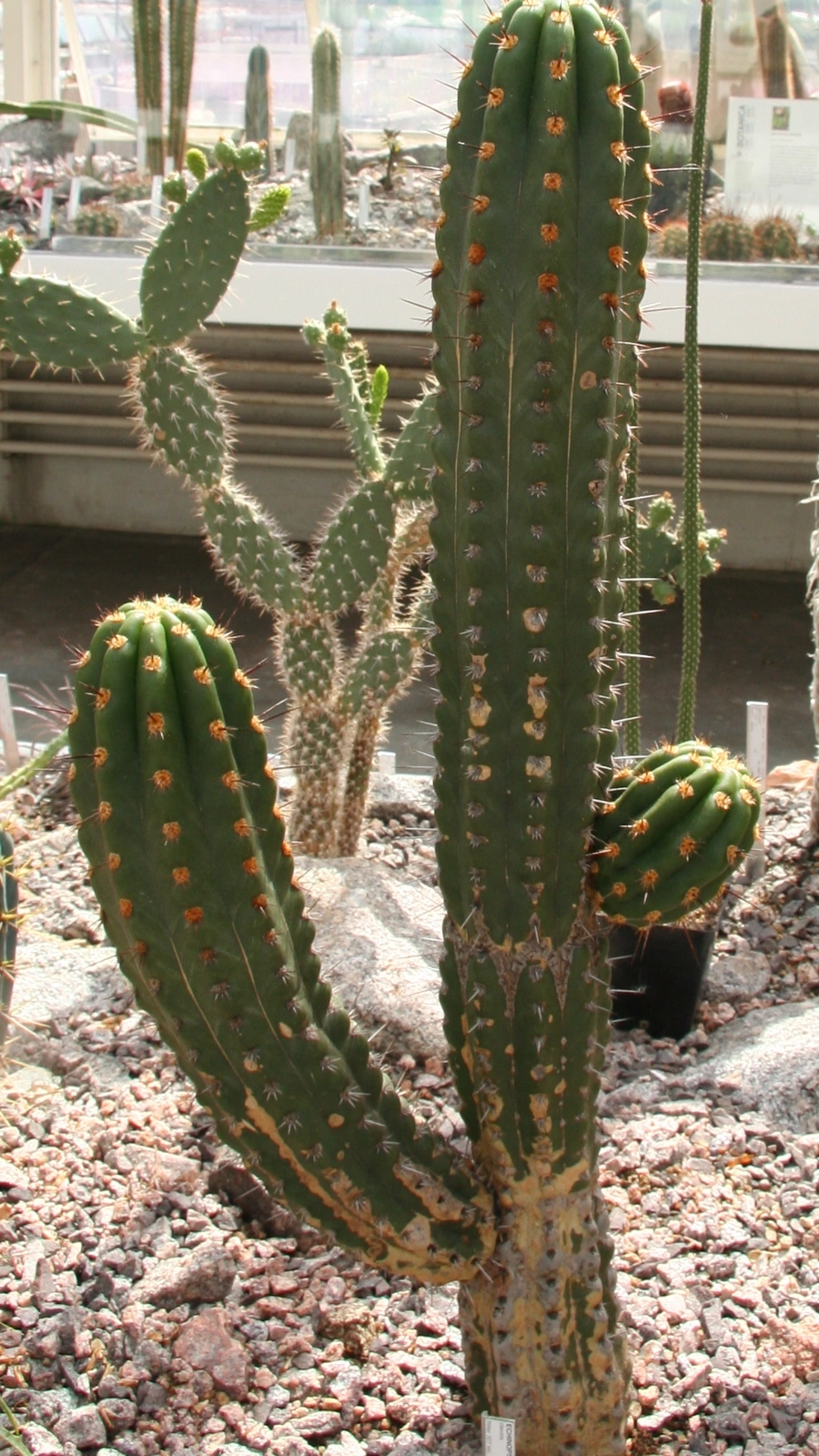 Reference image
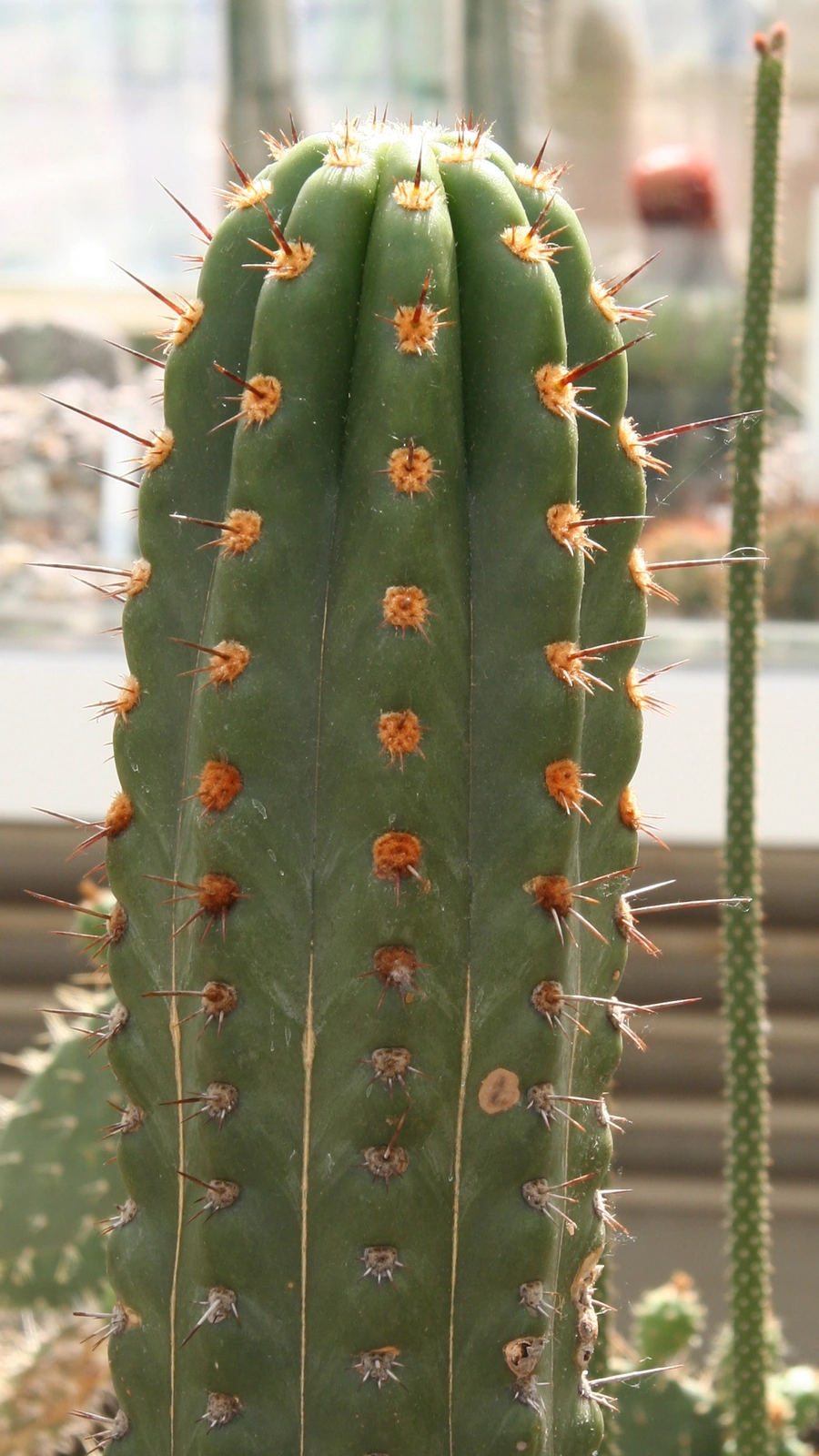 Reference image
Club Cactus
Echinopsis clavata is a distinctive, succulent subshrub belonging to the Cactaceae family. Known for its erect, club-like growth habit and minimal spination, it represents an outstanding adaptation to semi-arid montane environments 1.
Classified under the genus Echinopsis, the specific epithet clavata derives from the Latin 'clava', meaning club, referencing the club-like morphology of its older branches. It remains a prized but lesser-known species among succulent collectors 2.
This species is native to the Andean regions of Bolivia in western South America. It thrives in desert and dry shrubland biomes, growing in rocky crevices and well-drained slopes subjected to high diurnal temperature fluctuations 1.
It forms a branching succulent subshrub. The stems are cylindrical, light green to glaucous, featuring vertical ribs with distinct but often small areoles. Flowers are large, nocturnal, tubular, typically opening in shades of white or cream, adapted for moth pollination.
In container culture, it requires porous soil mix with plenty of mineral components like pumice or perlite. It performs best under bright, filtered sunlight. Water thoroughly only when the growing medium has dried out completely.
Overwatering is the primary cause of plant death through root rot. Keeping the plant in poorly lit conditions causes unsightly stretching (etiolation) and weakens the main stems 2.
Prefers bright, indirect light or filtered sun. Avoid intense midday direct summer sun.
Water thoroughly once the substrate is completely dry. Keep nearly dry in winter.
Use highly porous, mineral-based substrate containing pumice, gravel, and sand.
Non-toxic to cats, dogs, and humans. Handle gently due to occasional small spines.
Easy to care for. Excellent option for succulent beginners with well-draining soil.
Native to the dry valley ecosystems and high-altitude rocky slopes of Bolivia, thriving in highly mineralized soils.
