
Light
Full Sun
Position in a south-facing spot receiving at least 6 hours of direct daily sunlight.
 Reference image
 Reference image
Thick-Stemmed Echinopsis
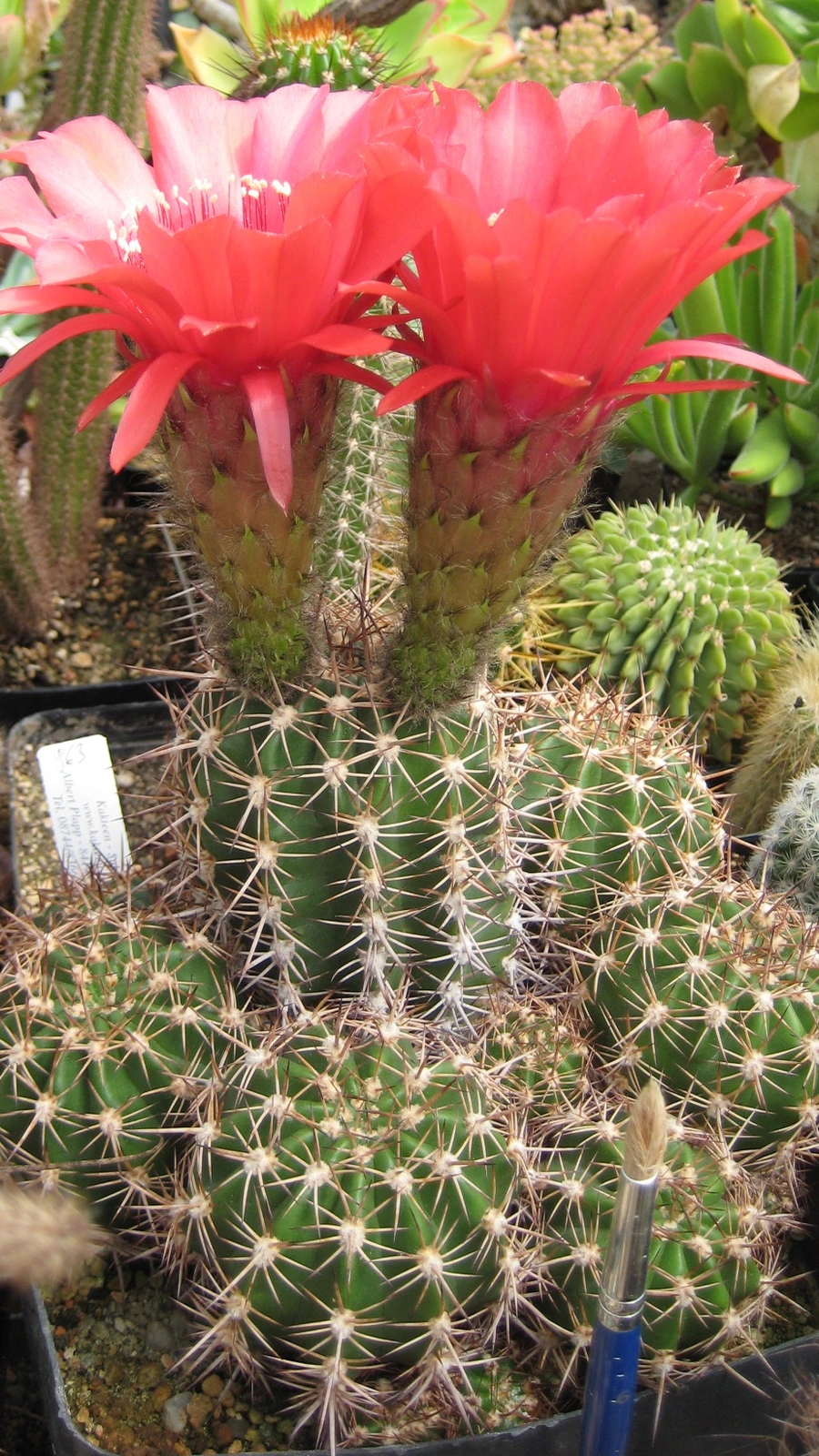
Echinopsis crassicaulis is a striking, slow-growing globose cactus belonging to the Cactaceae family. It is highly valued in container culture and xeriscaping for its impressive hardiness and vivid floral display 1.
Originally classified within the genus Lobivia, contemporary taxonomic databases such as Kew's Plants of the World Online (POWO) also recognize it as Soehrensia crassicaulis 2. The specific epithet crassicaulis translates from Latin to "thick-stemmed".
This species is native to the high-altitude, semi-arid rocky slopes and dry shrublands of Northwestern Argentina, including provinces like Catamarca and La Rioja 1. It is well-adapted to intense solar radiation and sharp diurnal temperature swings.
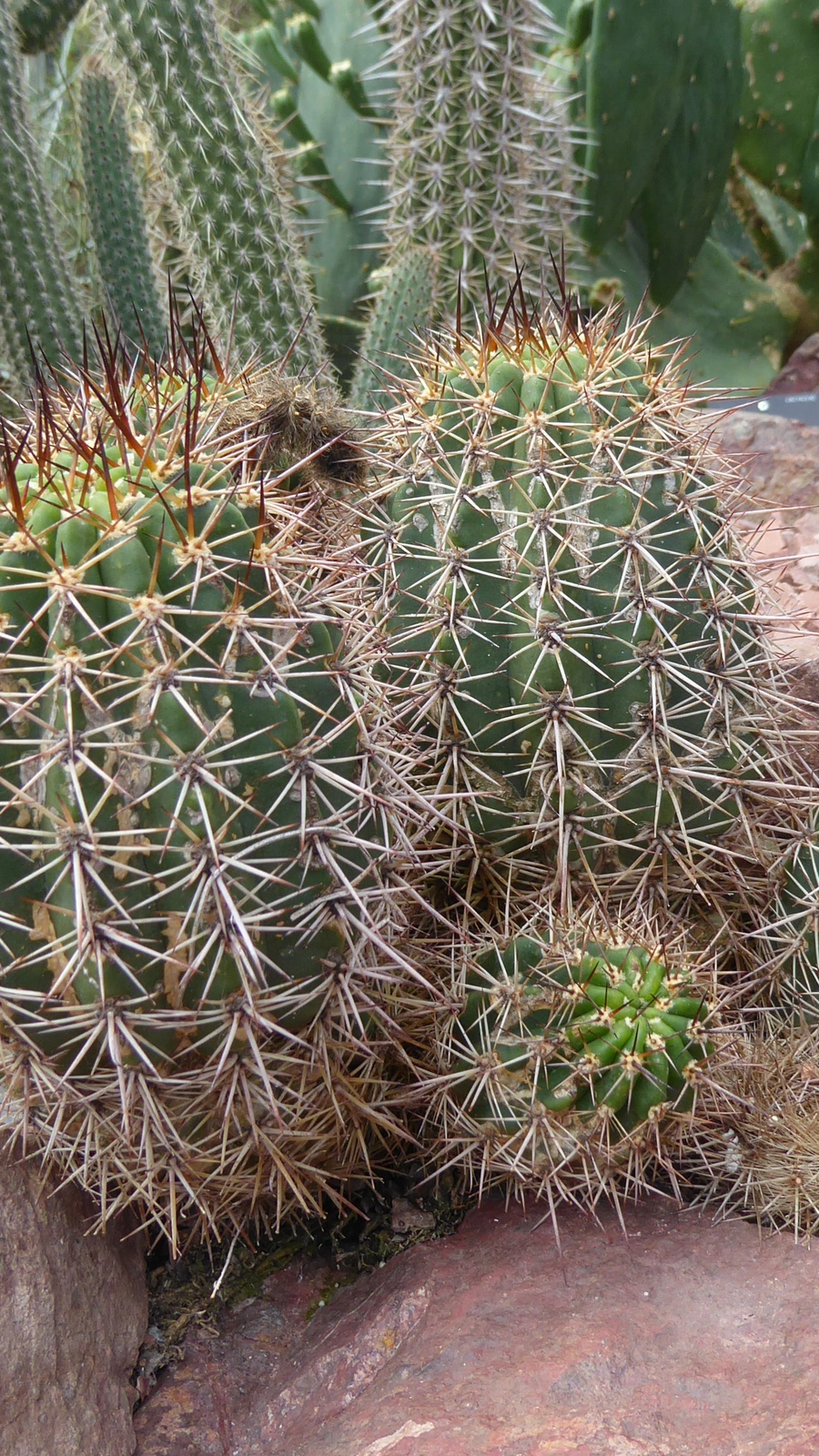
It features a dark green, solitary to clustering globular stem that becomes short-cylindrical with age. The ribs are prominent, adorned with sharp, greyish-brown spines. In summer, it produces magnificent, funnel-shaped, vibrant red to orange-yellow flowers near the crown 2.
It thrives in full sun and requires exceptionally well-draining, mineral-heavy soil. Water thoroughly during the active summer growing season, allowing the substrate to dry completely between sessions. It requires a cold, dry winter dormancy period to trigger spring blooming.
The most frequent mistake is overwatering during the winter rest, which rapidly leads to root rot 1. Insufficient sunlight causes etiolation, stretching the stem and weakening the plant's structural integrity.
Position in a south-facing spot receiving at least 6 hours of direct daily sunlight.
Allow the substrate to dry out entirely between waterings; suspend watering in winter.
Use highly porous mineral mixes containing pumice, gravel, and minimal organic matter.
Non-toxic, but features sharp spines that can cause physical injury to pets and children.
Very easy to maintain, provided it is kept dry and cool during its winter dormancy.
Native to the Andean foothills of Northwestern Argentina, specifically in provinces like Catamarca, San Juan, and La Rioja, where it grows on rocky slopes and dry high-altitude shrublands.
