
Light
Bright Indirect Light
Requires bright, filtered sunlight with some direct sun for optimal flowering.
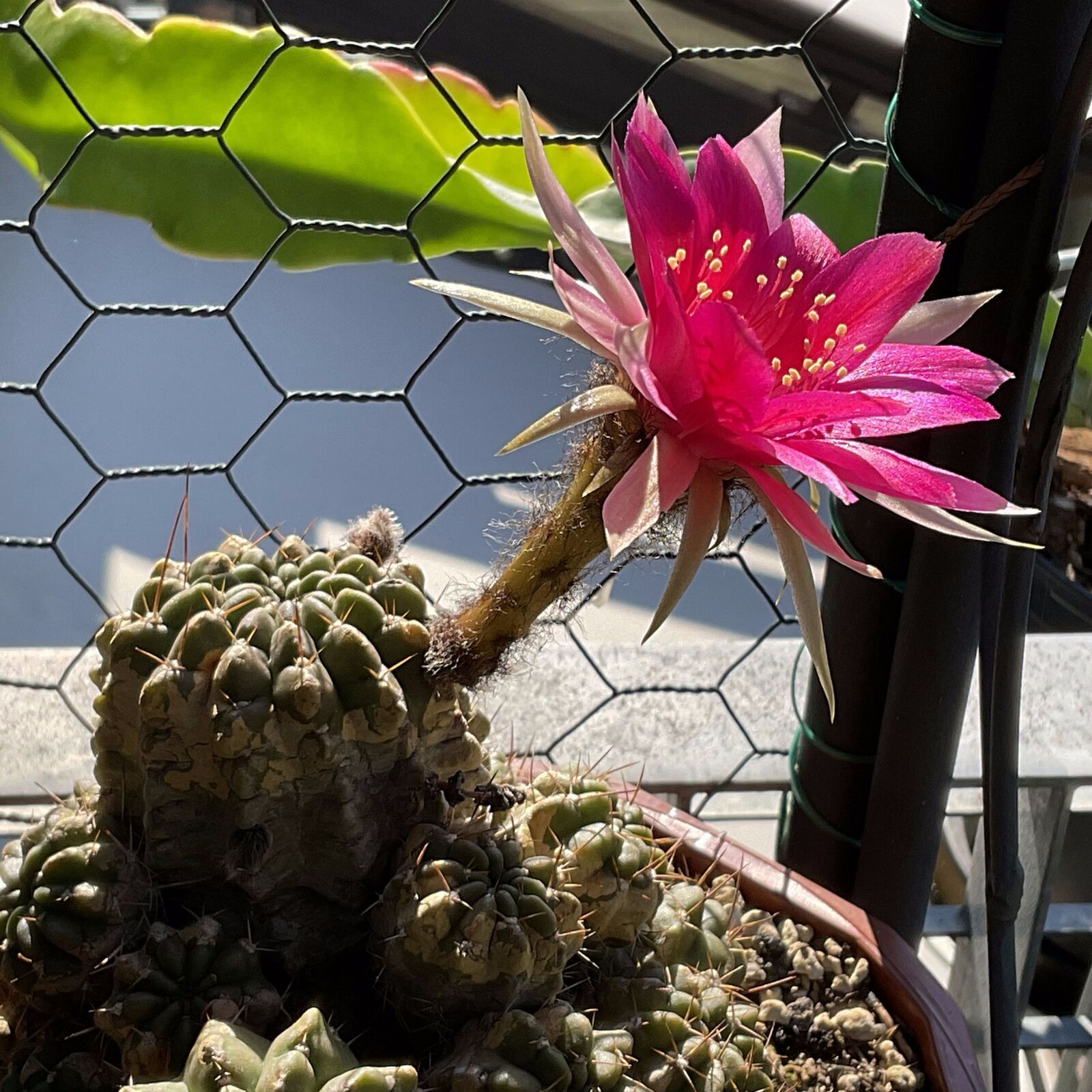 Reference image
Hertrich's Echinopsis
Echinopsis hertrichiana is a sought-after succulent subshrub in the Cactaceae family, widely celebrated among collectors for its massive, vivid red to orange blooms and clustering growth habit 1.
Historically classified under the genus Lobivia, this species is accepted within the diverse genus Echinopsis under modern phylogenetic classification 2. The specific epithet honors William Hertrich, a prominent curator and horticulturist.
Native to Western South America, this species is endemic to Peru 1. It thrives primarily in high-altitude dry shrublands and desert biomes of the Andean valleys, usually at elevations between 2,000 and 3,000 meters above sea level.
The plant features globose to short-cylindrical, bright green stems that freely offset from the base to form dense mounds. The prominent ribs are lined with woolly areoles bearing needle-like, yellowish-brown spines. During summer, it produces spectacular, large, funnel-shaped fiery red flowers.
This cactus prefers bright, filtered sunlight to partial direct sun. It requires highly porous, gravelly soil with excellent drainage. Water thoroughly only when the soil is completely dry, and maintain a strict dry period during winter dormancy 2.
Overwatering and placing the plant in heavy, moisture-retentive soils are the most common causes of root rot. Inadequate light leads to weak, elongated growth (etiolation) and a lack of flowering.
Requires bright, filtered sunlight with some direct sun for optimal flowering.
Water thoroughly when soil is dry in summer; keep completely dry in winter.
Use a highly porous, mineral-rich soil mix with pumice and coarse sand.
Non-toxic to pets, but has sharp spines that require careful handling.
Very easy and resilient, making it a great choice for beginner cactus growers.
Naturally occurs in the high-elevation valleys of the Peruvian Andes, growing in rocky crevices and dry desert shrublands.
