
Light
Filtered Sun
Requires bright filtered sun or direct light; insufficient light prevents flowering.
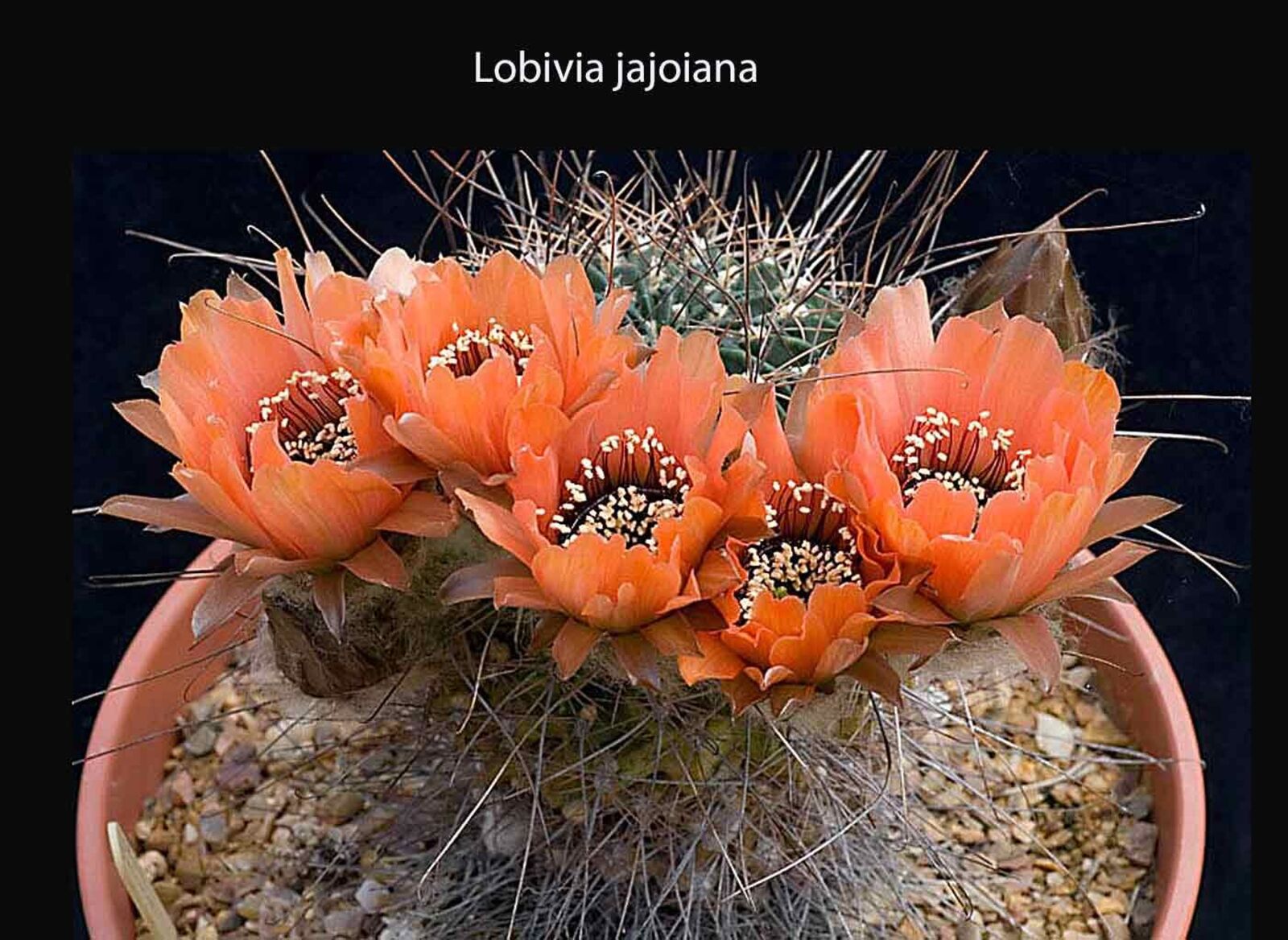 Reference image
Echinopsis jajoana (synonym Lobivia jajoana) is a small, globose cactus species belonging to the Cactaceae family, highly prized for its stunningly vibrant flowers 1. It is especially famous among collectors for the distinctive dark, near-black or deep purple throat inside its colorful blossoms.
The species was historically classified under the genus Lobivia before modern molecular and phylogenetic classifications grouped it under the broader genus Echinopsis 2. The specific epithet "jajoana" honors the cactus collector Jajo.
This species is native to northwestern Argentina, particularly found in the high-altitude regions of Jujuy and Salta provinces 1. It thrives in montane tropical grasslands and rocky slopes at elevations between 2,000 and 3,000 meters above sea level 2.
The body is typically solitary and spherical, occasionally becoming short-cylindrical with age. It features distinct ribs with sharp, grayish spines. Its most remarkable feature is the large summer flowers, which can be red, yellow, or orange, contrasted by a striking dark purple or black center.
In cultivation, it requires abundant sunlight and excellent drainage. Water regularly during the active summer growing season, allowing the soil to dry out completely between waterings, and keep completely dry in winter 1. It is frost-tolerant if kept dry.
The most common mistake is overwatering during the cold winter dormancy period, which rapidly causes root rot. Insufficient sunlight leads to etiolation, where the plant stretches and loses its compact shape.
Requires bright filtered sun or direct light; insufficient light prevents flowering.
Water thoroughly in summer when dry; keep completely dry during winter dormancy.
Requires extremely gritty, fast-draining soil rich in pumice and coarse sand.
Non-toxic, but sharp spines require cautious handling away from pets and children.
Very easy to care for, provided the dry winter dormancy requirement is respected.
Naturally occurs in the high-elevation rocky slopes and montane grasslands of the Andes, adapted to cool nights, intense sun, and dry winter conditions.
