
Light
Direct Sun
Requires at least 6 hours of direct sunlight daily for healthy spines and flowers.
 Reference image
 Reference image
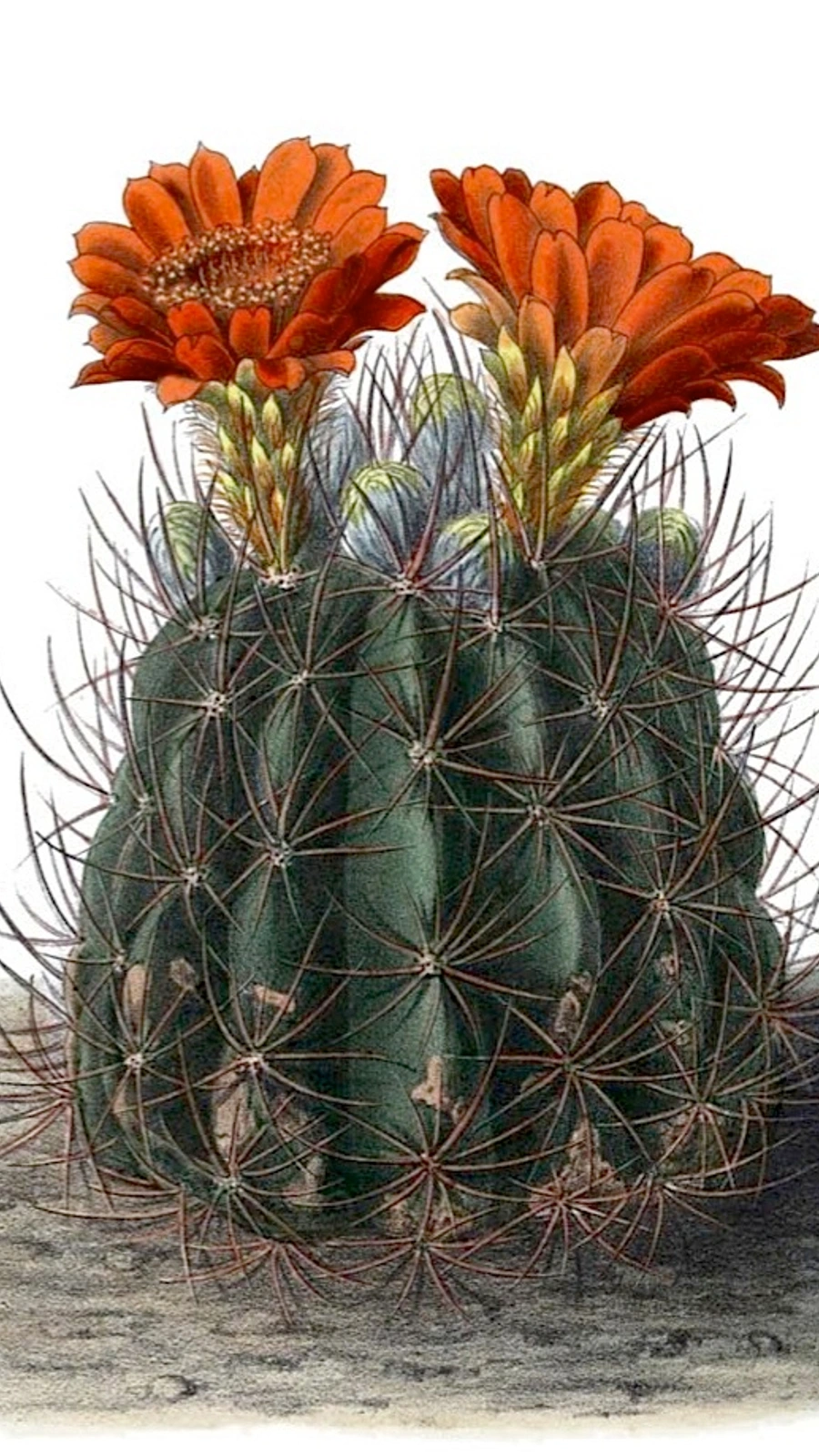
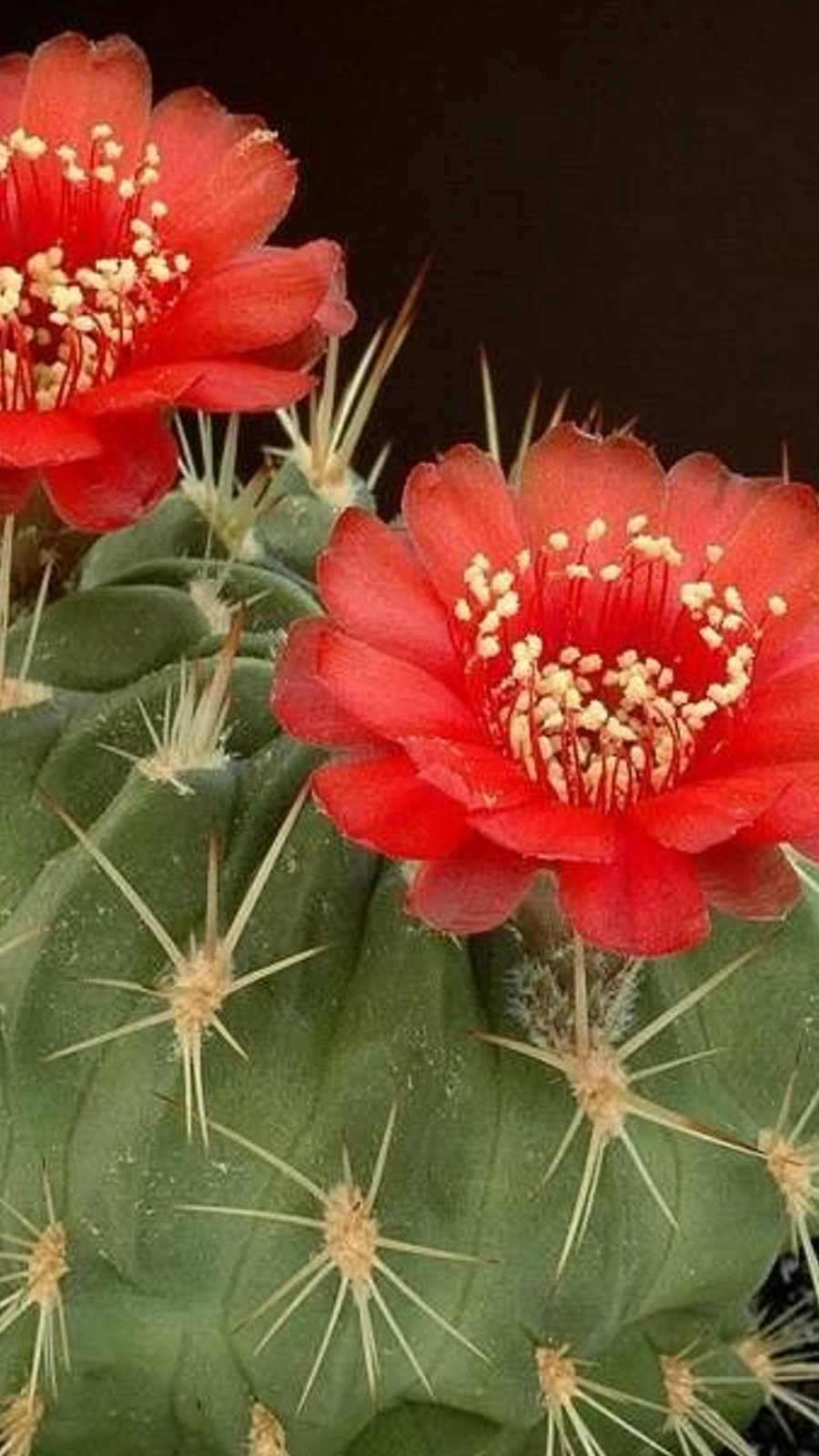
Brick Red Flowered Cactus
Echinopsis lateritia is a globose to cylindrical cactus species belonging to the family Cactaceae, highly regarded by collectors for its solitary growth habit and brilliant brick-red flowers. It is well-adapted to survive arid environments 1.
Described in the 20th century, the specific epithet "lateritia" is derived from the Latin word for brick-colored, indicating the striking, fiery orange-red hue of its large funnel-shaped flowers 2.
This species is native to the high-altitude dry valleys and rocky slopes of Bolivia in South America 1. It thrives in gravelly, low-nutrient soils at elevations between 1500 and 3000 meters above sea level, exposed to intense solar radiation.
The stem is light green to glaucous-green, growing up to 15-20 cm high, with 10 to 15 distinct ribs. Areoles bear strong, rigid, greyish-brown spines. The magnificent flowers emerge from the upper part of the stem during early summer, presenting a vibrant brick-red or coppery-orange color.
In cultivation, this cactus requires direct sunlight and moderate watering during the warm growing season. To promote healthy growth and subsequent flowering, it must be kept dry and cool (around 5-10 °C) during its winter dormancy 2.
The most prevalent issue is overwatering combined with poorly draining soil, which quickly leads to root rot. Insufficient light causes the plant to stretch (etiolate), weakening its spine structure and preventing flower production.
Requires at least 6 hours of direct sunlight daily for healthy spines and flowers.
Water only when soil is bone dry. Keep completely dry in winter.
Highly porous mineral soil mix with plenty of pumice and sand.
Non-toxic, but sharp spines can cause physical injury. Handle with care.
Very easy and resilient, perfect for beginners with bright windows.
Found naturally in the high-elevation rocky slopes and arid shrublands of Bolivia.
