
Light
Bright Indirect Light
Requires at least 4-6 hours of bright indirect light or filtered sun daily.
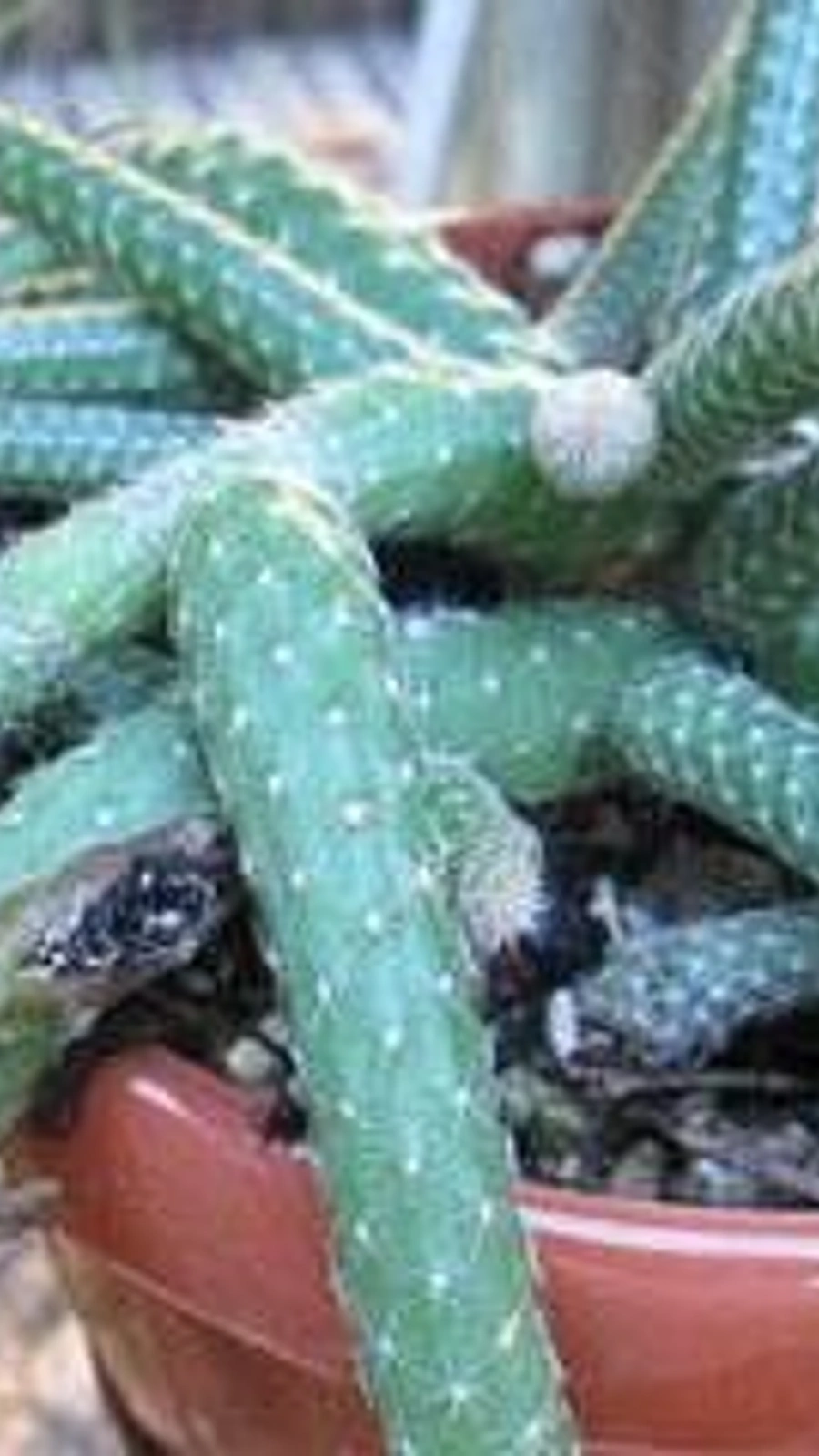 Reference image
Luis Ramirez Cactus
Echinopsis luisramirezii is a distinct, succulent subshrub species belonging to the Cactaceae family. Adapted to harsh, arid climates, this cactus is highly regarded by collectors for its resilient nature and structural beauty 1.
Classified under the diverse genus Echinopsis, this taxon has been meticulously documented by taxonomists. The specific epithet "luisramirezii" honors influential figures in botanical field research 2. Modern phylogenetic studies place it alongside other South American columnar and globular cacti.
Native to western and southern South America, particularly in dry shrublands and desert biomes of Bolivia and Argentina, it thrives in stony, mineral-rich soils. It is highly adapted to withstand prolonged droughts 1.
This succulent subshrub develops erect or semi-prostrate stems with well-defined ribs. Areoles bear protective spines of variable lengths. The species produces stunning, tubular flowers, often white to light cream, which bloom nocturnally to attract specific pollinators.
Excellent for indoor cultivation, it requires bright, indirect sunlight or filtered sun. Watering should follow the soak-and-dry method, allowing the substrate to dry out completely. Winter care requires a cool period with minimal to no water to induce the resting phase.
The most prevalent issue is root rot caused by overwatering or poorly draining substrates. Additionally, keeping the plant in warm rooms during winter prevents the chilling period required for spring flowering.
Requires at least 4-6 hours of bright indirect light or filtered sun daily.
Water thoroughly only when the soil is dry; reduce drastically during winter.
Highly porous cactus mix enriched with pumice, coarse sand, and perlite.
Spiny stems can cause physical injury; keep away from children and pets. Non-toxic.
Very easy to maintain, making it ideal for beginners who avoid overwatering.
Native to the dry, stony shrublands and desert microclimates of western and southern South America, mainly spanning across Bolivia and Argentina.
