
Light
Direct Sun
Requires at least 6 hours of direct sunlight daily. South or west-facing windows are ideal.
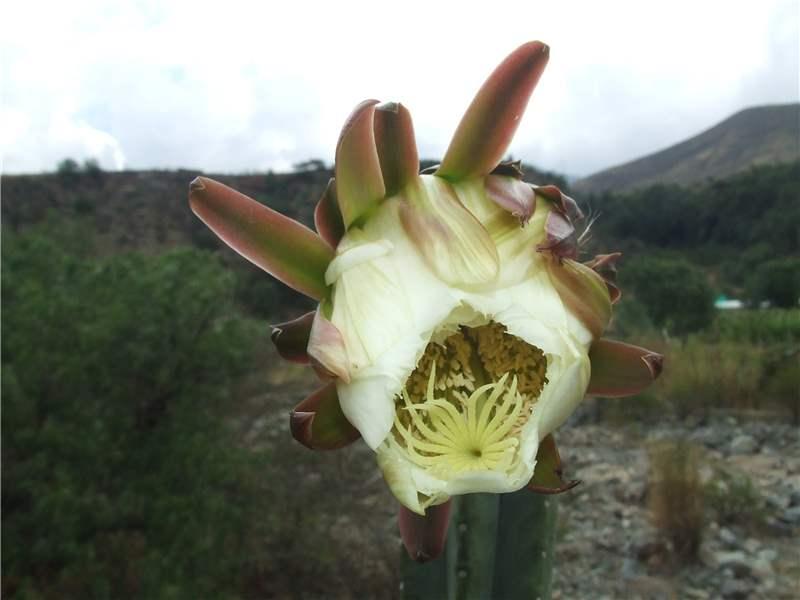 Reference image
Blue Torch Cactus
Echinopsis macrogona, commonly known as the Blue Torch Cactus, is a column-forming succulent tree species in the family Cactaceae. It is highly valued among collectors and landscapers for its striking glaucous blue-green stem color and massive upright growth habit 1.
Scientifically known as Echinopsis macrogona (synonym Trichocereus macrogonus), it belongs to the genus Echinopsis. It shares close genetic alliances with other South American columnar cacti, such as the San Pedro complex, which has been subject to continuous taxonomic revisions 2.
This species is native to the arid mountains and dry shrublands of Bolivia and Peru. However, it has also naturalized in parts of southwestern Europe (such as Spain) and dry regions of Africa, where it thrives in rocky, well-draining soils under intense sunlight 1.
Echinopsis macrogona forms columnar, branched stems that can reach heights of 2 to 3 meters. Stems are 5-9 cm in diameter and typically feature 6 to 9 well-defined ribs. The aeroles carry stiff, yellowish-brown spines. During summer, it produces large, nocturnal, funnel-shaped white flowers 2.
It requires full sun exposure and extremely porous, gravelly soil. Watering should be deep but infrequent, allowing the substrate to dry out entirely between sessions. During winter dormancy, keep the plant completely dry to prevent root rot. It can tolerate light frost if kept dry 1.
The most prevalent issue is root rot triggered by overwatering or compacted soil. Insufficient light leads to etiolation, causing the stems to stretch, weaken, and lose their beautiful blue coloration.
Requires at least 6 hours of direct sunlight daily. South or west-facing windows are ideal.
Allow soil to dry out completely. Cease watering during winter dormancy.
Use a specialized mineral-heavy cactus soil mix with plenty of pumice and grit.
Sharp spines can cause physical injury, and the plant contains compounds toxic to pets.
Very easy to care for, provided it is not overwatered and receives sufficient light.
Native to the Andean slopes of Bolivia and Peru, this species thrives in dry shrublands and rocky semi-desert biomes. It has successfully naturalized in Mediterranean Europe and parts of dry African landscapes due to its extreme drought tolerance.
