
Light
Bright Indirect Light
Prefers bright, indirect light or filtered sun; shield from scorching afternoon summer sun.
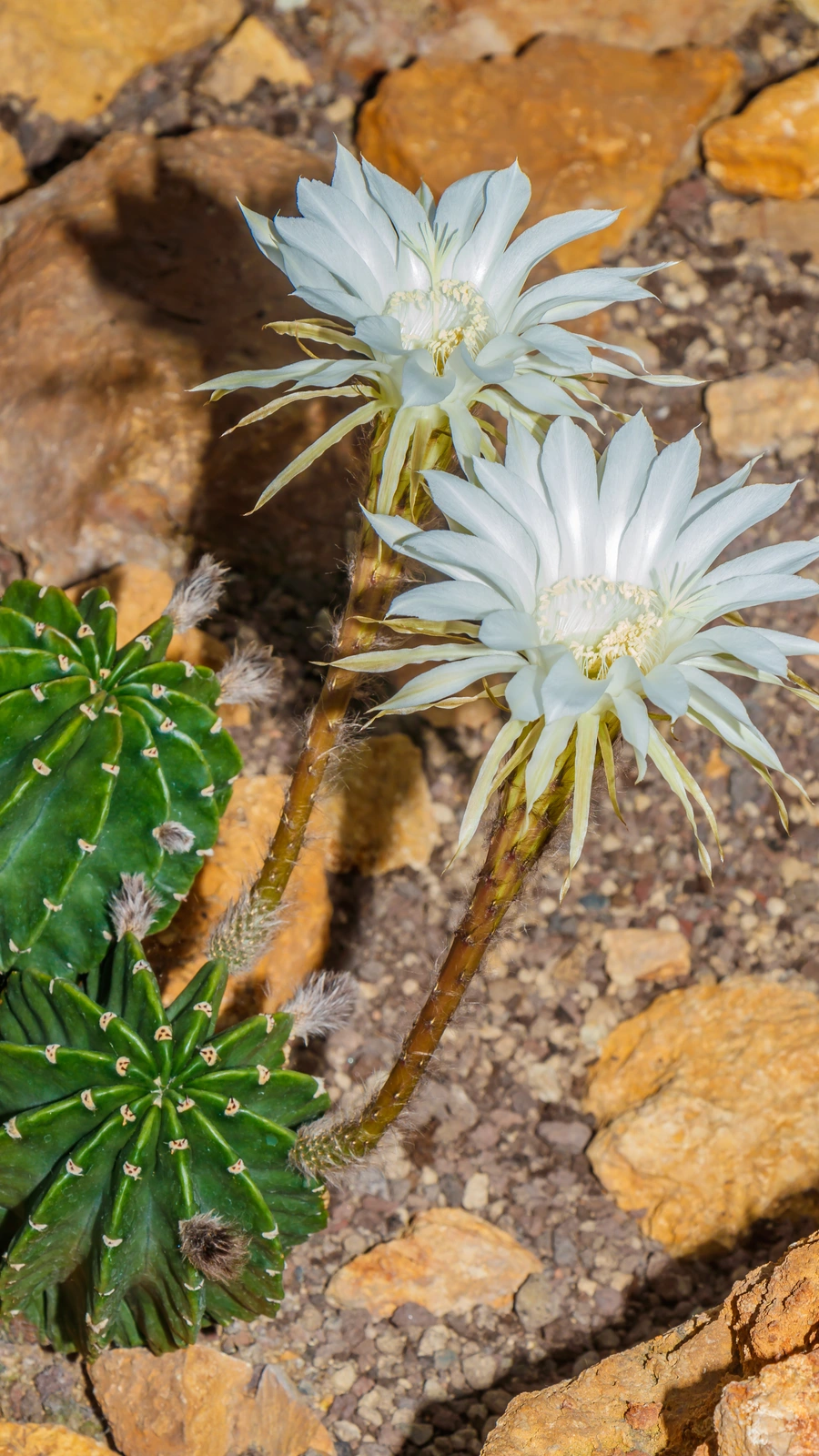 Reference image
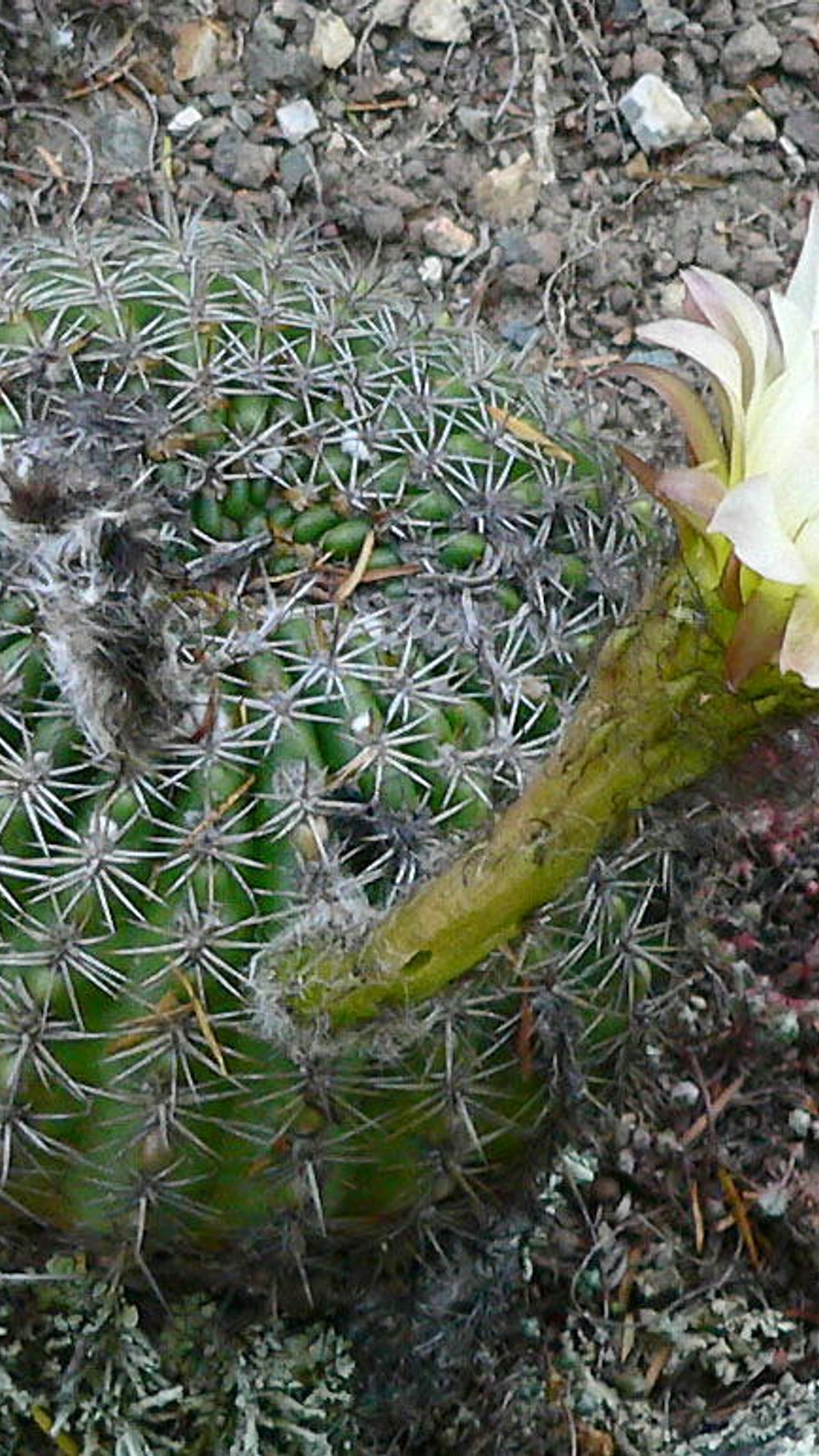 Reference image
Echinopsis mamillosa is a popular, perennial cactus species belonging to the family Cactaceae. Known for its spherical to short-cylindrical green stems, it is highly sought after by collectors for its extraordinarily large, funnel-shaped white to pale pink blossoms.
This species was formally integrated into botanical literature and categorized under the diverse genus Echinopsis 1. The specific epithet "mamillosa" refers to the prominent, nipple-like tubercles along its ribs, giving the stem a distinctly bumpy profile.
The natural range of Echinopsis mamillosa spans across high-altitude regions of southern Bolivia and northwestern Argentina 2. It typically grows on rocky slopes and dry grasslands at elevations between 1,500 and 3,000 meters above sea level.
The solitary stem is dark green, deeply ribbed with about 13 to 17 vertical ridges. Radial and central spines emerge from woolly areoles, ranging from yellowish to greyish-brown. During late spring and summer, it produces spectacular flowers that can reach up to 20 cm in length, opening usually during the night or early morning.
In cultivation, it is considered a hardy and robust plant. It thrives in well-drained, porous soils with a high mineral content. Regular watering during the active growing season must be paired with absolute dryness during winter dormancy to maintain its health.
The most prevalent issue is root rot triggered by overwatering or poorly draining soil. Keeping the plant in dark, humid conditions during winter is also detrimental, as it needs a cool and dry resting period to successfully initiate flower buds for the next season.
Prefers bright, indirect light or filtered sun; shield from scorching afternoon summer sun.
Allow soil to dry out 100% between waterings. Keep completely dry in winter.
Requires very porous soil; use a mix of standard potting soil, coarse sand, and pumice.
Non-toxic, but the sharp spines can cause physical injury; handle with care.
Easy; highly tolerant of neglect as long as overwatering is avoided.
Found natively in the dry, rocky soils and high-altitude grasslands of Bolivia and northwestern Argentina, adapted to intense mountain sunlight and cool nights.
