
Light
Bright Indirect Light
Prefers bright, indirect sunlight or filtered direct sun for at least 4-6 hours daily.
 Reference image
 Reference image
Pentland's Cob Cactus
Echinopsis pentlandii, belonging to the family Cactaceae, is a perennial globose succulent subshrub renowned for its remarkably vibrant flowers. Well-adapted to rugged mountain terrains in its native habitat, this resilient species is highly favored by global succulent hobbyists 1.
Originally described in 1844 by Joseph zu Salm-Reifferscheidt-Dyck, the species was named in honor of the Irish geographer and naturalist Joseph Barclay Pentland. It is frequently encountered in historical botanical literature under its synonym, Lobivia pentlandii, reflecting its high-altitude evolutionary lineage within the broader Echinopsis genus 2.
Native to Western South America, Echinopsis pentlandii occurs widely across the Andean regions of Bolivia and Peru. It thrives at elevations between 3,000 and 4,000 meters above sea level, primarily colonizing rocky slopes, montane tropical grasslands, and nutrient-poor, mineral-dense soils 1.
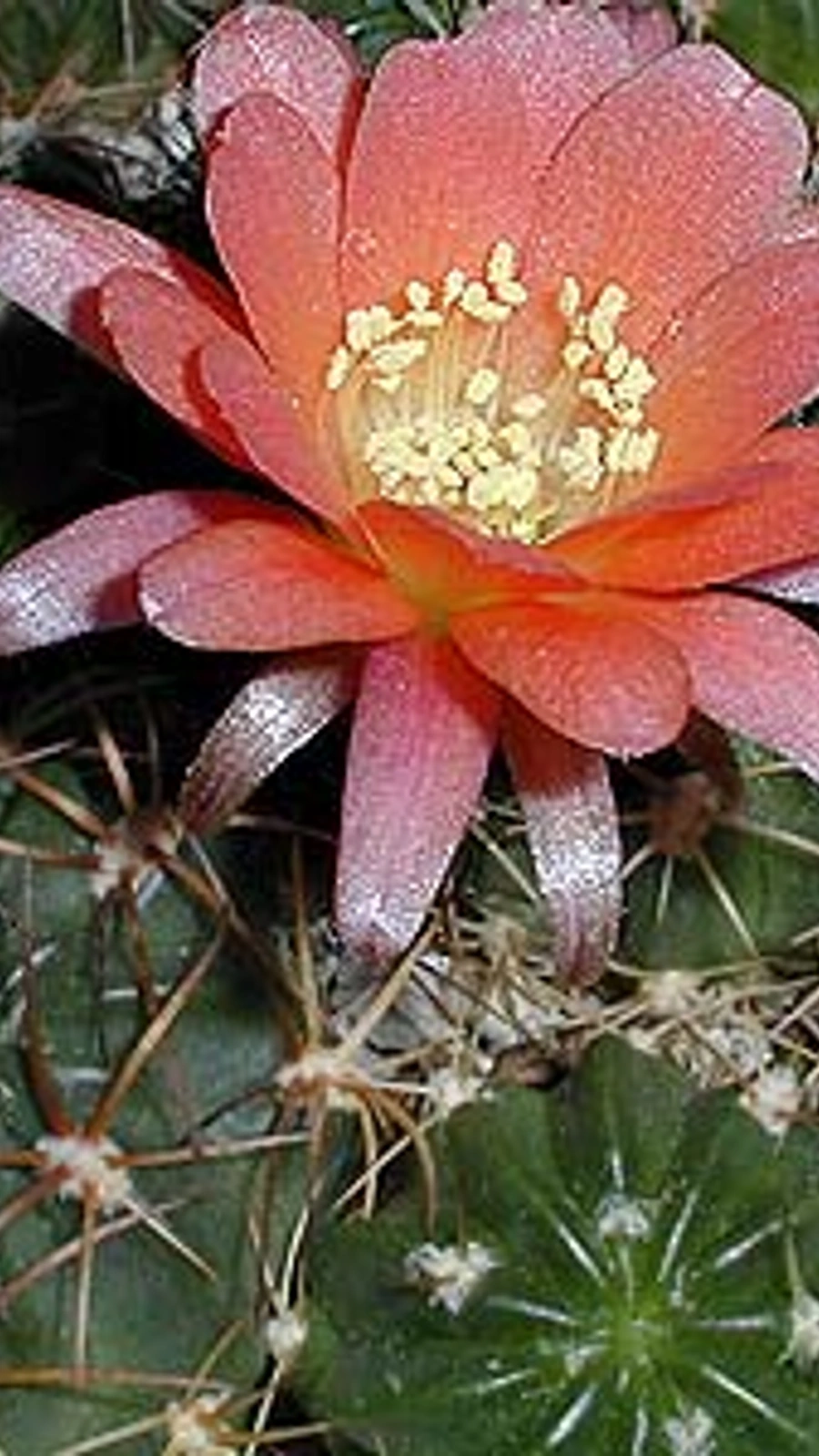
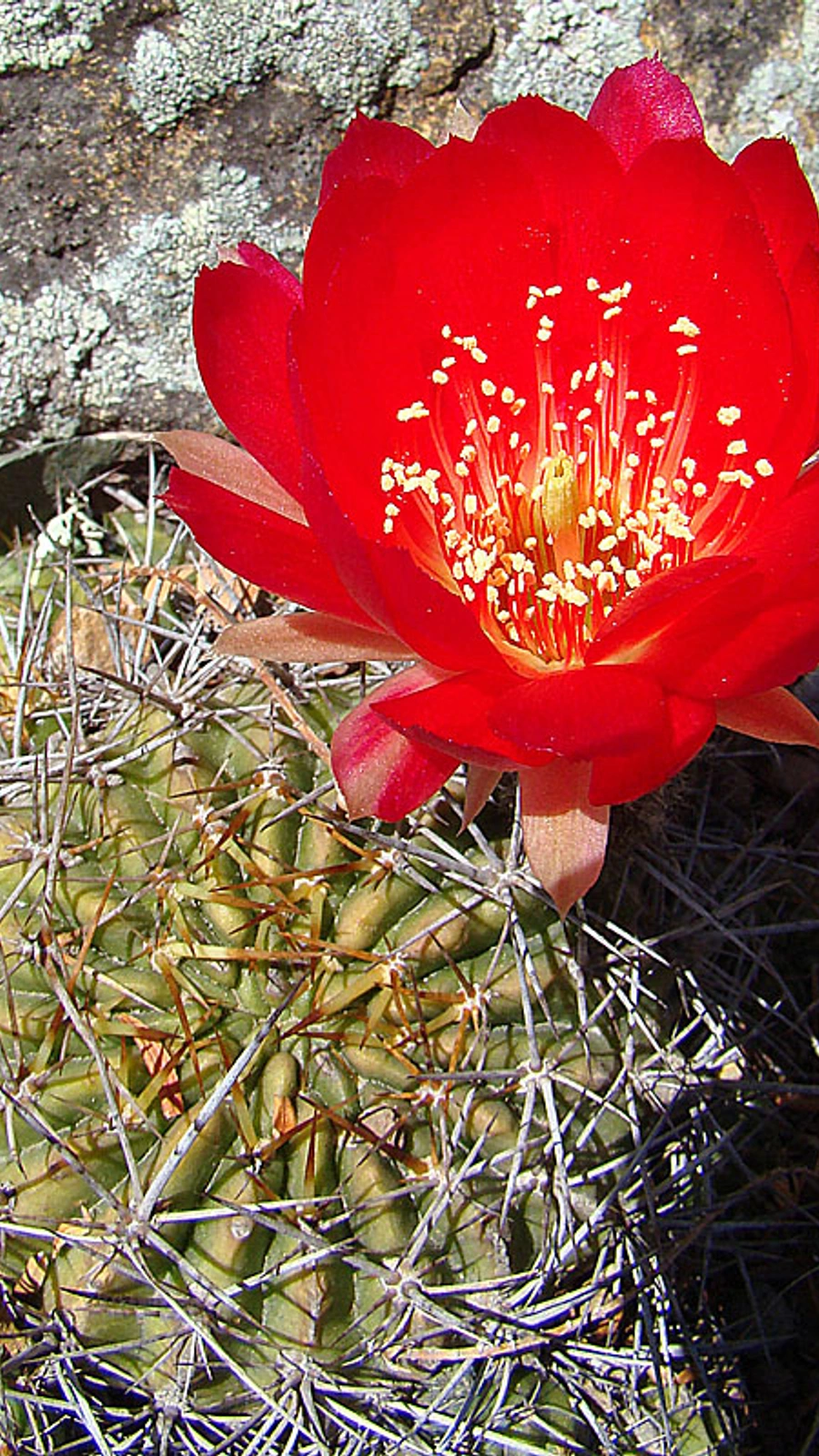
The stem is globose to shortly cylindrical, clumping from the base over time to form dense cushions. Stem color ranges from bright green to grayish-green. Prominent ribs host aeroles equipped with strong, yellowish-brown spines. In summer, it produces large, funnel-shaped, diurnal flowers in shades of red, orange, pink, or purple close to the apex 2.
This cactus requires a very porous, mineral-based growing medium with excellent drainage. Water thoroughly during the spring and summer active growth phase only when the soil has completely dried out. In winter, maintain absolute dryness and keep in a cool environment, as it can withstand light frost when dry. Bright indirect sun or partial direct sun is essential for robust spination and flowering.
The most prevalent issue is overwatering during winter dormancy or planting in heavy, clay-rich soil, which inevitably leads to root rot. Insufficient light exposure will trigger etiolation, causing the stems to stretch abnormally and weaken 1.
Prefers bright, indirect sunlight or filtered direct sun for at least 4-6 hours daily.
Allow the soil to dry out completely between waterings; keep almost bone-dry in winter.
Requires excellent drainage; use a mineral-based cactus mix with plenty of pumice.
Equipped with sharp spines; handle with thick gloves during repotting. Non-toxic.
Very easy to maintain provided it is not overwatered and receives enough light.
Found in high-altitude Andean zones of Peru and Bolivia, clinging to dry, rocky crevices and gravelly slopes under intense solar radiation and cool night temperatures.
