
Light
Bright Indirect Light
Prefers bright indirect light or partial sun for at least 4-6 hours daily.
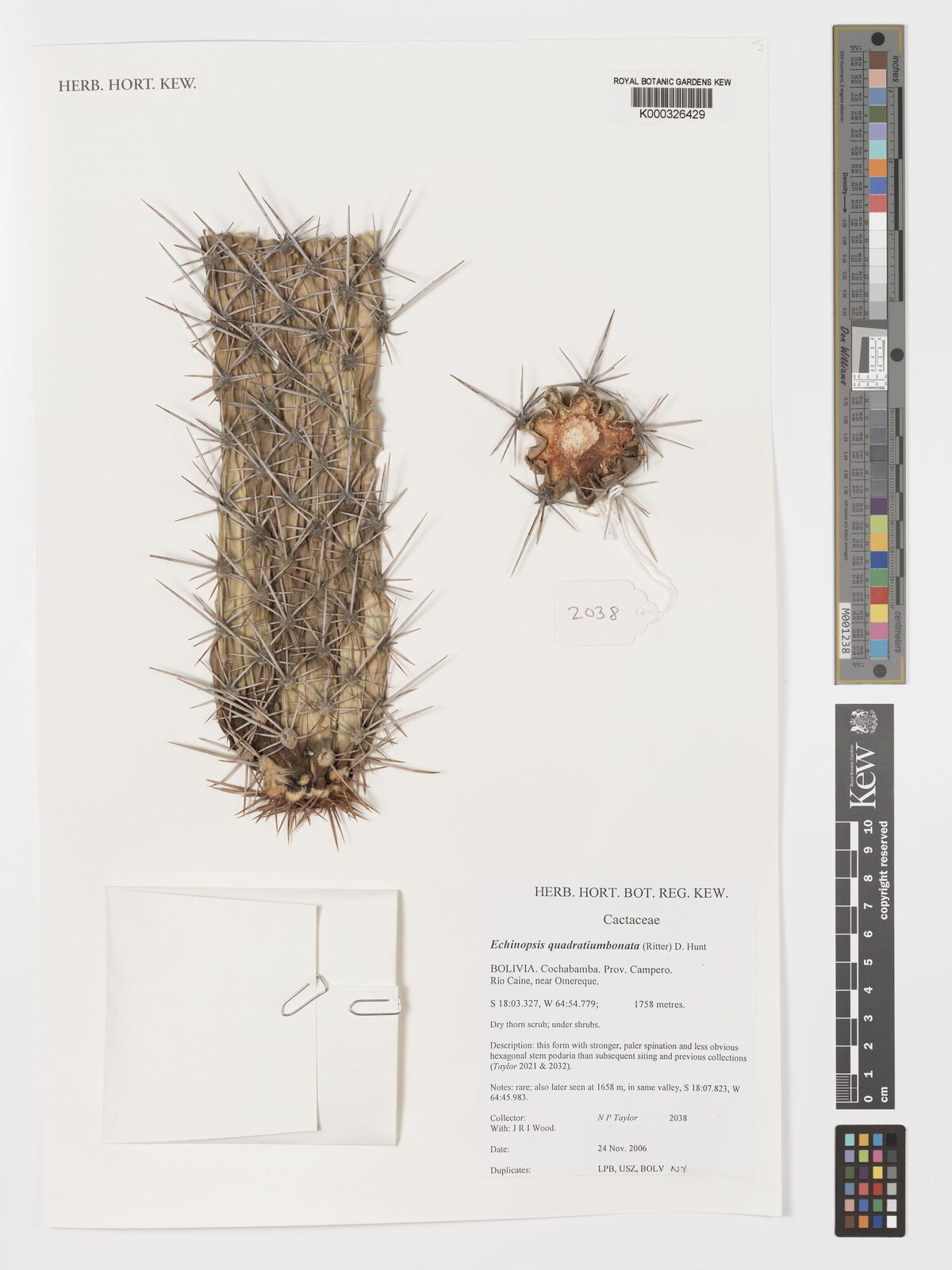 Reference image
Square-Tubercled Echinopsis
Echinopsis quadratiumbonata is a succulent subshrub belonging to the Cactaceae family 1. Characterized by its upright growth habit and distinct morphological features, this species thrives in dry shrublands and rocky environments, making it a unique addition to succulent collections.
The specific epithet quadratiumbonata refers to the square-like shape of its prominent tubercles along the ribs 2. It is classified within the diverse genus Echinopsis, which is well-known for producing spectacular, large funnel-shaped flowers.
This cactus is native to western South America, particularly endemic to the arid valleys and dry foothills of Bolivia 1. It grows in well-drained, mineral-rich soils, often wedged between rocks where rainwater drains rapidly away from the root system.
The plant features light-to-dark green cylindrical stems with well-defined ribs divided into square-ish blocks. Sharp spines emerge from the woolly areoles. When mature, it produces trumpet-shaped flowers, typically white or pale cream, which open during the cooler hours of the day.
In cultivation, mimicking its arid native habitat is key. It requires bright, filtered sunlight and a coarse, fast-draining potting medium. Watering should be thorough but infrequent, allowing the substrate to dry out completely. Cold protection is necessary during winter.
Overwatering is the primary cause of failure, quickly leading to root and stem rot. Placing the plant in low-light conditions results in etiolation, where the stems become weak, pale, and abnormally elongated as they stretch toward light sources.
Prefers bright indirect light or partial sun for at least 4-6 hours daily.
Allow soil to dry 100% between waterings. Reduce watering to a minimum in winter.
Requires excellent drainage; use a soil mix rich in pumice, perlite, and coarse sand.
Sharp spines can cause physical injury. Keep away from curious pets and small children.
Moderately easy for growers who can strictly control soil moisture and avoid overwatering.
Originates from the arid, rocky valleys and dry shrublands of Bolivia in western South America.
