
Light
Bright Indirect Light
Prefers bright, indirect sunlight or morning direct sun. Avoid harsh afternoon rays in summer.
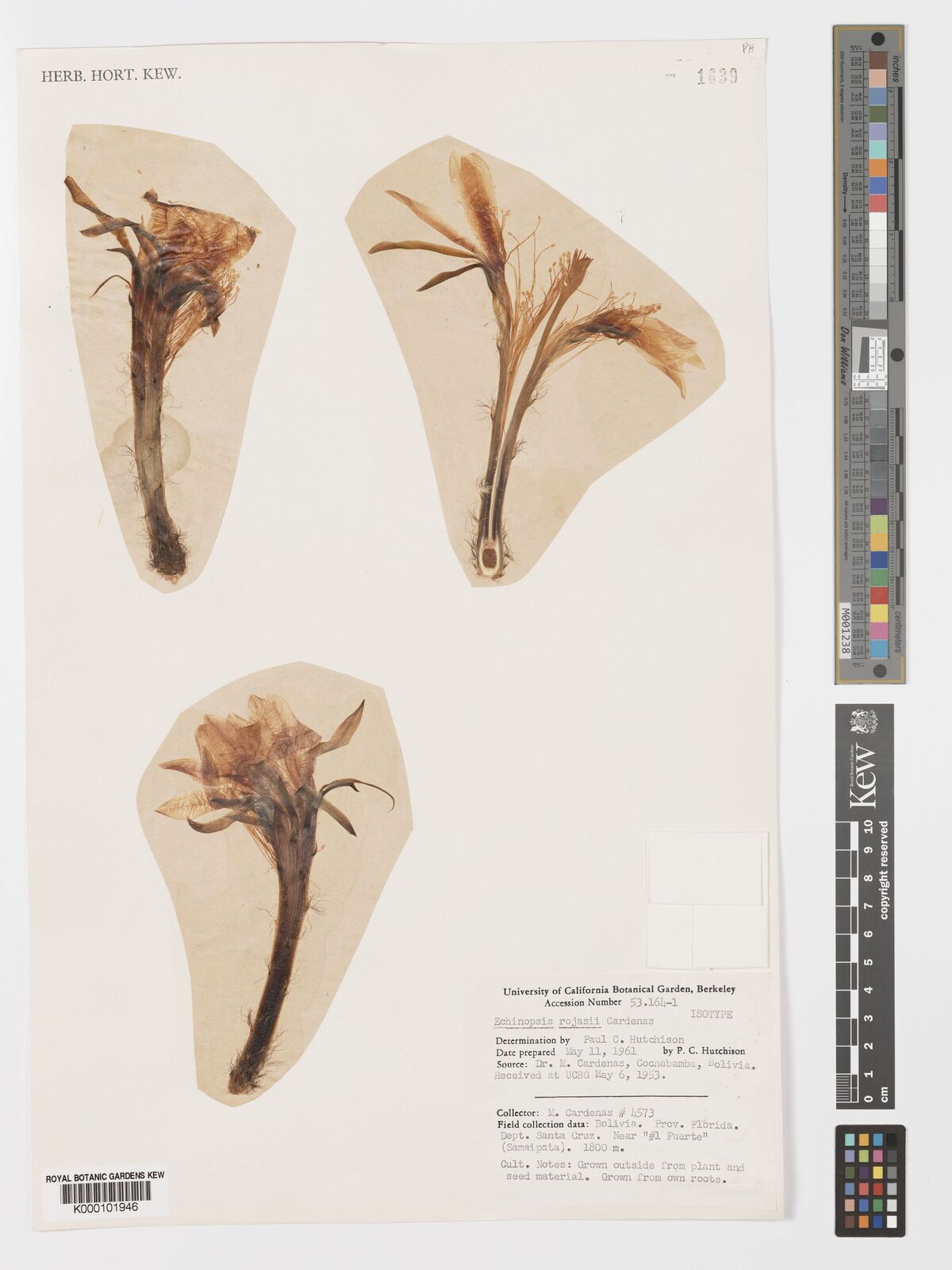 Reference image
Rojas's Echinopsis
Echinopsis rojasii is a highly ornamental and resilient cactus species belonging to the Cactaceae family, native to the seasonally dry tropical valleys of Bolivia 1. It is well-loved by succulent enthusiasts for its easy-to-grow nature and large, spectacular funnel-shaped flowers.
Classified under the genus Echinopsis, the species was named in honor of Teodoro Rojas, a notable botanist who contributed extensively to South American flora research 2. Within the genus, its distinctive spine arrangement and ribbed stem architecture define its taxonomic identity.
This species is endemic to Bolivia, thriving primarily in seasonally dry tropical biomes and rocky slopes 1. It grows in gravelly soils and open, scrubby terrains where it has adapted to endure prolonged droughts and high diurnal temperature fluctuations.
Developing as a succulent subshrub, Echinopsis rojasii features a cylindrical or slightly globose green stem with prominent ribs. The areoles bear sharp, light-colored spines. During the active growing season in spring and summer, it produces large, showy, funnel-shaped flowers that are typically white or pale pink.
In cultivation, it requires ample bright, indirect light or filtered sun. The soil must dry out completely between waterings to prevent root pathogens. During winter, a cool and dry resting period is crucial for encouraging healthy growth and blooming in the subsequent spring.
The most prevalent issue is overwatering coupled with poor-draining soil, which quickly leads to root rot 2. Placing the plant in dim indoor areas also causes etiolation, making the stems thin, weak, and susceptible to pests.
Prefers bright, indirect sunlight or morning direct sun. Avoid harsh afternoon rays in summer.
Allow the potting medium to dry out entirely between waterings. Suspend watering in winter.
Highly porous cactus soil with plenty of mineral components like pumice, gravel, and sand.
Features sharp spines that can cause physical injury. Keep away from children and pets.
Very easy to care for, making it excellent for beginners who tend to underwater their plants.
Native to the rocky, gravelly slopes of Bolivia's seasonally dry tropical highland regions, adapted to dry climates.
