
Light
Filtered Sun
Prefers bright, filtered sunlight; protect from intense, direct midday summer sun to prevent scorching.
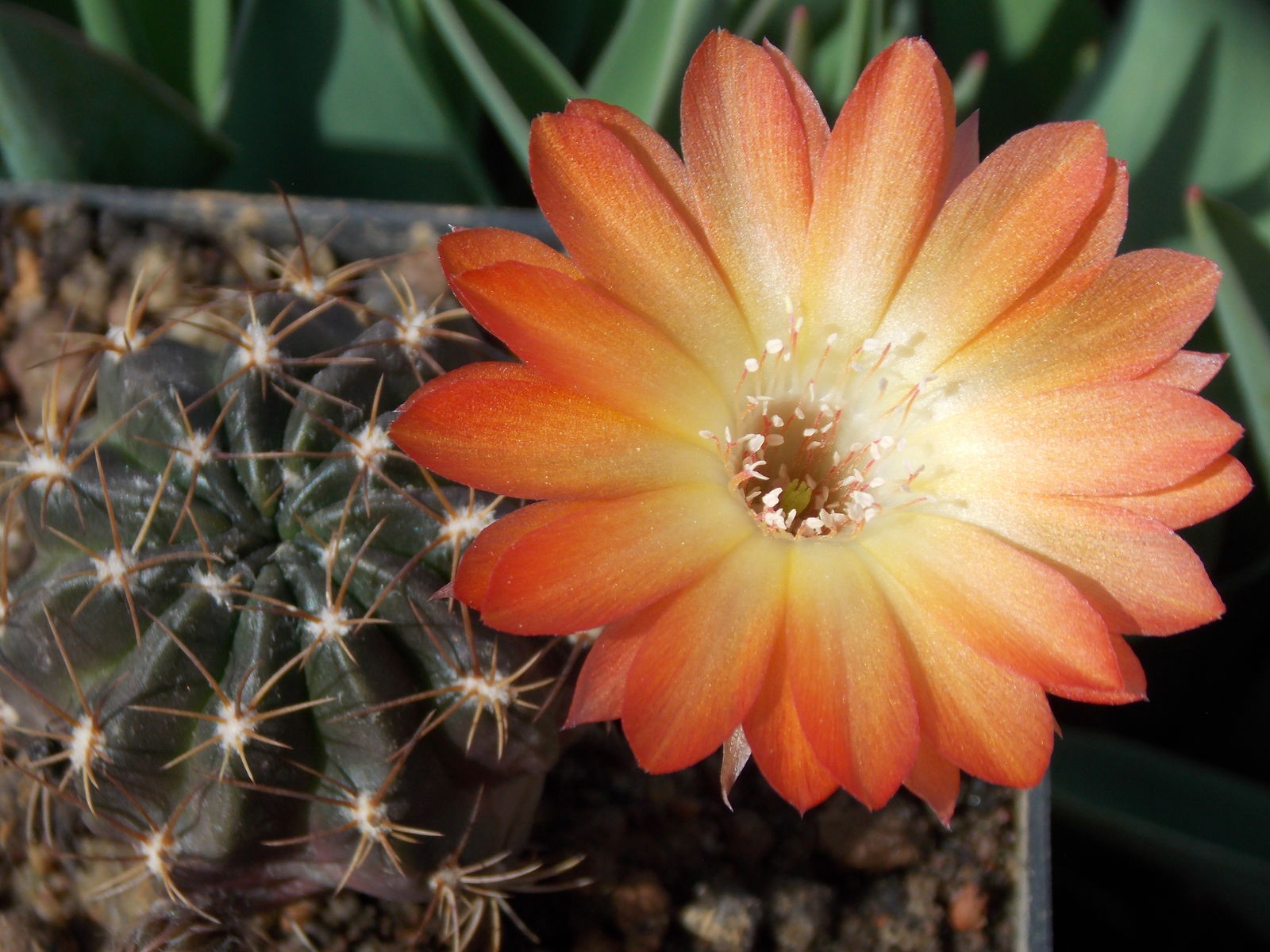 Reference image
Schiel's Echinopsis
Echinopsis schieliana (synonym Lobivia schieliana) is a small-growing, clumping perennial succulent subshrub in the Cactaceae family 1. Native to the high-altitude Andean regions of Peru and Bolivia, this species is highly valued in amateur collections and rock gardens.
Originally described in the mid-20th century, the species was named in honor of the German cactus enthusiast Schiel 2. While long categorized under the genus Lobivia, contemporary molecular taxonomy groups it within the broader genus Echinopsis 1.
This cactus thrives in the montane tropical biomes of the Andes, occurring at elevations between 3,000 and 4,000 meters 2. It grows primarily on rocky, well-draining slopes exposed to intense solar radiation and low organic matter.
The stems are globose to short-cylindrical, light green, clustering freely from the base to form dense cushions. Areoles bear numerous pectinate, thin, needle-like spines. In spring and summer, it produces vibrant funnel-shaped flowers in shades of red, orange, or yellow 1.
It requires a highly porous, mineral-rich substrate. While it enjoys bright conditions, filtered sunlight is preferred during intense summer heat. Kept completely dry in winter, it can tolerate brief frosts down to -2°C 2.
Overwatering and poor soil drainage are the most frequent causes of root rot. Additionally, keeping the plant warm and wet during winter prevents the essential dormancy period needed for spring flowering.
Prefers bright, filtered sunlight; protect from intense, direct midday summer sun to prevent scorching.
Allow the soil to dry out completely between waterings. Keep absolutely dry throughout the winter cold.
Thrives in a highly porous mineral mix with plenty of pumice, perlite, and coarse sand.
Non-toxic to pets, but the sharp pectinate spines can cause mechanical injury. Keep out of reach.
Very easy to grow if watering is kept minimal and winter dormancy is properly maintained.
Hailing from the high-altitude montane tropical zones of the Andes, this species is adapted to intense sunlight, dry air, and rocky, nutrient-poor soils that experience sharp temperature drops at night.
