
Light
Bright Indirect Light
Requires bright, indirect sunlight or partial morning sun; protect from scorching midday sun.
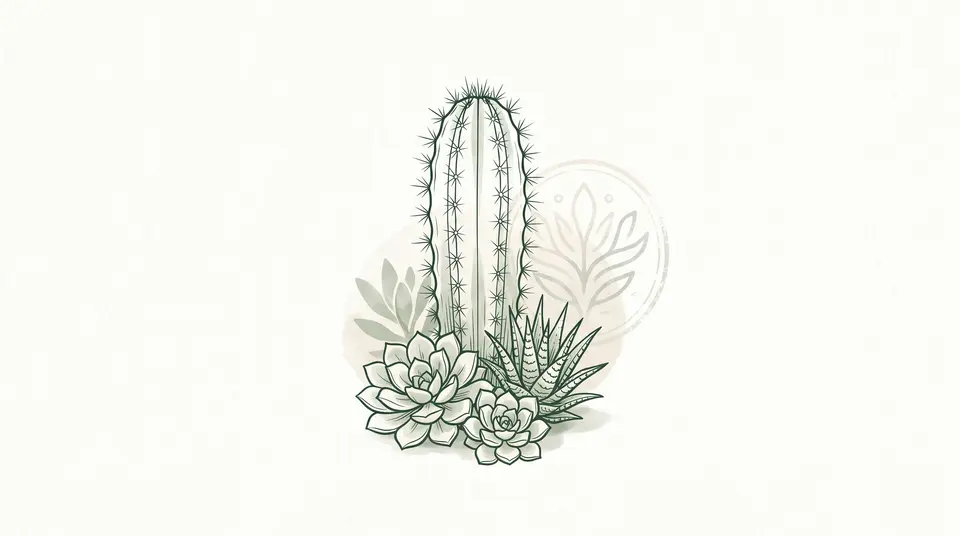 Reference image
Serpentine Echinopsis
Echinopsis serpentina is an intriguing succulent subshrub in the Cactaceae family, known for its sprawling, trailing, or semi-erect growth habit. It makes an excellent addition to hanging baskets and rock gardens due to its uniquely flexible stems and spectacular nocturnal blooms 1.
Belonging to the diverse Echinopsis genus, this species shares characteristics with plants formerly classified under Trichocereus. Its specific epithet 'serpentina' translates to snake-like, referring directly to its long, curving, and cylindrical stems 2.
This species is native to Western South America, particularly the dry valleys and subtropical scrublands of Bolivia and Peru. In these regions, it thrives on rocky slopes where rainwater drains away quickly, often sheltered slightly by larger shrubs 1.
The stems are elongated, green, and structured with multiple ribs lined with small areoles and short, needle-like spines. During its active blooming period in late spring or summer, it produces large, funnel-shaped white flowers that open at night and attract nocturnal pollinators 2.
In cultivation, Echinopsis serpentina prefers bright, filtered sunlight and a highly porous substrate. It is highly drought-tolerant and requires watering only when the soil is completely dry. Adequate air circulation and dry winter conditions are necessary for its longevity 1.
Overwatering is the primary cause of failure, quickly leading to root rot. Keeping the plant in a pot without drainage holes or using heavy, clay-rich soil will suffocate the roots. Lack of light results in weak, stretched stems (etiolation) and a lack of flowers.
Requires bright, indirect sunlight or partial morning sun; protect from scorching midday sun.
Allow the substrate to dry out completely between waterings. Reduce watering to a minimum in winter.
Use a coarse, mineral-rich, and fast-draining cactus soil mix with plenty of pumice.
Non-toxic to pets, but has sharp spines. Handle with thick gardening gloves.
Very easy for beginners, provided it is kept dry in winter and receives adequate light.
Indigenous to the rugged mountain slopes and subtropical dry shrublands of Bolivia and Peru, where it grows in porous, gravelly soil under the light shade of larger vegetation.
