
Light
Direct Sun
For maximum growth and flowering, a location that receives direct sunlight is ideal. However, under very intense midday sun, scorching can occur, in which case a light midday shade might be beneficial.
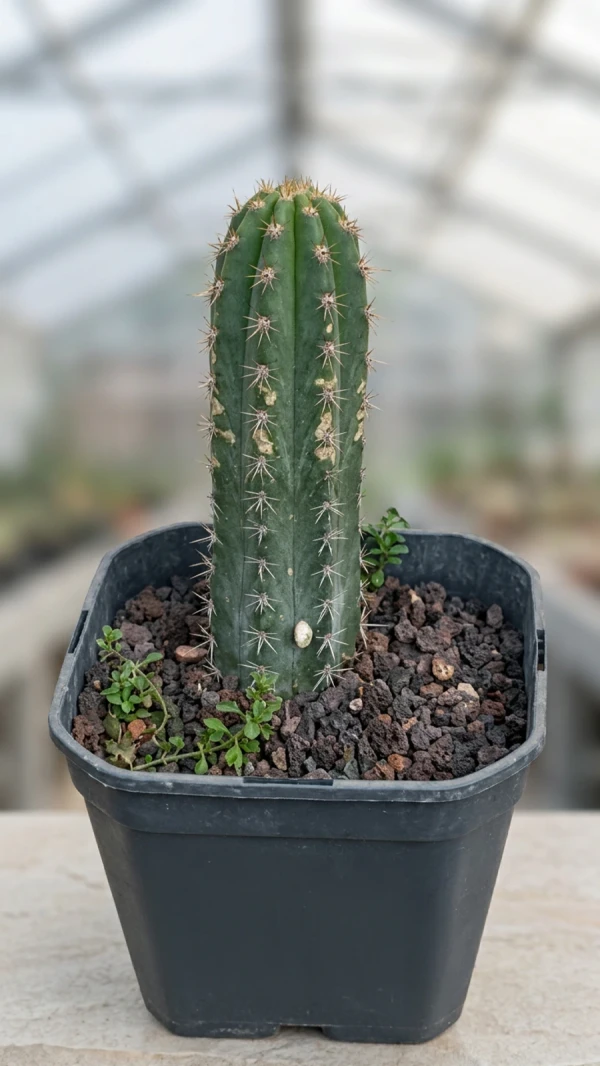
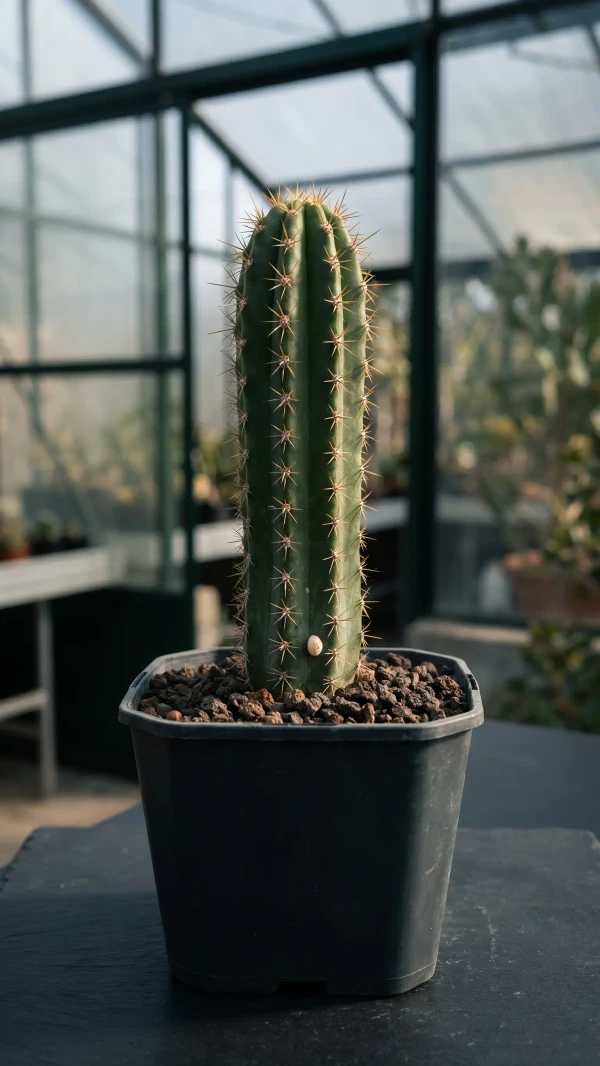
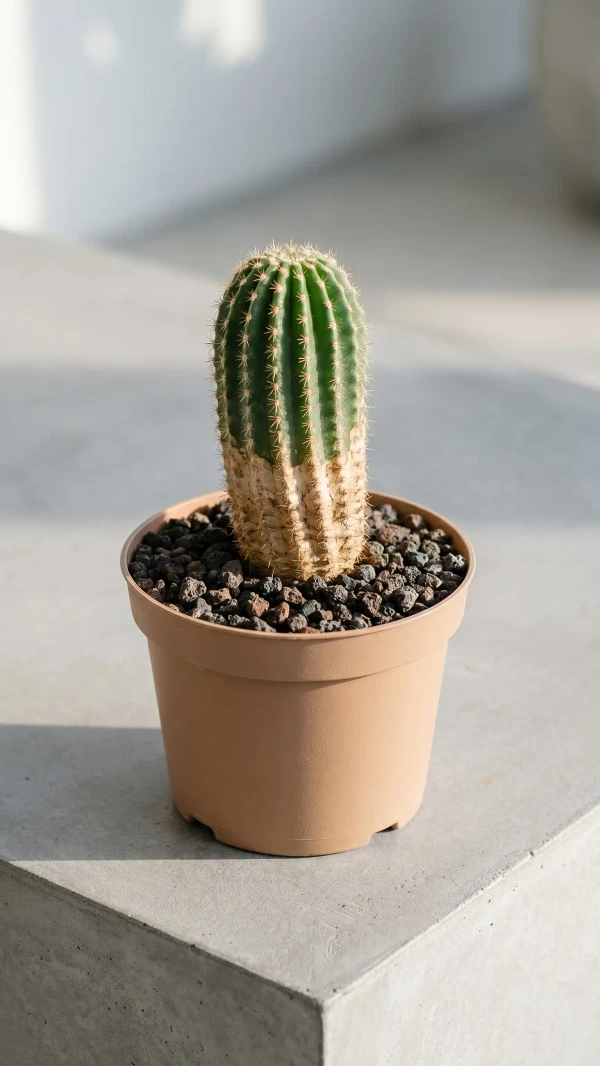
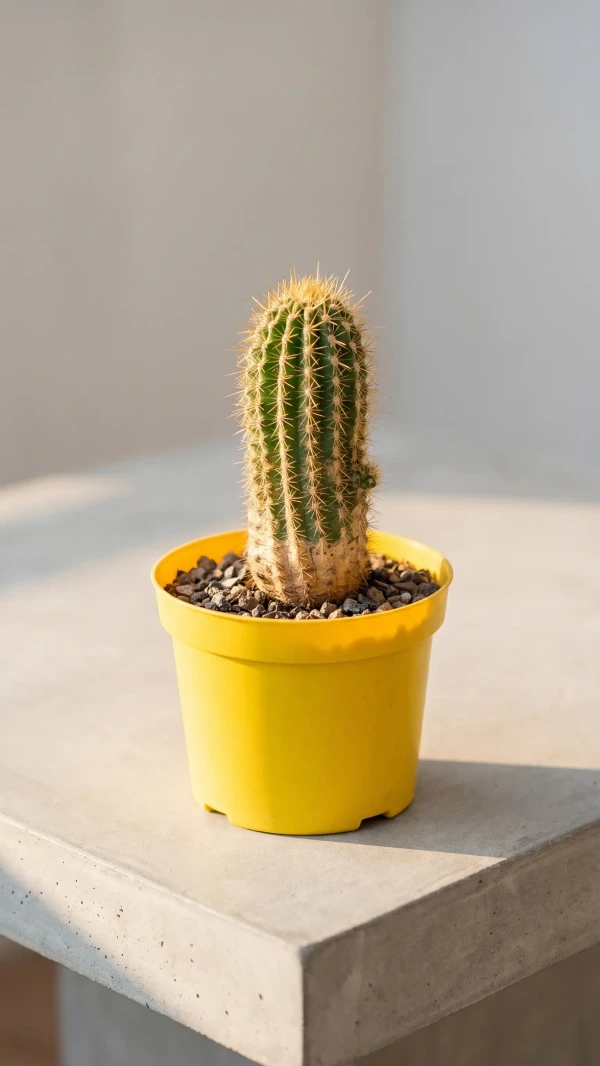
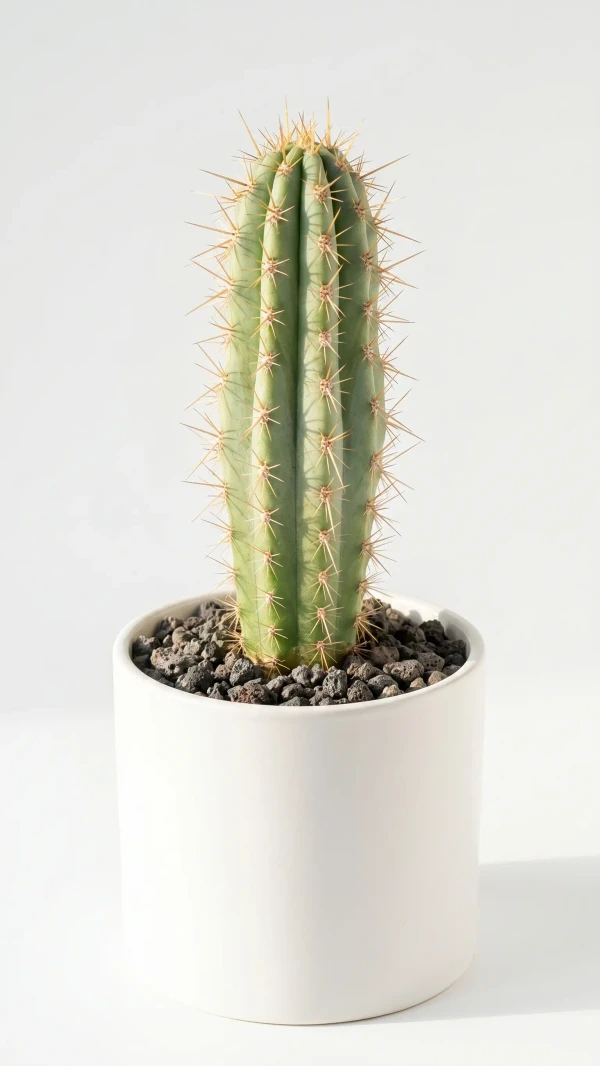
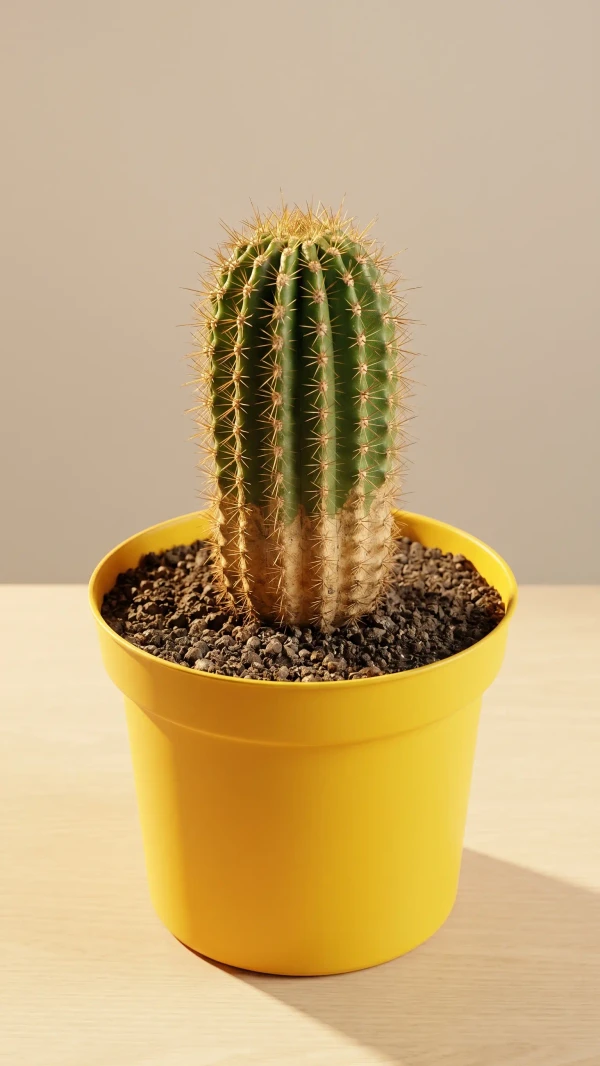
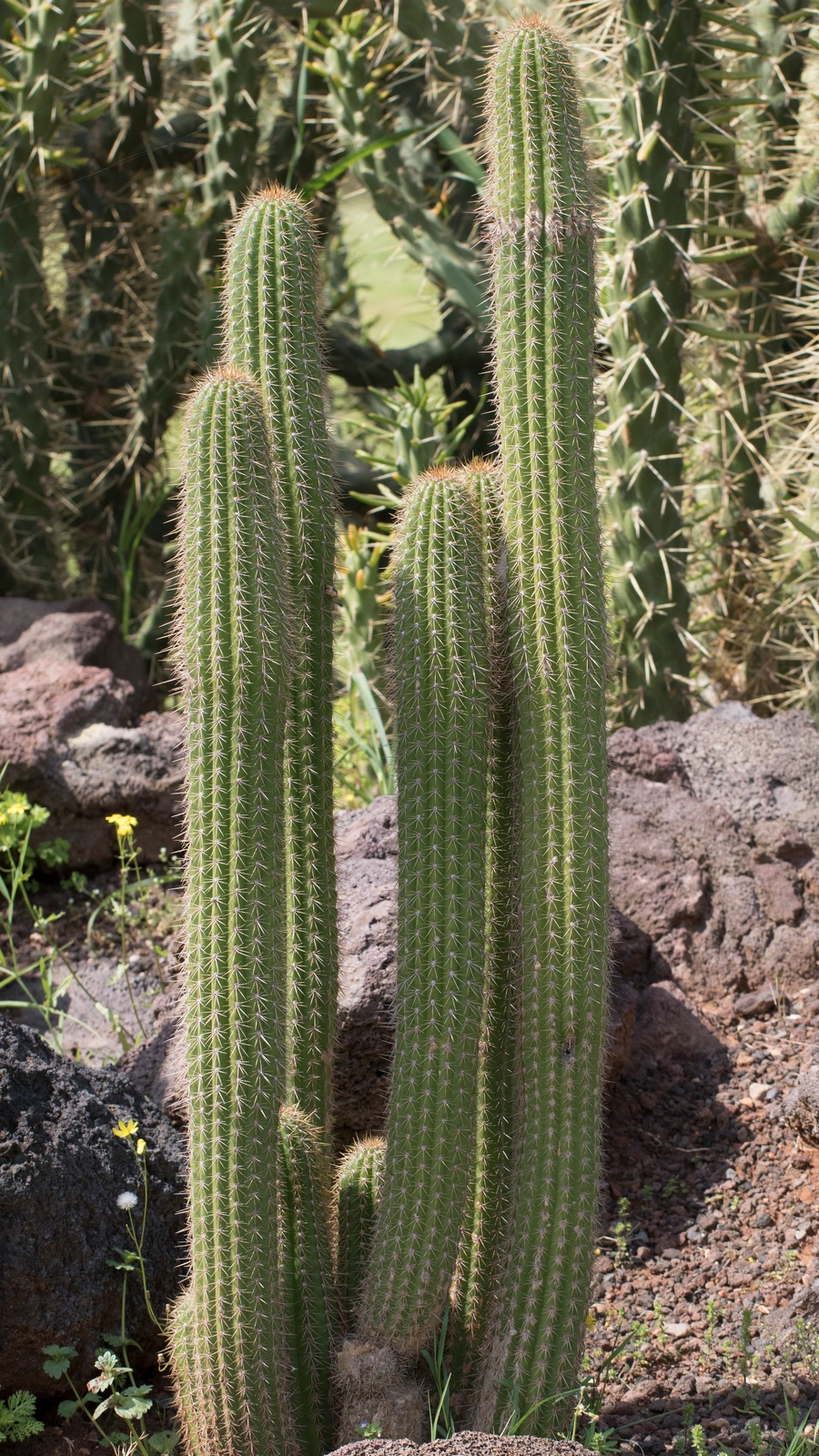 Reference image
Torch Cactus
Echinopsis spachiana, commonly known as the Torch Cactus or White Torch Cactus, is a columnar cactus species belonging to the Cactaceae family. Its natural habitat spans the arid regions of South America. The plant is named after the German botanist Eduard Spach. This species typically features upright, unbranched, or slightly branched stems from the base, which can grow up to 1.5 to 2 meters tall over time. It begins with a globose form when young, gradually developing into its characteristic columnar structure as it matures 1.
The stem of Echinopsis spachiana is characterized by usually 8 to 14 prominent, sharply edged ribs, giving the plant a distinctive fluted appearance. Areoles, which are woolly or hairy structures, are spaced evenly along each rib and typically bear yellowish-brown spines. The spines are generally short and stiff, serving as part of the plant's defense mechanism.
This cactus species produces large, funnel-shaped, beautiful white flowers during the summer months. The flowers typically open at night, emitting a strong fragrance to attract pollinators. Although the blooming period is short, it significantly contributes to the overall aesthetic appeal of the plant. Echinopsis spachiana can be easily propagated both by seeds and stem cuttings, a characteristic that makes it popular among collectors and growers.
Echinopsis spachiana is native to several South American countries, including northwestern Argentina, Bolivia, Paraguay, and Uruguay. It commonly thrives in dry scrublands, semi-deserts, and at the foothills of mountainous regions. It is highly tolerant of drought and high temperatures. Due to its wide natural distribution and ease of cultivation, it is not considered under specific threat on the IUCN Red List 2.
References:
For maximum growth and flowering, a location that receives direct sunlight is ideal. However, under very intense midday sun, scorching can occur, in which case a light midday shade might be beneficial.
Water only when the soil has completely dried out. During winter, as the plant enters dormancy, significantly reduce the amount and frequency of watering. Overwatering can lead to root rot.
Opt for a well-draining, sandy, and mineral-rich soil mix specifically formulated for cacti and succulents. Ensure the pot has a drainage hole at the bottom.
Torch Cactus is generally non-toxic to humans and pets. However, its sharp spines can cause skin irritation or pricks, so it should be handled with care.
This is an easy-to-care-for cactus species, highly suitable for beginners. It grows without issues when basic cactus care principles are applied.
Echinopsis spachiana is native to various parts of South America, particularly the arid and semi-arid regions of Argentina, Bolivia, Paraguay, and Uruguay. In these areas, it typically grows naturally in rocky and sandy terrains, on slopes receiving abundant sunlight.
