
Light
Direct Sun
Requires at least 6 hours of direct sunlight daily; etiolates in low light.
Golden Spine Echinopsis
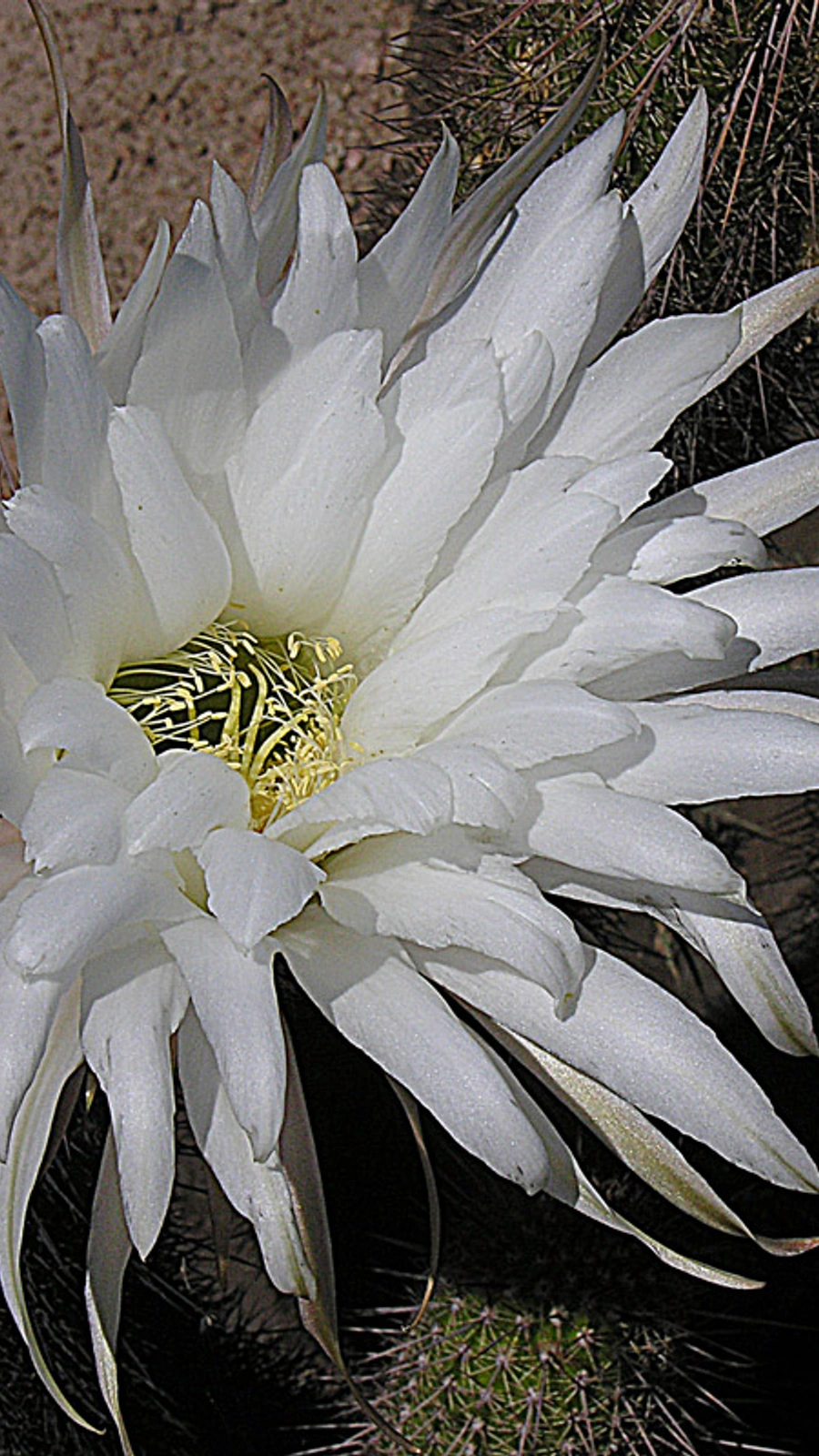
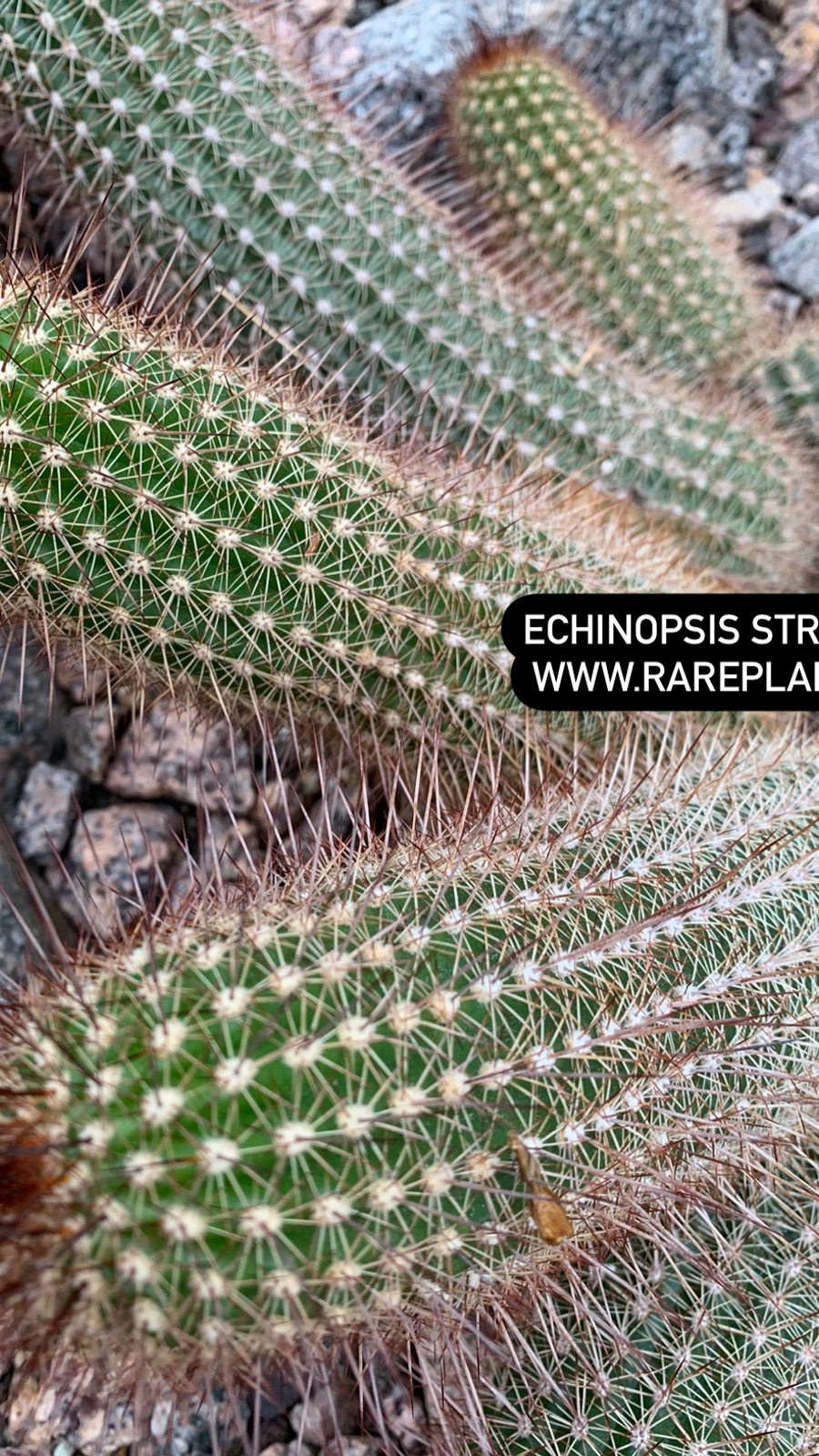
Echinopsis strigosa is a multi-branched, columnar cactus species belonging to the Cactaceae family. Known for its dense, golden-yellow to whitish spines and large, nocturnal white flowers, it is highly valued for its striking desert aesthetic.
The species was first described in 1834 by Salm-Dyck as Cereus strigosus 1. Following taxonomical reorganizations in the cactus family, it was transferred to the genus Echinopsis. Modern molecular studies sometimes classify it under the genus Soehrensia 2.
This species is native to western and northwestern Argentina, including the provinces of San Juan, San Luis, Mendoza, La Rioja, Catamarca, and Tucumán 1. It thrives in arid shrublands, rocky slopes, and sandy desert soils at elevations between 500 and 2000 meters.
It forms low, dense clumps branching from the base. Individual stems are cylindrical, reaching up to 60 cm in height and 5-6 cm in diameter, featuring 15 to 20 ribs. The prominent areoles bear numerous needle-like, golden-yellow to brownish spines. The funnel-shaped white flowers are up to 20 cm long and bloom during the night.
Echinopsis strigosa requires maximum sunlight exposure and highly porous, mineral-rich soil. Watering should be deep but infrequent during the active growing season, allowing the medium to dry completely. In winter, the plant must be kept dry and cool.
Overwatering and poorly drained soils are the primary causes of root rot. Lack of adequate sunlight leads to etiolation (weak, stretched growth) and prevents the plant from flowering.
Requires at least 6 hours of direct sunlight daily; etiolates in low light.
Water thoroughly only when the soil is dry. Keep completely dry in winter.
Needs a highly porous mineral mix with pumice, coarse sand, and perlite.
Features sharp, needle-like spines. Handle with thick gloves and keep away from pets.
Very easy to care for, provided you do not overwater or let it freeze in damp conditions.
Endemic to the dry, stony slopes and sandy flats of western and northwestern Argentina, adapted to harsh desert environments.
