
Light
Direct Sun
Requires full sun or bright direct sunlight to grow healthy spines.
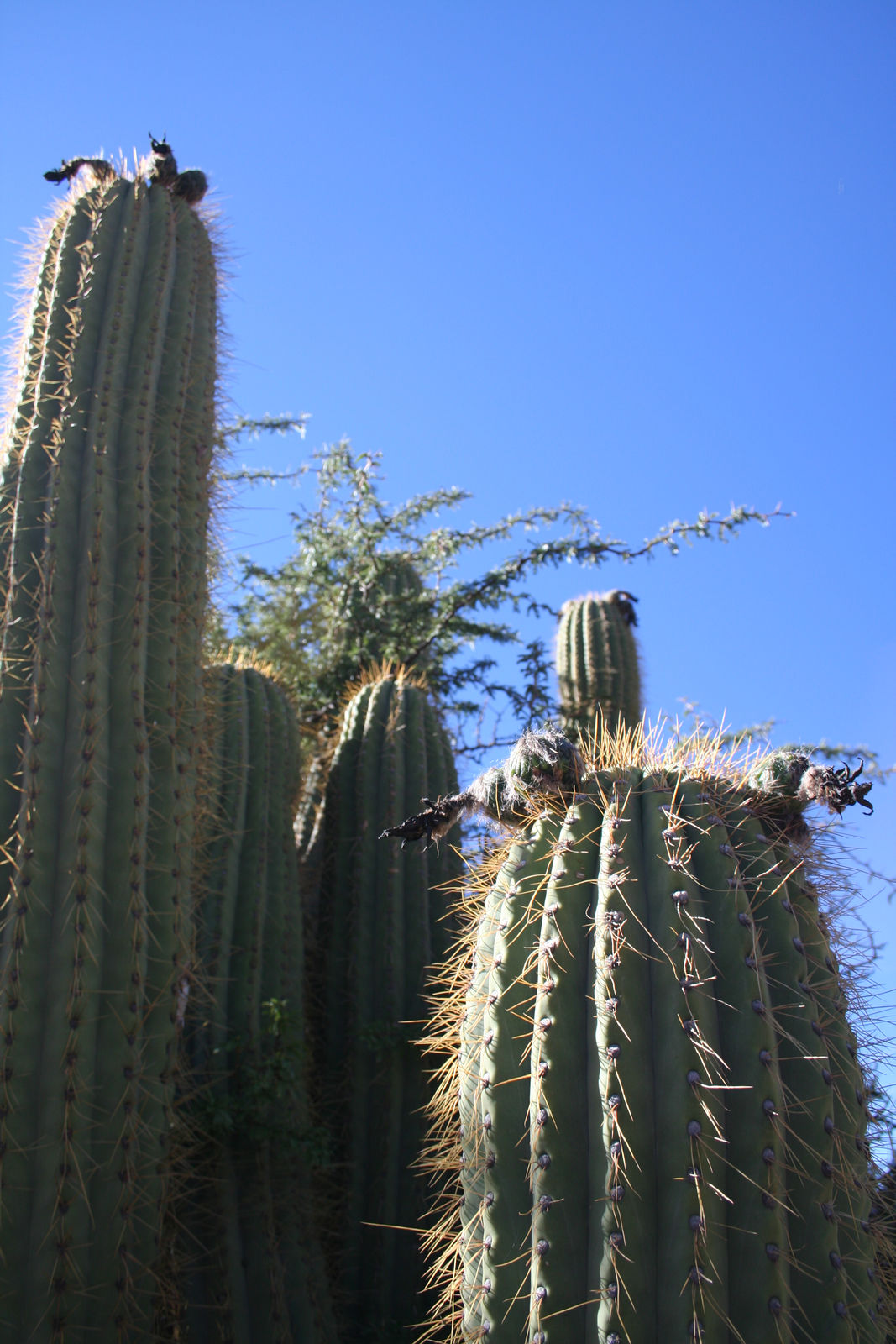 Reference image
Tacaquira Cactus
Echinopsis tacaquirensis is a robust, columnar cactus native to the high-altitude, semi-arid regions of Bolivia. Belonging to the Cactaceae family, this species grows as a large shrub or small tree, adding dramatic vertical structure to arid gardens and collections 1.
Named after the Tacaquira region in Bolivia where it was collected, this species is classified under the genus Echinopsis 2. It is frequently referred to as Trichocereus tacaquirensis in older literature and among traditional collectors who favor the segregate genera.
It is endemic to the dry, rocky valleys of southern Bolivia, particularly in Chuquisaca, Tarija, and Potosi, thriving at elevations between 2,000 and 3,300 meters above sea level 1. It has adapted to survive intense solar radiation and significant day-night temperature fluctuations.
The plant forms erect, dark-green stems that branch from the base, reaching heights of 1 to 3 meters. Stems feature numerous prominent ribs lined with large areoles. These areoles produce stout, sharp spines that transition from pinkish-brown to grey with age. Large, funnel-shaped white to pale pink flowers bloom near the branch tips 2.
In cultivation, it requires conditions that mimic its high-altitude desert habitat. Bright, direct sunlight is essential for healthy spine development and flowering. Soil must be highly porous and fast-draining, and water should be applied only when the substrate is dry.
Overwatering, especially during the cold winter dormancy, is the primary cause of root rot 1. Inadequate sunlight causes etiolation, where stems stretch and become weak and discolored.
Requires full sun or bright direct sunlight to grow healthy spines.
Water only when the soil is completely dry; stop watering in winter.
Use a fast-draining, mineral-based cactus mix with plenty of grit.
Possesses sharp, strong spines; handle with care and keep away from pets.
Very easy to maintain, making it perfect for novice succulent growers.
Native to the high-elevation rocky valleys and dry scrublands of southern Bolivia.
