
Light
Direct Sun
Requires at least 6 hours of direct sunlight daily to maintain its structural form and spines.
 Reference image
 Reference image
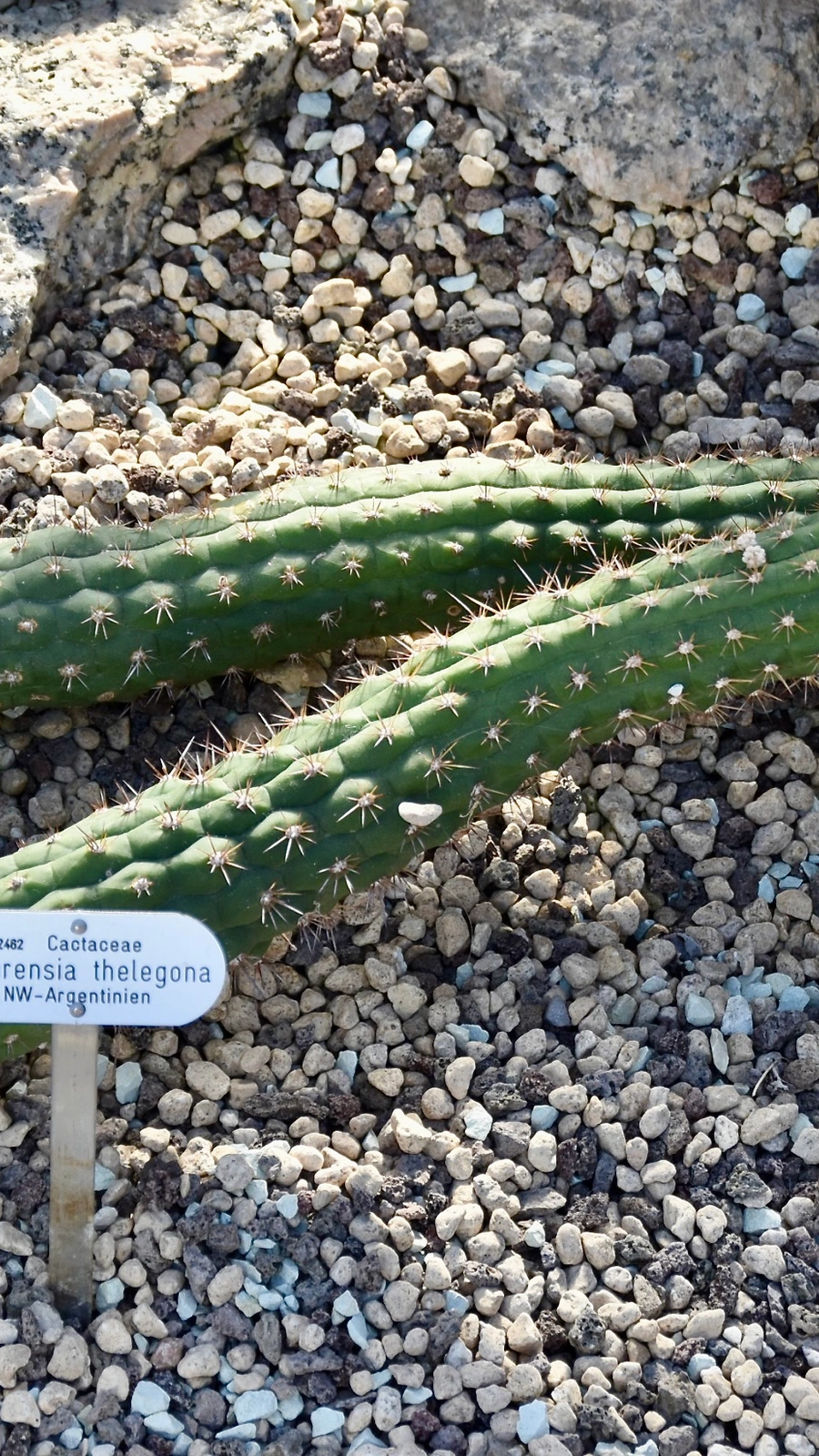
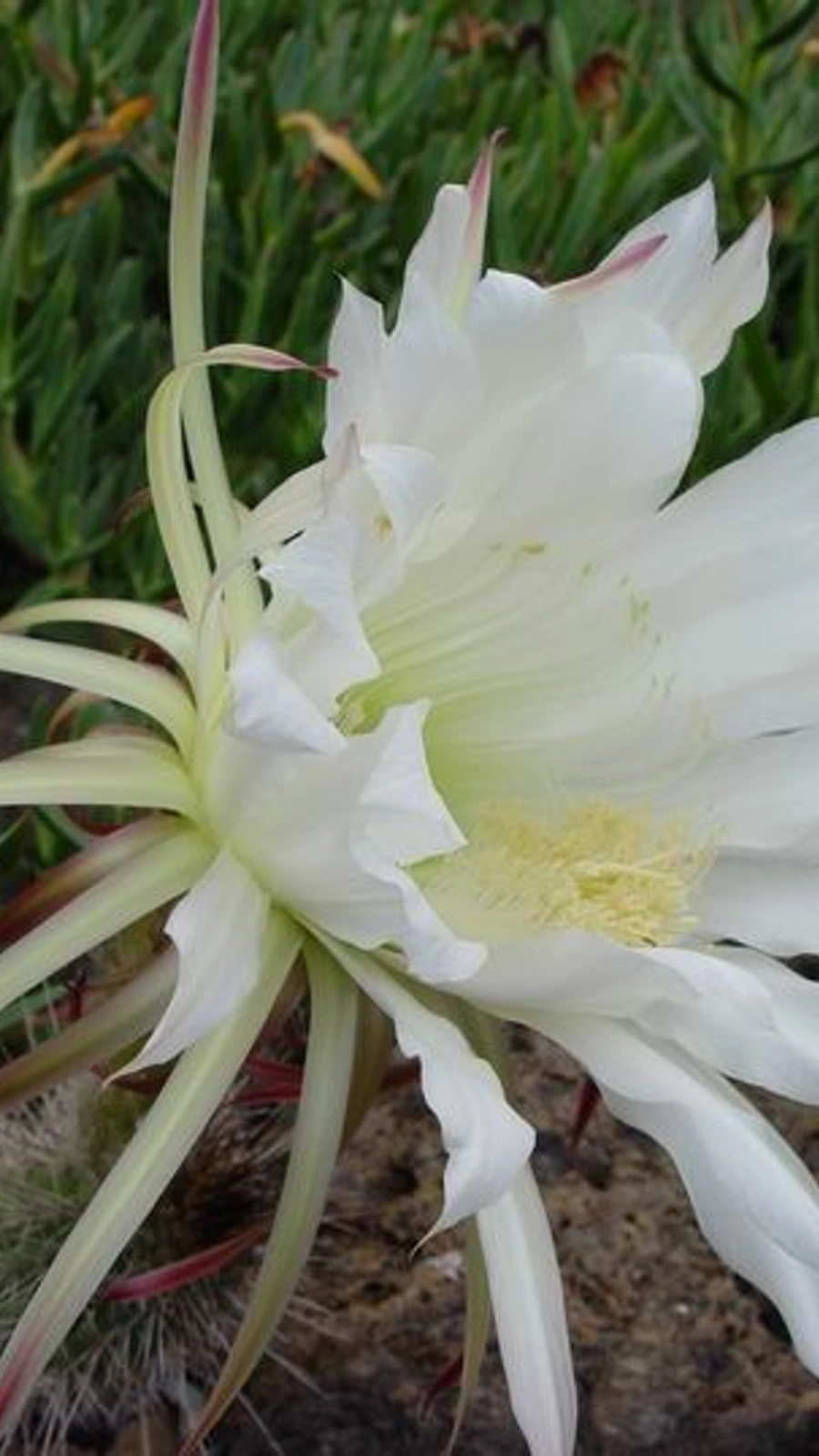
Echinopsis thelegona (syn. Trichocereus thelegonus) is a distinct, decumbent or semi-prostrate columnar cactus species belonging to the family Cactaceae 1. Highly sought after by collectors, it is prominent for its beautifully tessellated stems and spectacular, nocturnal white flowers.
Originally described by Weber in 1897 as Cereus thelegonus, it was later classified under Trichocereus and subsequently integrated into the genus Echinopsis 1. The specific epithet 'thelegona' is derived from the Greek terms describing the nipple-like, polygonal tubercles that ornament its ribs 2.
This species is native to northwestern Argentina, specifically across the provinces of Salta, Tucumán, Catamarca, and Jujuy 1. It thrives in dry shrublands and deciduous forests at elevations ranging from 500 to 1000 meters above sea level 2.
The stems are dark green, cylindrical, and grow up to 2 meters long, often prostrating along the ground. The ribs (usually 12-13) are deeply divided into prominent hexagonal tubercles. The areoles carry sharp, yellowish-brown spines. Its magnificent funnel-shaped flowers are pure white, opening at night and releasing a subtle fragrance 2.
Echinopsis thelegona prefers bright, direct sunlight and excellent air circulation. During the growing season, water thoroughly only when the substrate is fully dry. Keep dry in winter. It can tolerate brief cold spells down to -5°C if kept dry 2.
Overwatering and using heavy, poorly draining soils are the primary causes of root rot. Lack of sufficient sunlight leads to etiolation, where the stems grow thin, weak, and pale.
Requires at least 6 hours of direct sunlight daily to maintain its structural form and spines.
Allow soil to dry out completely between waterings. Keep bone dry throughout the winter.
Thrives in a fast-draining, mineral-based substrate containing pumice, perlite, and coarse sand.
Equipped with sharp spines. Keep away from high-traffic areas, children, and pets.
Very easy to care for as long as it receives maximum light and is not overwatered.
Naturally distributed in the dry foothills, slopes, and deciduous woodlands of Salta, Catamarca, Jujuy, and Tucumán provinces in Argentina.
