
Light
Bright Indirect Light
Bright indirect light or filtered sun; protect from scorching midday sun.
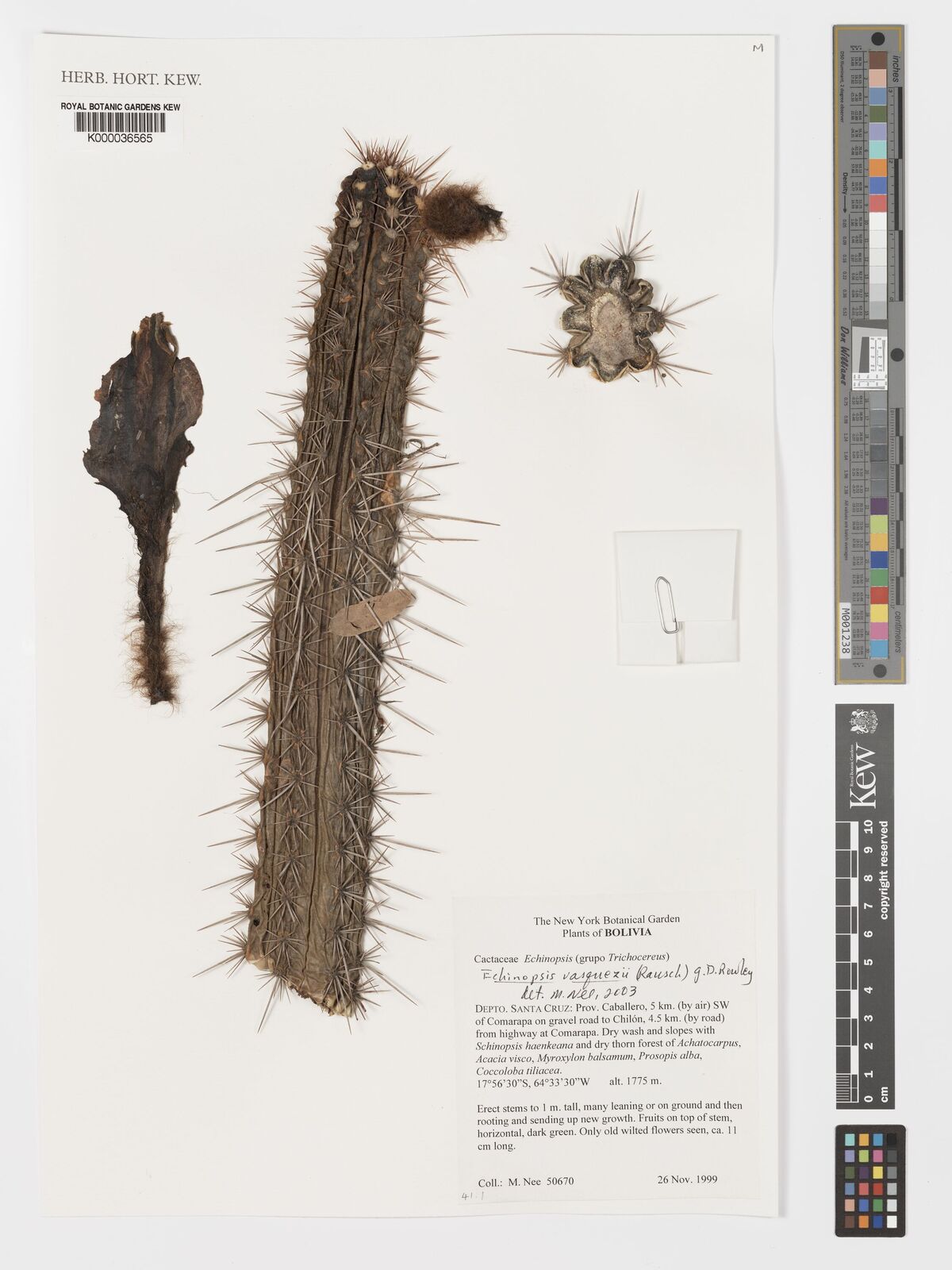 Reference image
Vasquez's Echinopsis
Echinopsis vasquezii is a distinct, shrubby succulent cactus belonging to the family Cactaceae. Native to the semi-arid, high-altitude regions of Bolivia, this plant is highly valued by collectors for its robust growth, dramatic spination, and resilient nature.
Classified under the genus Echinopsis, this species represents the diverse and often large-flowered cacti of South America. It has historical synonyms and classifications associating it with the genus Trichocereus 1. It is well-documented in regional flora studies of Bolivia 2.
The natural range of this species is restricted to Bolivia, primarily within dry shrublands and rocky desert valleys. It thrives in high-altitude dry climates where soils are highly mineralized, nutrient-poor, and extremely well-drained.
This species develops a branching, subshrub or shrubby habit with cylindrical, ribbed stems. The stems are green to grayish-green, featuring prominent ribs adorned with woolly aeroles. From these aeroles, stiff, needle-like spines emerge, ranging in color from pale yellow to dark brown. The large, nocturnal flowers are typically white.
Echinopsis vasquezii is exceptionally suited for container culture. It requires bright, indirect sunlight or partially filtered sun. Watering should follow the 'soak and dry' method, where the substrate is allowed to dry out completely between waterings. Winter requires a cool, dry dormancy period.
The most frequent cause of failure is overwatering, particularly in heavy, clay-rich soils, which inevitably leads to root rot. Insufficient light exposure causes etiolation, where the plant grows unnaturally thin and weak.
Bright indirect light or filtered sun; protect from scorching midday sun.
Soak and dry method. Keep completely dry in winter.
Mineral-rich, highly porous cactus soil with plenty of pumice.
Non-toxic but possesses sharp spines. Keep away from pets and children.
Very easy; ideal for beginners who can avoid overwatering.
Naturally distributed across the high-altitude arid valleys and eastern slopes of the Bolivian Andes, growing on gravelly, well-draining soils.
