
Light
Full Sun
Requires at least 6 hours of direct daily sunlight for strong spine growth.
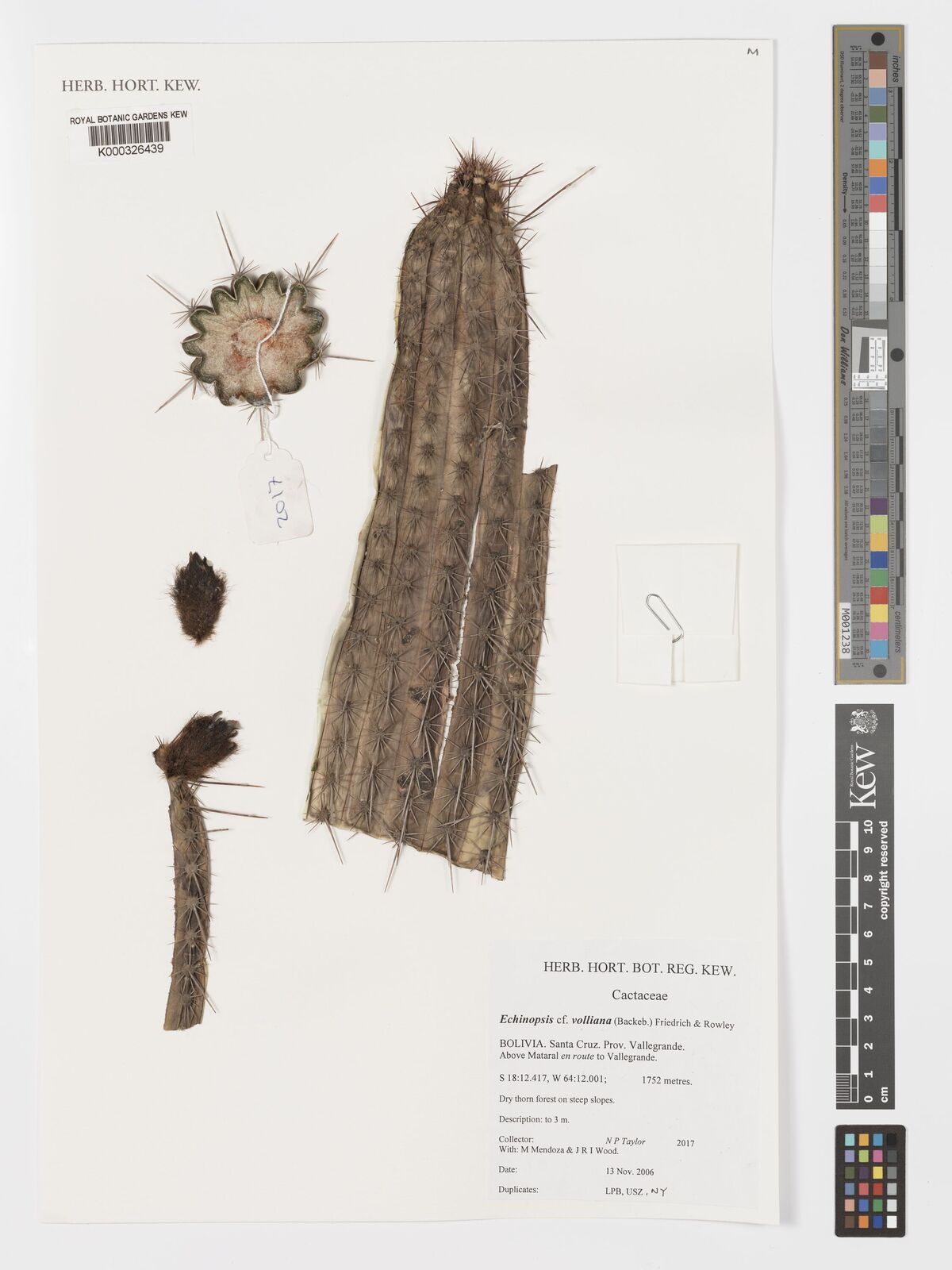 Reference image
Echinopsis volliana is a prominent, shrubby to treelike columnar cactus belonging to the Cactaceae family. Initially classified under the genus Trichocereus, this species is highly appreciated by collectors for its robust golden spination and architectural vertical growth 1. It is well-suited for both container culture and xeriscaping.
Scientifically known as Echinopsis volliana (with the major synonym Trichocereus vollianus), it is integrated into the diverse Echinopsis genus 1. The specific epithet 'volliana' honors historical botanical contributors associated with South American succulent research.
The native range of Echinopsis volliana is centered in Bolivia, specifically in the dry, rocky inter-Andean valleys and high-altitude scrublands 2. It has also become naturalized in parts of Southern Europe and Macaronesia, thriving in Mediterranean-style climates.
In its natural habitat, it forms a branched, columnar structure reaching up to 4 meters in height. The stems are bright green with distinct vertical ribs. Areoles bear sharp, golden to brownish-yellow spines. In summer, it produces large, nocturnal, funnel-shaped white flowers that emit a pleasant fragrance to attract pollinators 2.
Echinopsis volliana requires full sun exposure and excellent air circulation. During the active growing season (spring and summer), water thoroughly but allow the substrate to dry out completely between waterings. Provide a gritty, mineral-rich potting mix with high drainage. Keep the plant dry and cool during winter dormancy.
The most prevalent issue is overwatering combined with poorly draining soil, which quickly leads to root rot 1. Insufficient sunlight indoors causes etiolation, where the stems stretch and weaken. Keeping the plant too warm in winter prevents successful flowering in spring.
Requires at least 6 hours of direct daily sunlight for strong spine growth.
Allow soil to dry completely; avoid standing water at all costs.
Mineral-heavy mix with coarse sand, pumice, and minimal organic matter.
Non-toxic, but sharp spines present a physical hazard to pets and children.
Very easy to care for, making it ideal for beginners with sunny spaces.
Originating from the semi-arid, high-altitude Andean valleys of Bolivia, this cactus has evolved to withstand intense solar radiation and low moisture. It has also successfully naturalized in Southern Europe and Macaronesia due to comparable dry winter conditions.
