
Light
Bright Indirect Light
Protect from direct midday sun; bright indirect or dappled light is perfect.
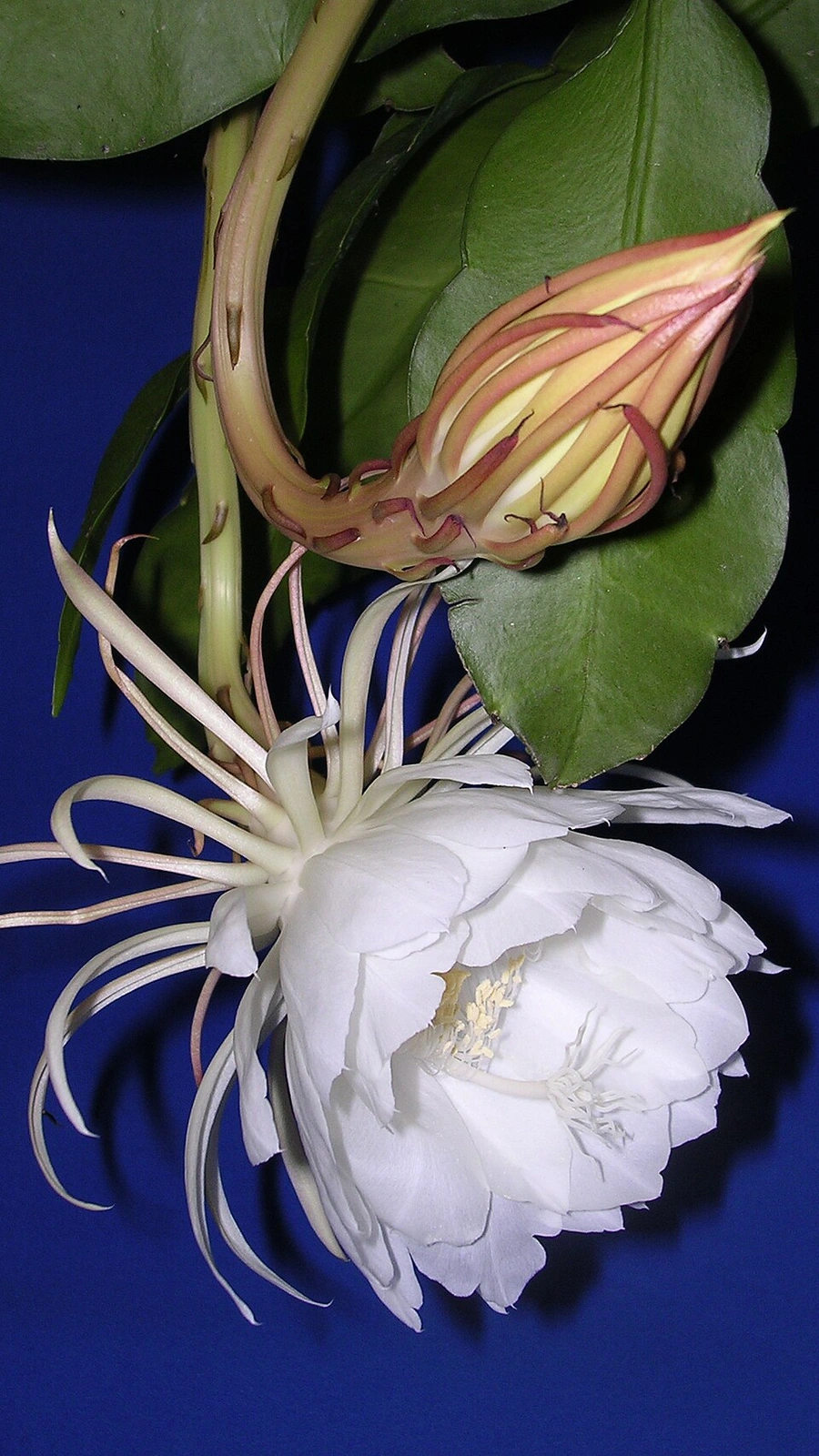
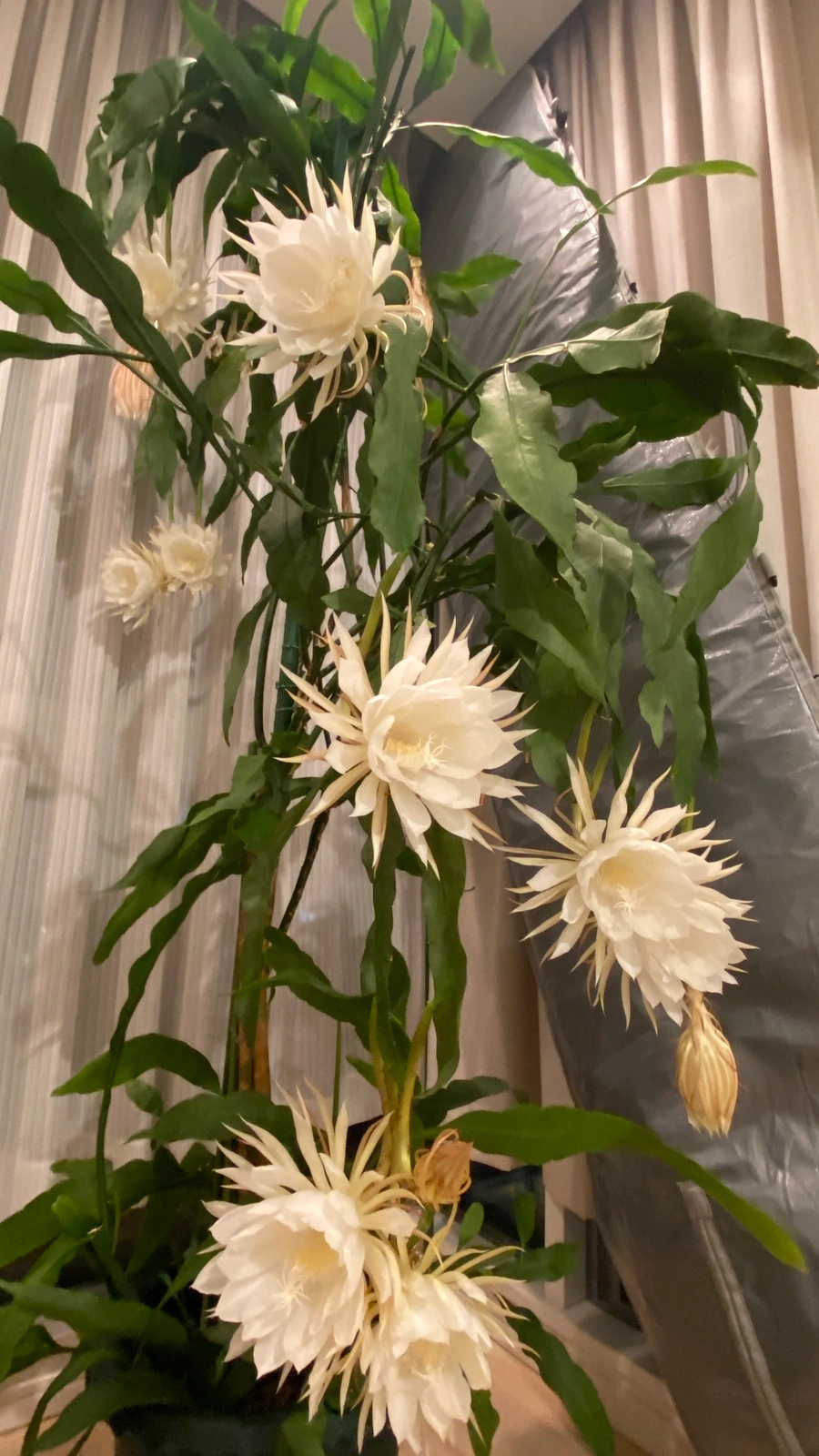
Queen of the Night (Dutchman's Pipe Cactus)
Epiphyllum oxypetalum, commonly known as the 'Queen of the Night' or 'Dutchman's Pipe Cactus', is a highly celebrated epiphytic cactus species. Renowned for its large, fragrant, nocturnal white flowers, this species belongs to the Cactaceae family and is widely cultivated as an ornamental plant 1.
Scientifically described in the early 19th century, the genus name Epiphyllum is derived from the Greek words meaning 'upon the leaf', referring to the flowers arising from the leaf-like cladodes. The specific epithet oxypetalum translates to 'acute petals', describing the sharp, pointed nature of its outer perianth segments 2.
Native to a broad range spanning from Mexico through Central America and parts of the Caribbean, Epiphyllum oxypetalum thrives in seasonally dry tropical forests 1. It grows primarily as an epiphyte, anchoring onto tree trunks, or occasionally as a lithophyte on rocky cliffs under the forest canopy 3.
The plant features long, arching, flat green stems (cladodes) that serve the photosynthetic function of leaves. The spectacular white flowers can reach up to 30 cm in length and 20 cm in width, opening rapidly after sunset and emitting a strong, sweet fragrance to attract nocturnal pollinators before wilting at dawn 3.
This species is easy to grow indoors. It requires bright, filtered light and a highly porous, organic potting mix similar to orchid media. Regular watering during the active growth season is essential, but water must drain freely to prevent root rot.
Overwatering and poor drainage are the primary causes of failure, quickly leading to root decay. Insufficient light during spring can lead to leggy growth and prevent the plant from producing its famous nocturnal blooms.
Protect from direct midday sun; bright indirect or dappled light is perfect.
Allow soil to dry slightly between waterings. Avoid soggy roots at all costs.
Use an airy, well-draining mixture of peat, perlite, and fine orchid bark.
Non-toxic to cats, dogs, and humans. A very safe plant to keep indoors.
Easy to moderate. Highly rewarding when provided with appropriate winter rest.
Native to the humid, tropical forests of Southern Mexico and Central America, where it grows nestled in tree branches, absorbing moisture from the humid air and seasonal rains.
