
Scientific taxonomy article
Auto-generated taxonomy record for Epiphyllum.
Epiphyllum
Auto generated taxonomy record for Epiphyllum.
Auto-generated taxonomy record for Epiphyllum.

Epiphyllum baueri
Epiphyllum baueri is an epiphytic cactus species belonging to the family Cactaceae. Known for its flattened, leaf like stems and fragrant, nocturnal blooms, it is a prized species among collectors of tropical cacti .

Epiphyllum cartagense
Epiphyllum cartagense is a captivating, night blooming epiphytic cactus belonging to the Cactaceae family . Commonly referred to as an orchid cactus, this plant grows on tree trunks in wet tropical forests, relying on high humidity and dappled light.

Epiphyllum chrysocardium
Epiphyllum chrysocardium, commonly known as the fern leaf cactus, is a stunning epiphytic cactus prized for its deeply lobed, dramatic foliage and spectacular nocturnal blooms.
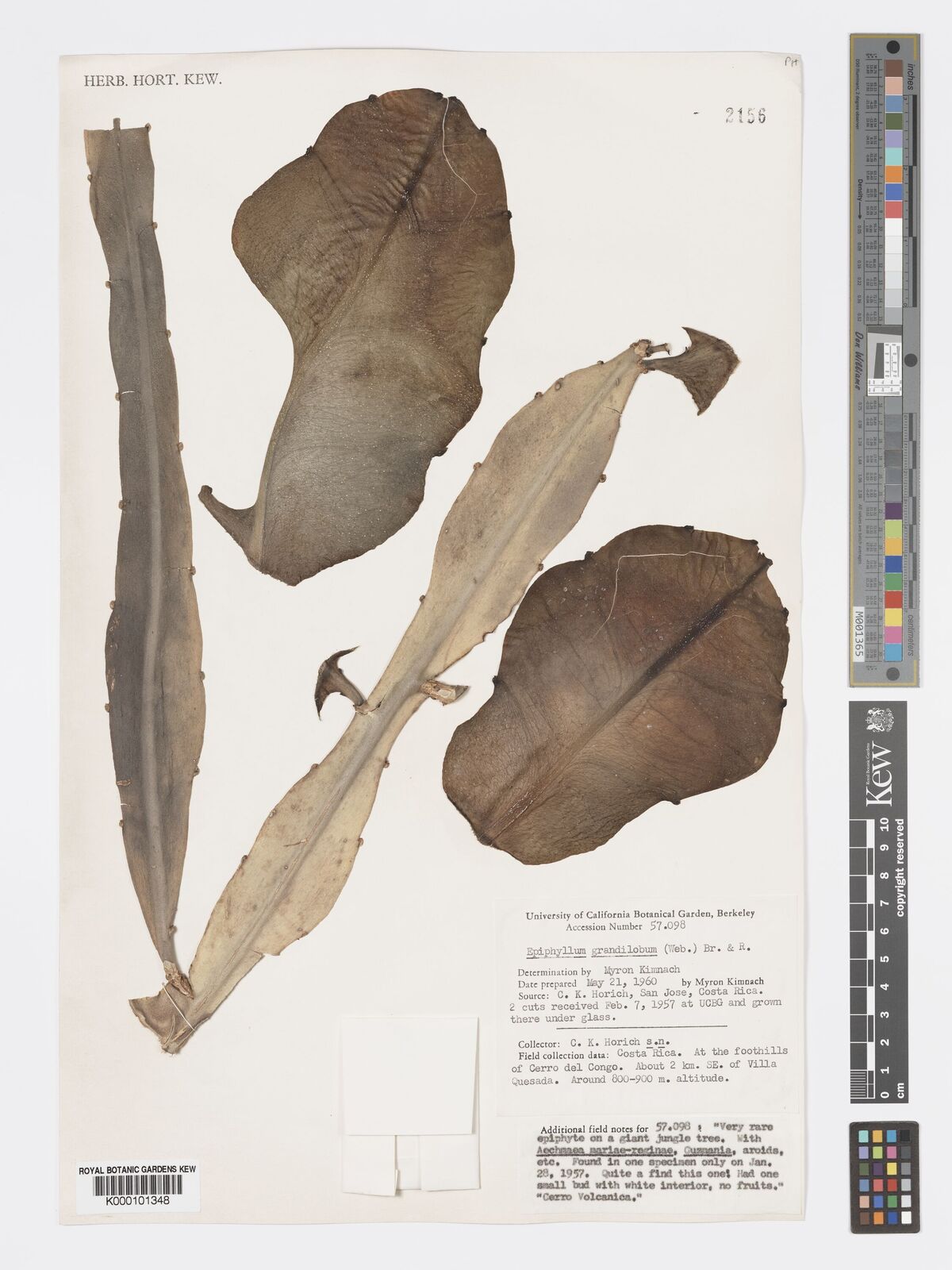
Epiphyllum grandilobum
Epiphyllum grandilobum is a striking epiphytic cactus species belonging to the family Cactaceae, highly recognized for its deeply lobed, leaf like flattened stems and nocturnal blooming habits . Unlike typical terrestrial desert cacti, this tropical epiphyte thrives on tree branches in rainforest canopies.

Epiphyllum hookeri
Epiphyllum hookeri , commonly known as Hooker's orchid cactus, is a striking epiphytic cactus species belonging to the Cactaceae family. Renowned for its nocturnal, fragrant, dinner plate sized white flowers and long, flattened, leaf like stems, this species is highly valued in tropical horticulture and as an elegant hanging houseplant .

Epiphyllum laui
Epiphyllum laui is an epiphytic cactus species belonging to the Cactaceae family, highly valued for its elegant funnel shaped flowers and trailing growth habit . Unlike many strictly nocturnal night blooming cereus species, this plant features diurnal elements, remaining open during the daytime.

Epiphyllum macropterum
Overview\nEpiphyllum macropterum is an epiphytic cactus species celebrated for its massive, nocturnal blooms and broad, leaf like flattened stems . Unlike desert cacti, it thrives in humid environments.\n\n Taxonomy and naming\nClassified under the tribe Hylocereeae within the Cactaceae family, this species showcases the typical epiphytic growth habit of the genus Epiphyllum . The specific epithet refers to its large, wing like stem margins.\n\n Natural distribution and habitat\nIt is native to wet tropical forests in Central and Southern America, specifically ranging across Guatemala, Honduras, and Panama . Here, it grows high in the canopy on host trees.\n\n Appearance\nThe plant features long, pendant, flattened green branches that act as leaves. The flowers are stunningly large, white, highly fragrant, and adapted to open exclusively at night to attract nocturnal pollinators .\n\n Cultivation and care\nIt requires a well aerated, organic rich substrate, frequent misting to maintain high humidity, and protection from direct midday sun. Water thoroughly but allow the top layer to dry out slightly between waterings.\n\n Common care mistakes\nOverwatering in heavy soils leads to root rot, while placing the plant in dry, low humidity rooms prevents flowering and causes stem tip dieback .\n\n References\n Plants of the World Online (POWO), Royal Botanic Gardens, Kew.\n IPNI, International Plant Names Index.
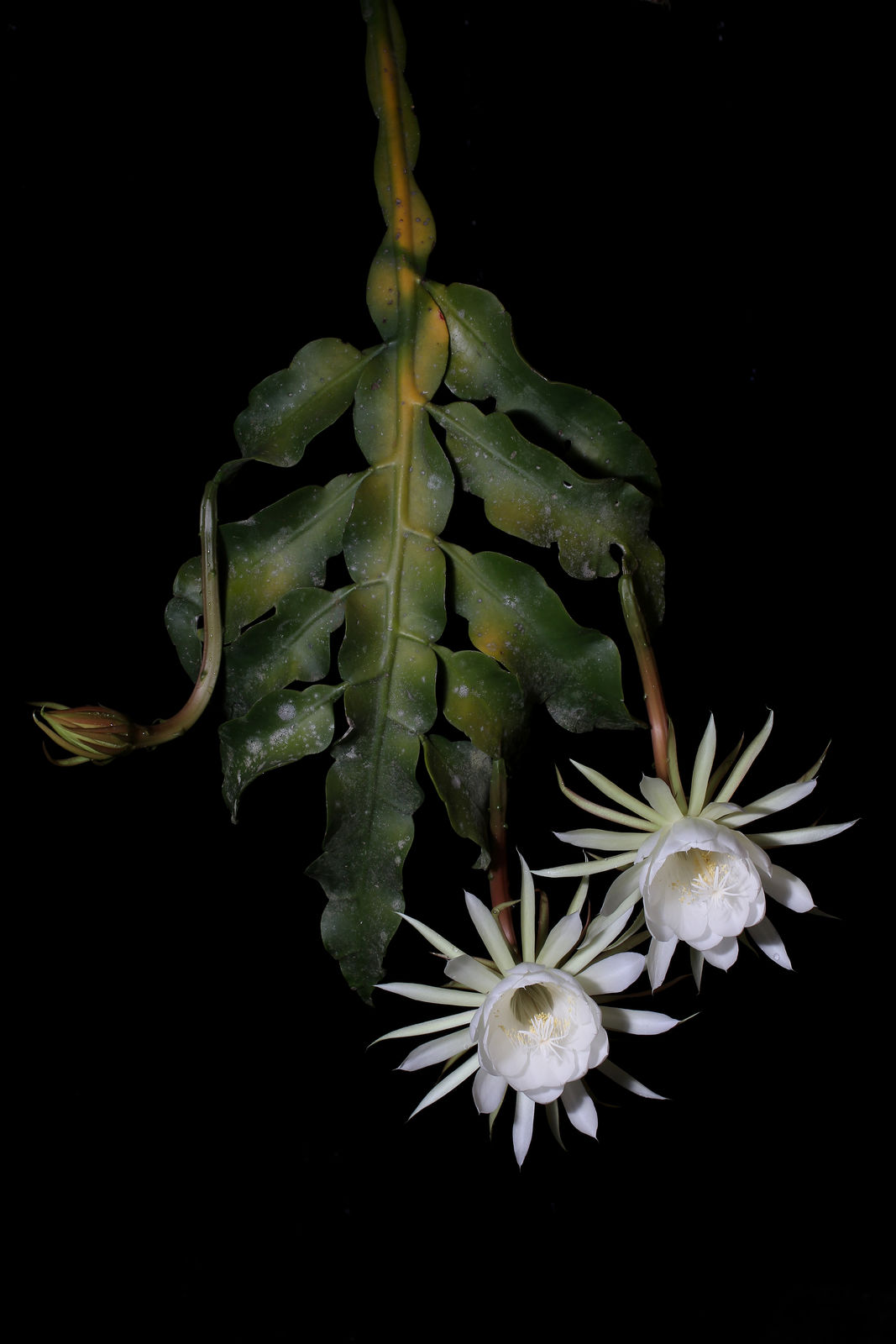
Epiphyllum oxypetalum
Epiphyllum oxypetalum , commonly known as the 'Queen of the Night' or 'Dutchman's Pipe Cactus', is a highly celebrated epiphytic cactus species. Renowned for its large, fragrant, nocturnal white flowers, this species belongs to the Cactaceae family and is widely cultivated as an ornamental plant .
Epiphyllum oxypetalum
Epiphyllum oxypetalum , commonly known as the 'Queen of the Night' or 'Dutchman's Pipe Cactus', is a highly celebrated epiphytic cactus species. Renowned for its large, fragrant, nocturnal white flowers, this species belongs to the Cactaceae family and is widely cultivated as an ornamental plant .

Epiphyllum phyllanthus
Epiphyllum phyllanthus is a striking epiphytic succulent belonging to the family Cactaceae . Commonly known as the climbing cactus, this species is highly valued among collectors for its flat, leaf like photosynthetic stems and nocturnal, tubular flowers.

Epiphyllum pumilum
Epiphyllum pumilum is an elegant, night blooming epiphytic cactus belonging to the family Cactaceae. Commonly known as the Dwarf Queen of the Night, this species thrives in tropical humid forests rather than arid deserts, growing on tree trunks and relying on atmospheric humidity and leaf litter for sustenance .
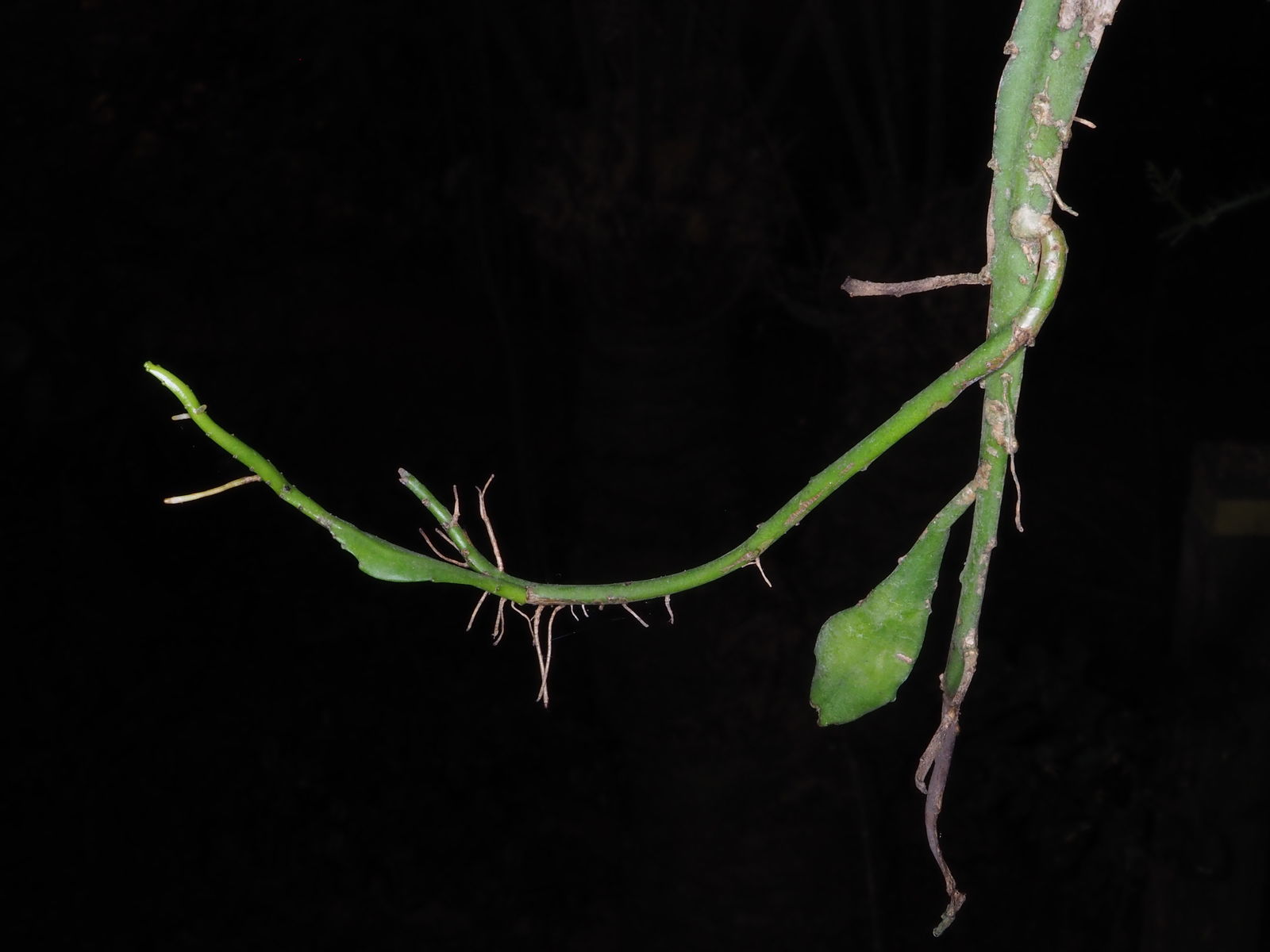
Epiphyllum thomasianum
Epiphyllum thomasianum is a majestic epiphytic cactus belonging to the family Cactaceae, famous for its giant, nocturnal white flowers and arching, leaf like flattened stems .

Epiphyllum × bauericardium
Epiphyllum × bauericardium is a hybrid epiphytic cactus belonging to the family Cactaceae. Unlike desert cacti, this plant grows on tree branches in its ancestral humid environments, absorbing moisture and nutrients from the air and organic debris . It is highly prized by collectors for its stunning, fragrant nocturnal blooms and architectural leaf like stems.

Epiphyllum × cupreum
Epiphyllum × cupreum is an exquisite hybrid epiphytic cactus within the family Cactaceae . Widely celebrated as the orchid cactus, this cultivar is highly prized in horticulture for its stunning copper bronze flowers and gracefully cascading, flattened stem segments.
Epiphyllum × floribundum
Epiphyllum × floribundum is a pendulous, epiphytic hybrid cactus belonging to the Cactaceae family . It is highly prized in horticulture for its spectacular, abundant flowering habit, from which its epithet 'floribundum' is derived.

Epiphyllum × jenkinsonii
Epiphyllum × jenkinsonii is a highly celebrated epiphytic hybrid cactus belonging to the family Cactaceae. Famed for its spectacular, fiery red blooms, this classic cultivar is a favorite worldwide for hanging baskets and indoor culture .
Epiphyllum × rollissonii
Overview\nEpiphyllum × rollissonii is a historically significant artificial hybrid within the family Cactaceae. Celebrated for its large, vibrant reddish orange flowers, this epiphytic cactus is a highly sought after specimen among horticultural collectors .\n\n Taxonomy and Naming\nThe '×' in its botanical name denotes its hybrid origin, created by crossing species within the genus Epiphyllum. The epithet 'rollissonii' pays tribute to the Rollisson nursery, where early hybridization work took place .\n\n Natural Distribution and Habitat\nThis plant does not exist in the wild. While wild Epiphyllum species are native to the tropical rainforests of Central and South America, this specific hybrid was intentionally bred in cultivation .\n\n Appearance\nIt features flattened, leaf like green stems with undulating margins that initially grow upright before gracefully cascading. The spectacular, funnel shaped flowers bloom in late spring, often opening at night .\n\n Care in Cultivation\nIt thrives in high humidity and bright, indirect or filtered sunlight. Because of its epiphytic nature, the root system requires excellent aeration. Water thoroughly only when the top layers of the soil feel dry .\n\n Common Care Mistakes\nExposing the plant to harsh, direct sunlight causes severe stem scorching. Overwatering combined with dense, heavy soil mixes is the most common cause of root rot.\n\n References\n Royal Botanic Gardens, Kew (POWO). Epiphyllum Hybridization Records.\n International Cactus Lizard Association Cultivar Monographs.

Epiphyllum × splendens
Epiphyllum × splendens is a magnificent hybrid orchid cactus belonging to the family Cactaceae . Renowned for its large, showy, and often fragrant blossoms, it is highly sought after by collectors and indoor plant enthusiasts alike for its cascading growth habit.

Epiphyllum × splendidum
Epiphyllum × splendidum is one of the most stunning hybrid cultivars within the orchid cactus group. Celebrated for its massive, vibrant blossoms, this epiphytic cactus has secured a lasting spot among indoor plant collectors .
