
Light
Bright Indirect Light
Bright indirect light or filtered sun; shield from intense midday summer sun.
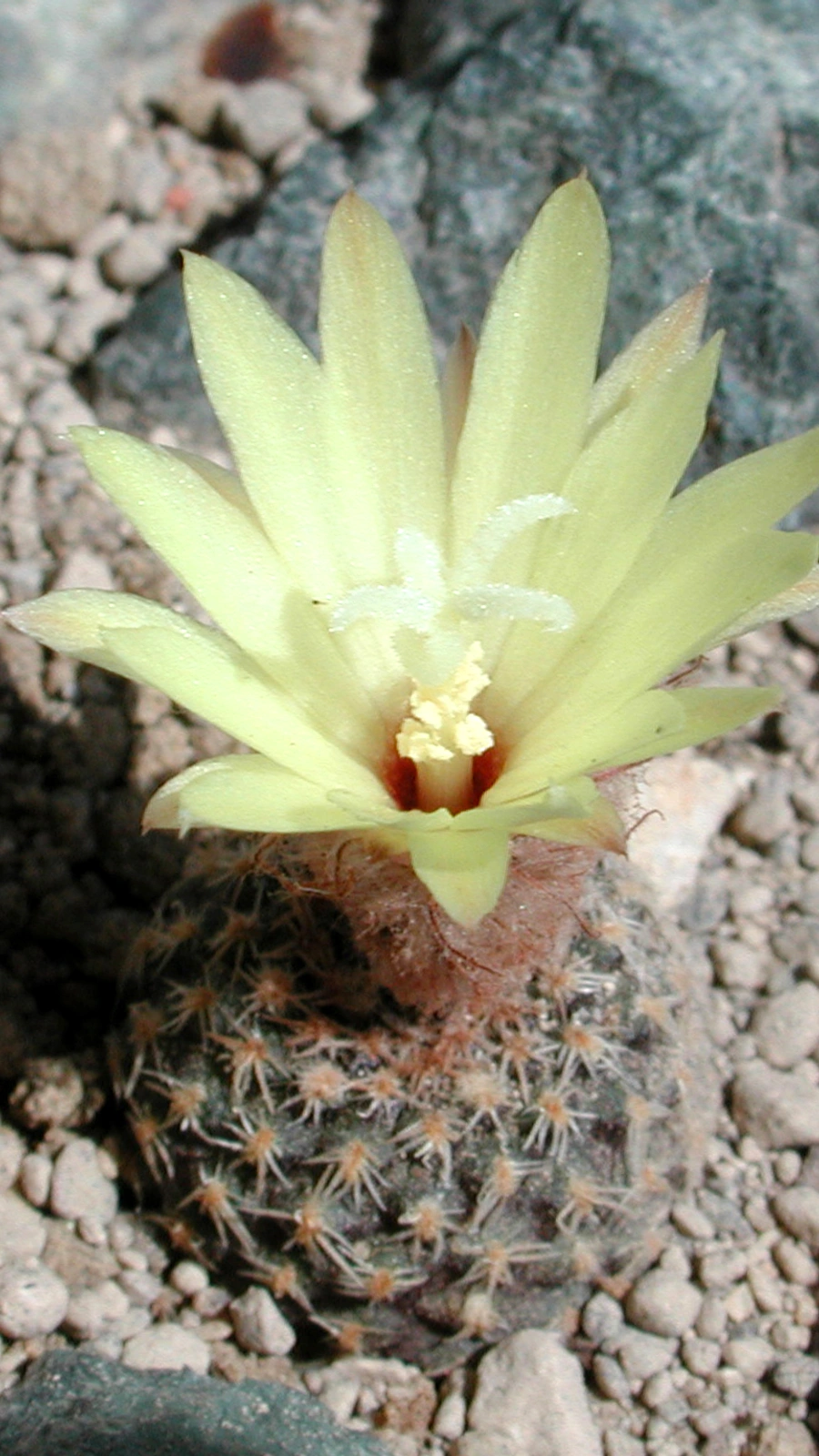 Reference image
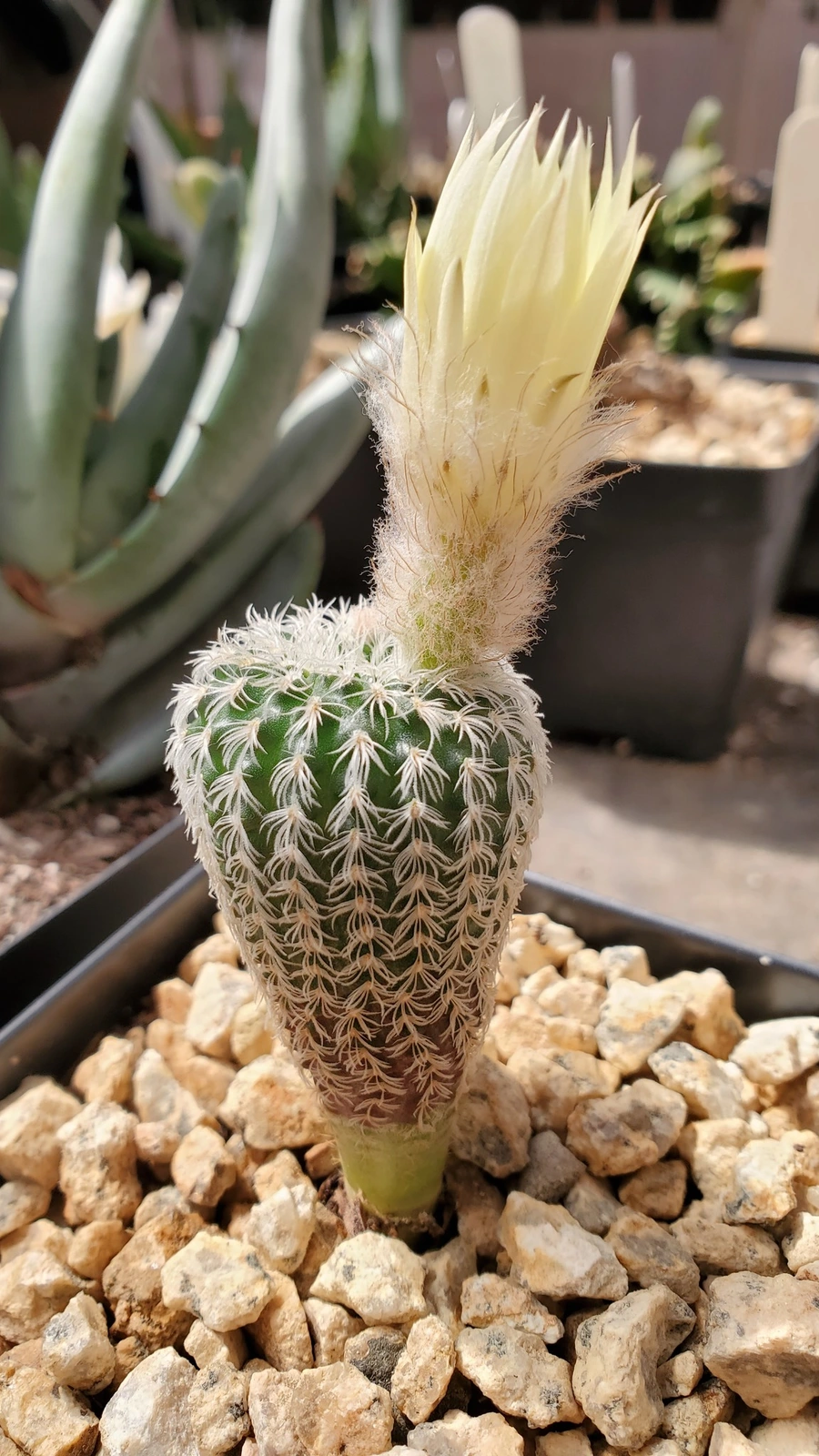 Reference image
Buenecker's Miniature Cactus
Frailea buenekeri is one of the smallest and most fascinating members of the family Cactaceae, highly prized among collectors for its miniature size and distinctive cleistogamous flowering habit.
The genus Frailea was named in honor of Manuel Fraile, a Spanish-born botanist 1. The specific epithet 'buenekeri' honors Rudolf Buenecker, a noted Brazilian plant collector. It is distinguished by its small, globose, somewhat flattened stem and dense pectinated spines.
This species is native to Southern America, specifically restricted to the southern regions of Brazil, including Rio Grande do Sul 2. It grows in subtropical biomes, typically nesting in rocky crevices, quartzite outcrops, and sandy gravelly soils under the sparse shade of shrubs.
Frailea buenekeri forms small, flattened-globose stems measuring only 2 to 5 cm in diameter. The epidermis ranges from dark green to brownish-bronze. The ribs are low, carrying small areoles with pectinate, yellowish-brown appressed spines. The flowers are bright yellow, but they frequently self-pollinate without opening (cleistogamy).
In cultivation, it requires a highly porous, mineral-rich potting medium. Due to its shallow root system, shallow pots are preferred. It enjoys consistent watering during the hot summer months, provided the soil dries out quickly, and must be kept dry in winter.
Overwatering in poorly draining soils is the leading cause of root rot in this species 1. Placing the plant in deep shade leads to unnatural elongation (etiolation), whereas sudden exposure to harsh afternoon sun can cause permanent scarring.
Bright indirect light or filtered sun; shield from intense midday summer sun.
Water thoroughly only when dry during the growing season; keep dry in winter.
Excellent drainage is vital; use a mineral-based mix with high pumice content.
Spines are tiny but can prick; non-toxic to cats, dogs, and humans.
Moderate; its tiny size means less buffer for overwatering mistakes.
Native to the rocky grasslands and stony hillsides of Southern Brazil, where it thrives nestled between stones and sandy soil under subtropical conditions.
