
Light
Full Sun
Thrives in direct sunlight, but a light afternoon shade can be beneficial during intense midday heat.
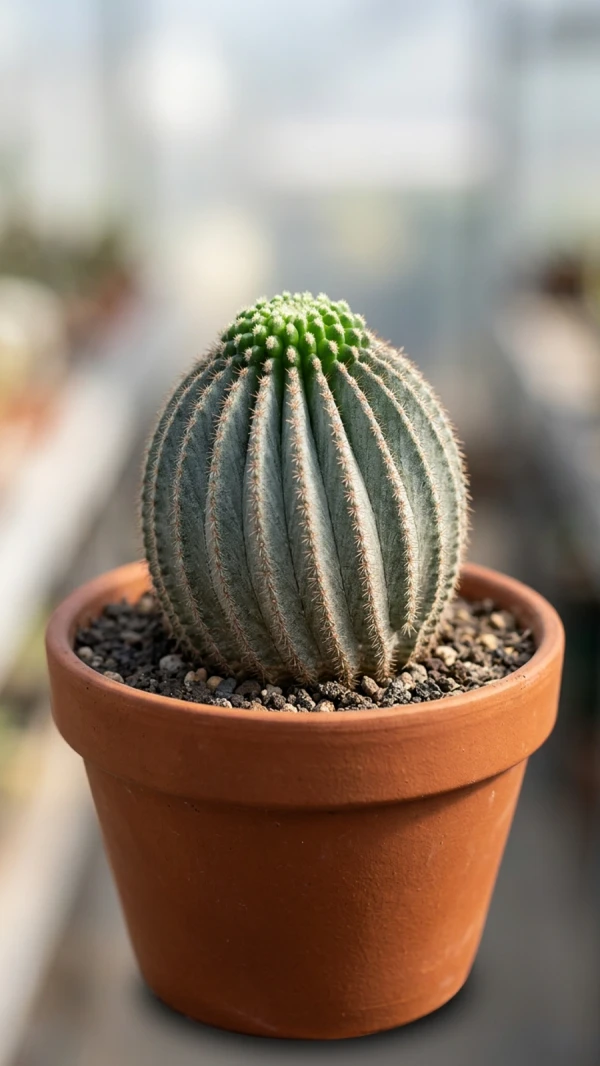
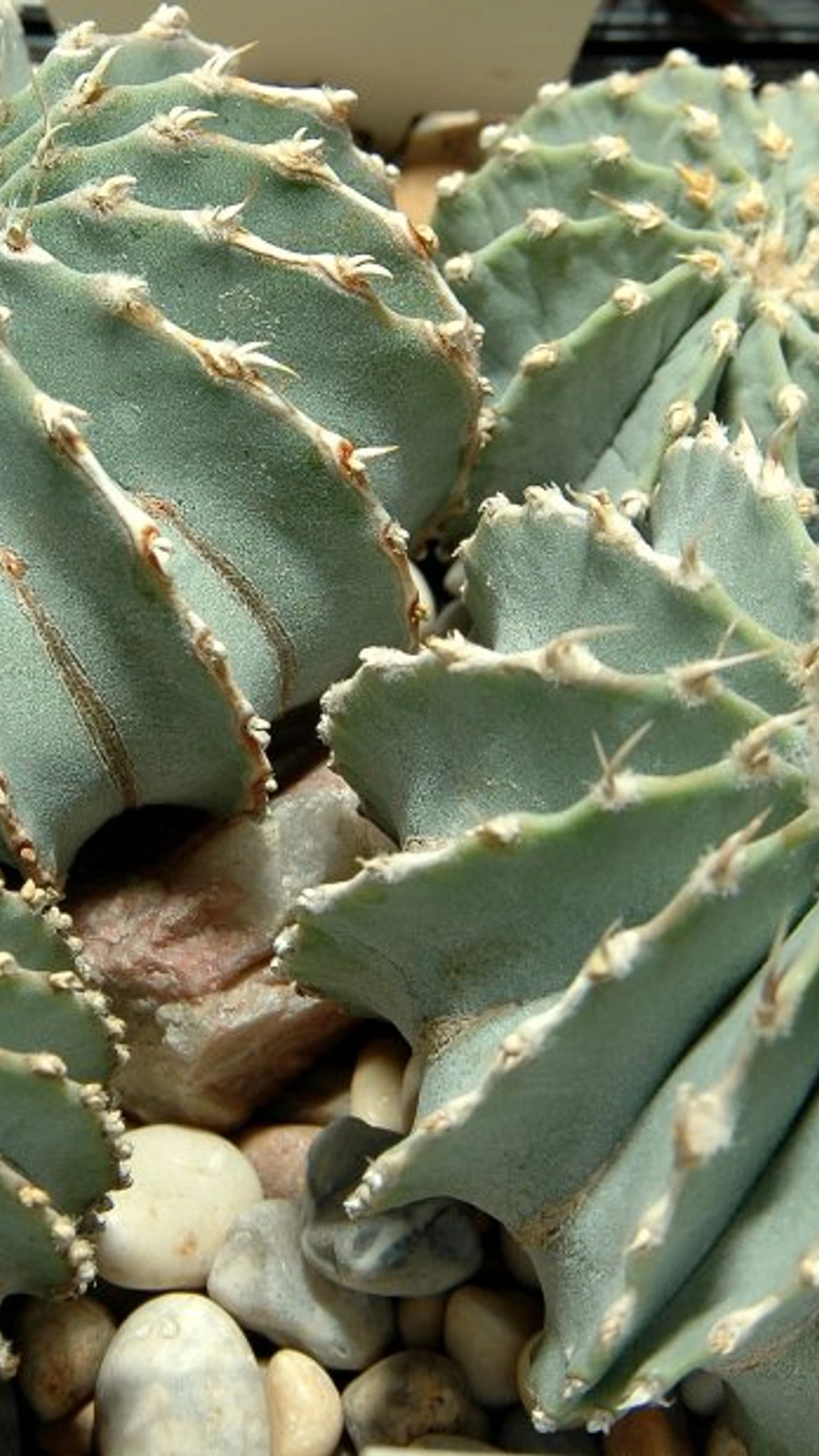 Reference image
Geohintonia mexicana stands as one of the most intriguing and rare members of the cactus family. Discovered in 1991 by George Hinton, and named in his honor, this species was initially thought to be closely related to genera like Ariocarpus or Aztekium. However, morphological and genetic analyses have confirmed its unique characteristics, leading to its classification under Geohintonia, a monotypic genus 1. This sole species represents a significant evolutionary link within the Cactaceae family.
This cactus typically features a flattened, grey-green stem, slightly sunken at the apex, reaching up to 10 cm in diameter. Its surface is covered with distinct, pointed triangular tubercles. At the tip of each tubercle, there are short, whitish spines, approximately 2-5 mm long, which tend to shed over time. One of the plant's most striking features is its propensity to produce new offsets from the base or lower parts of the main stem, leading to the formation of dense clusters over time. Its flowers are usually pink or magenta, blooming from the apical meristem in late spring or early summer.
Geohintonia mexicana is endemic to the northeastern Mexican state of Nuevo León, where it grows on the slopes of the Sierra Madre Oriental mountains, particularly in gypsum soils 2. This specialized and calcareous habitat presents challenging conditions that explain the plant's unique adaptations. Unfortunately, Geohintonia mexicana is listed as "Critically Endangered (CR)" on the IUCN Red List of Threatened Species. Habitat loss, mining activities, and illegal collection are the primary factors severely threatening the species' survival. Conservation efforts are vital for the future of this unique cactus. Cultivation in private collections can play an important role in preserving its genetic diversity.
Sources:
Thrives in direct sunlight, but a light afternoon shade can be beneficial during intense midday heat.
Water thoroughly only when the soil has completely dried out, and significantly reduce or cease watering in winter.
Use an airy, gritty mix specifically formulated for cacti, with plenty of sand and pumice.
Possesses short, stiff spines; handle with care to avoid injury.
Best suited for collectors, this is a moderate to difficult plant for experienced cactus growers.
Geohintonia mexicana is endemic to the arid, desert-like regions of the northeastern Mexican states of Coahuila and Nuevo León. It thrives specifically in mountainous and hilly gypsum soils, sharing its habitat with other cactus and succulent species. These areas are characterized by challenging climatic conditions, offering high altitudes, dry and hot summers, and cooler winters.
