
Light
Full Sun
Requires full sun (at least 6 hours of direct sunlight daily) to maintain its dense spine structure.
 Reference image
 Reference image
Mounded Dog Cholla
Grusonia aggeria (synonym: Corynopuntia aggeria), commonly known as the mounded dog cholla, is a low-growing, heavily-spined succulent subshrub belonging to the Cactaceae family. Highly adapted to harsh, arid desert conditions, this species is prized by collectors for its compact, architectural, and fiercely armed mounding form.
Originally described by Anthony M. Powell, this species has been historically placed under both Opuntia and Corynopuntia due to its club-shaped stem segments 1. Modern phylogenetic studies classify it under the genus Grusonia. The specific epithet 'aggeria' is derived from the Latin 'agger', meaning 'heap' or 'mound', highlighting its characteristic growth habit of forming dense, low-lying cushions.
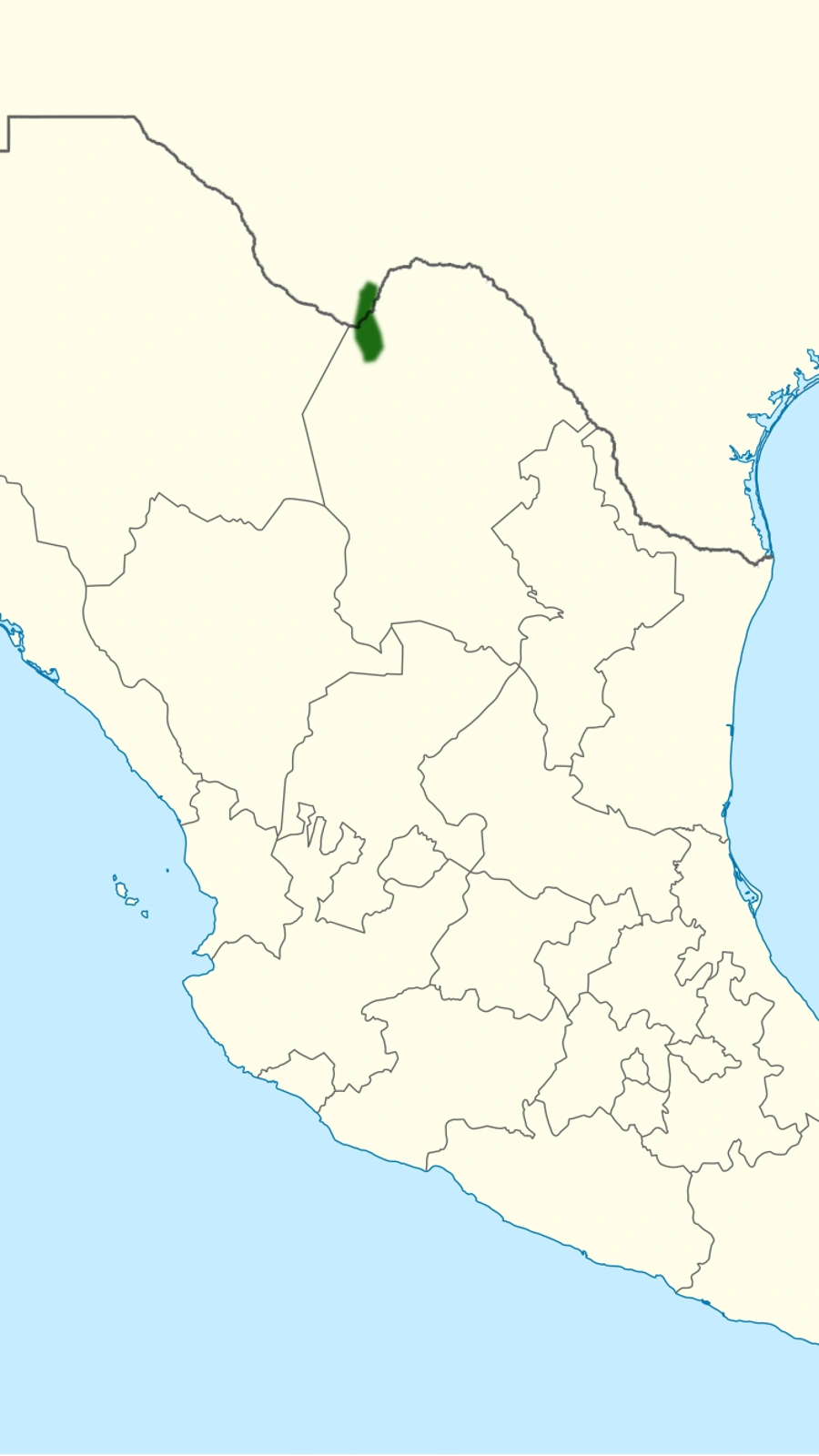
Grusonia aggeria is native to the Chihuahuan Desert, spanning across western Texas in the United States and several northern states of Mexico 2. It thrives in gravelly flats, alluvial fans, limestone hillsides, and desert scrub communities at elevations ranging from 600 to 1,500 meters above sea level.
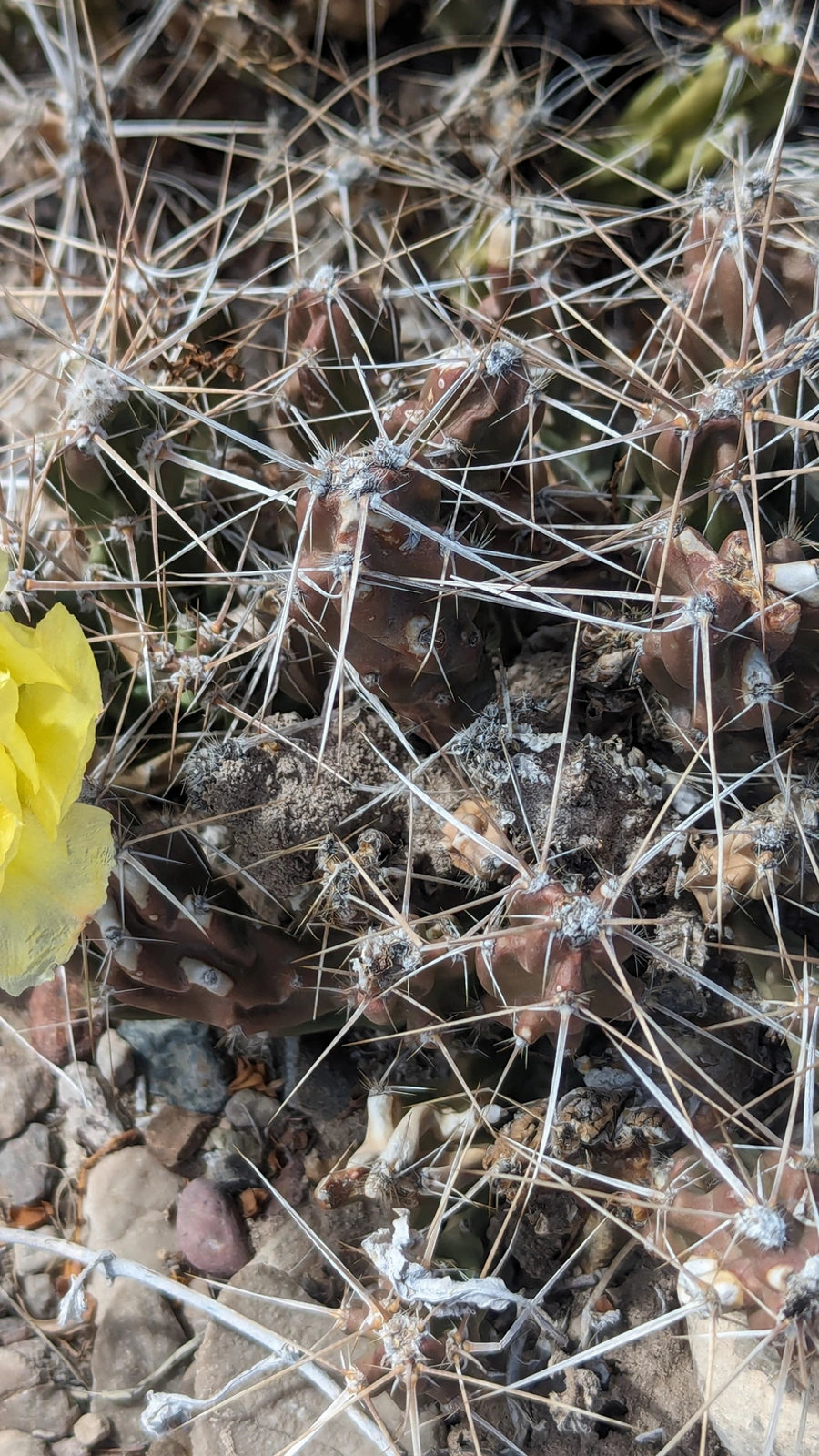
The plant consists of short, cylindrical to obovate joints measuring 3-9 cm in length. These segments branch out to form dense mounds up to 15 cm high and up to 1 meter wide. The prominent tubercles bear clusters of sharp, variable spines ranging from greyish to brownish, which shield the stem from intense solar radiation. It produces pale yellow to bronze flowers in late spring, followed by dry, spineless, yellowish fruits.
In cultivation, Grusonia aggeria requires full sun, excellent air circulation, and exceptionally free-draining mineral soil. Watering should follow a soak-and-dry cycle during the active growing season (spring and summer) and must be withheld almost completely during the cold winter dormancy.
The most prevalent issue is root rot induced by overwatering or compacted soil. Insufficient light leads to etiolation, causing the stems to stretch, weaken, and lose their dense spine cover.
Requires full sun (at least 6 hours of direct sunlight daily) to maintain its dense spine structure.
Water deeply only when the soil is 100% dry. Keep dry in winter to prevent rot.
Prefers a mineral-heavy mix with pomace, perlite, and coarse sand. Avoid organic peat.
Equipped with sharp, barbed spines. Keep away from pets, children, and high-traffic areas.
Moderate. Very easy if kept dry and sunny, but highly intolerant of wet winter soil.
Naturally distributed across the Chihuahuan Desert, where it colonizes rocky slopes, gravel plains, and alluvial washes characterized by extreme summer heat and cold winter nights.
