
Light
Full Sun
Requires full sun, preferably at least 6 hours of direct sunlight daily.
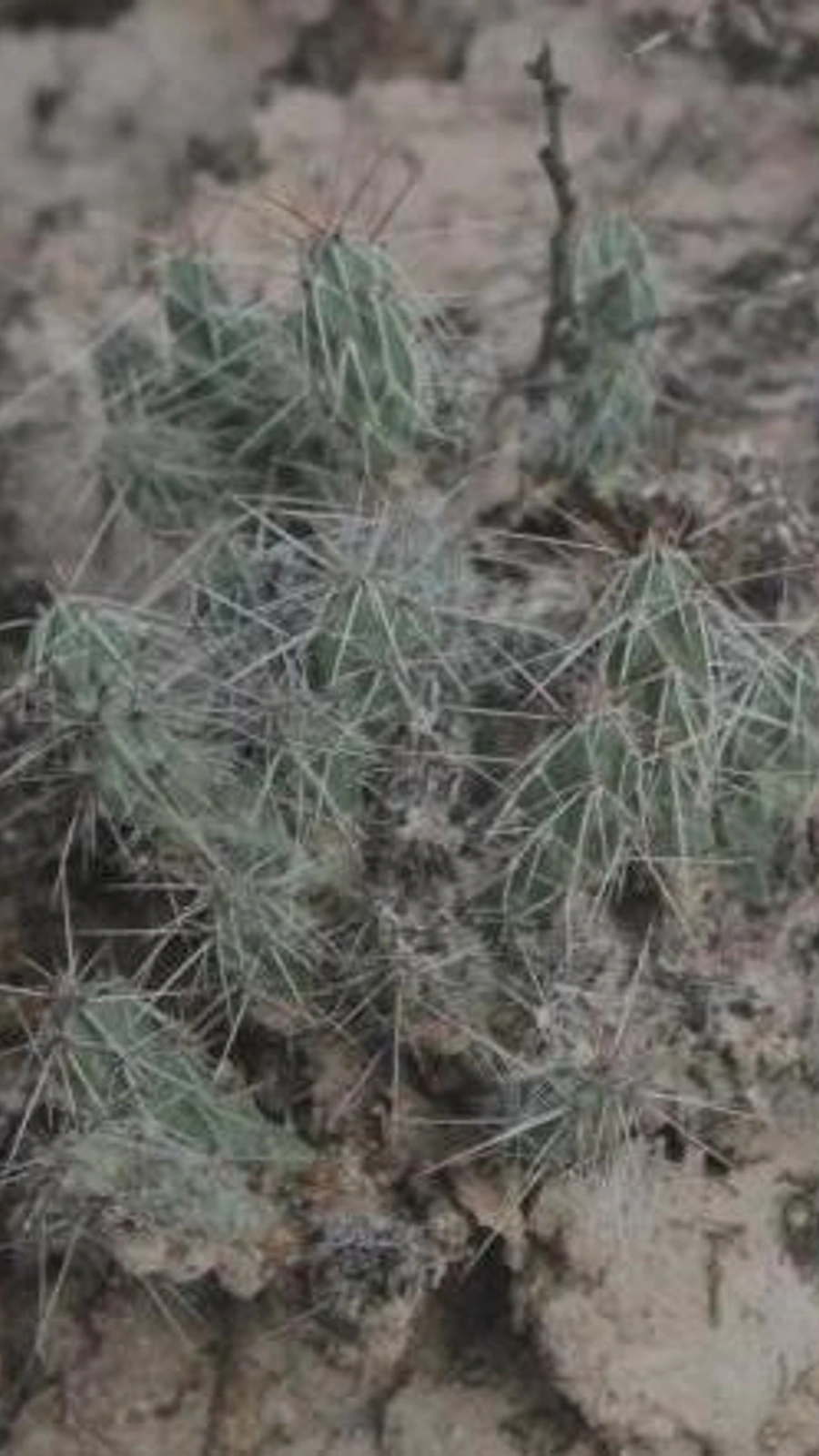 Reference image
Deinacantha Club Cactus
Grusonia deinacantha is a distinctive succulent subshrub belonging to the family Cactaceae. Known for its heavily spined, low-growing form, this species is a hardy survivor of the arid North American deserts and a prized addition to specialized cactus collections due to its wild, architectural appearance 1.
Classified under the genus Grusonia, this species has historical taxonomic associations with Corynopuntia and Opuntia. Its specific epithet, deinacantha, is derived from the Greek deinos (meaning terrible or fierce) and akantha (meaning spine), directly describing its formidable and sharp spination 2.
This species is native to Mexico, particularly across the states of Aguascalientes, Coahuila, Hidalgo, Zacatecas, Querétaro, Guanajuato, San Luis Potosí, Durango, and Tamaulipas. It thrives in desert shrublands, rocky slopes, and limestone flats with highly porous substrate 1.
Grusonia deinacantha forms low, spreading mats of cylindrical, segmented stems. The segments are armed with dense, rigid, greyish-white to straw-colored spines arising from prominent areoles. During the late spring and summer, it produces delicate, pale yellow to greenish flowers at the stem tips 2.
In cultivation, it requires a highly porous, mineral-rich substrate containing pumice, gravel, and minimal organic matter. It must be grown in a position that receives full sun and excellent air circulation. Water thoroughly only when the soil is completely dry, and suspend watering during the winter.
The most critical mistake is overwatering or using water-retaining soils, which rapidly leads to root rot. Insufficient sunlight will cause the stems to etiolate, making them weak, thin, and prone to disease.
Requires full sun, preferably at least 6 hours of direct sunlight daily.
Allow soil to dry out completely between waterings. Keep dry in winter.
Requires a highly mineral, fast-draining mix with pumice and coarse grit.
Features extremely sharp and stubborn spines. Keep away from pets and children.
Moderate. Easy if you avoid overwatering and provide enough direct light.
Native to the dry, stony deserts and shrublands of northern and central Mexico, where it grows in limestone-rich, porous soils under intense sunlight.
