
Light
Full Sun
Requires full sun, ideally 6 to 8 hours of direct sunlight daily for healthy growth.
 Reference image
 Reference image
Emory's Club Cholla
Grusonia emoryi is a low-growing, clump-forming succulent subshrub in the family Cactaceae, characterized by its formidable spination and rugged habit 1. It is commonly known as Emory's club cholla or devil's club, reflecting its prickly and defensive nature.
This species was originally described by George Engelmann as Opuntia emoryi before being transferred to the genus Grusonia 1. The specific epithet honors William H. Emory, a major general and surveyor who documented the botany of the US-Mexican border region in the 19th century.
Grusonia emoryi is native to the Southwestern United States (Arizona, New Mexico, Texas) and northern Mexico (including Chihuahua and Coahuila) 2. It typically inhabits sandy flats, rocky slopes, alluvial fans, and desert shrublands where soil is gravelly and drainage is optimal.
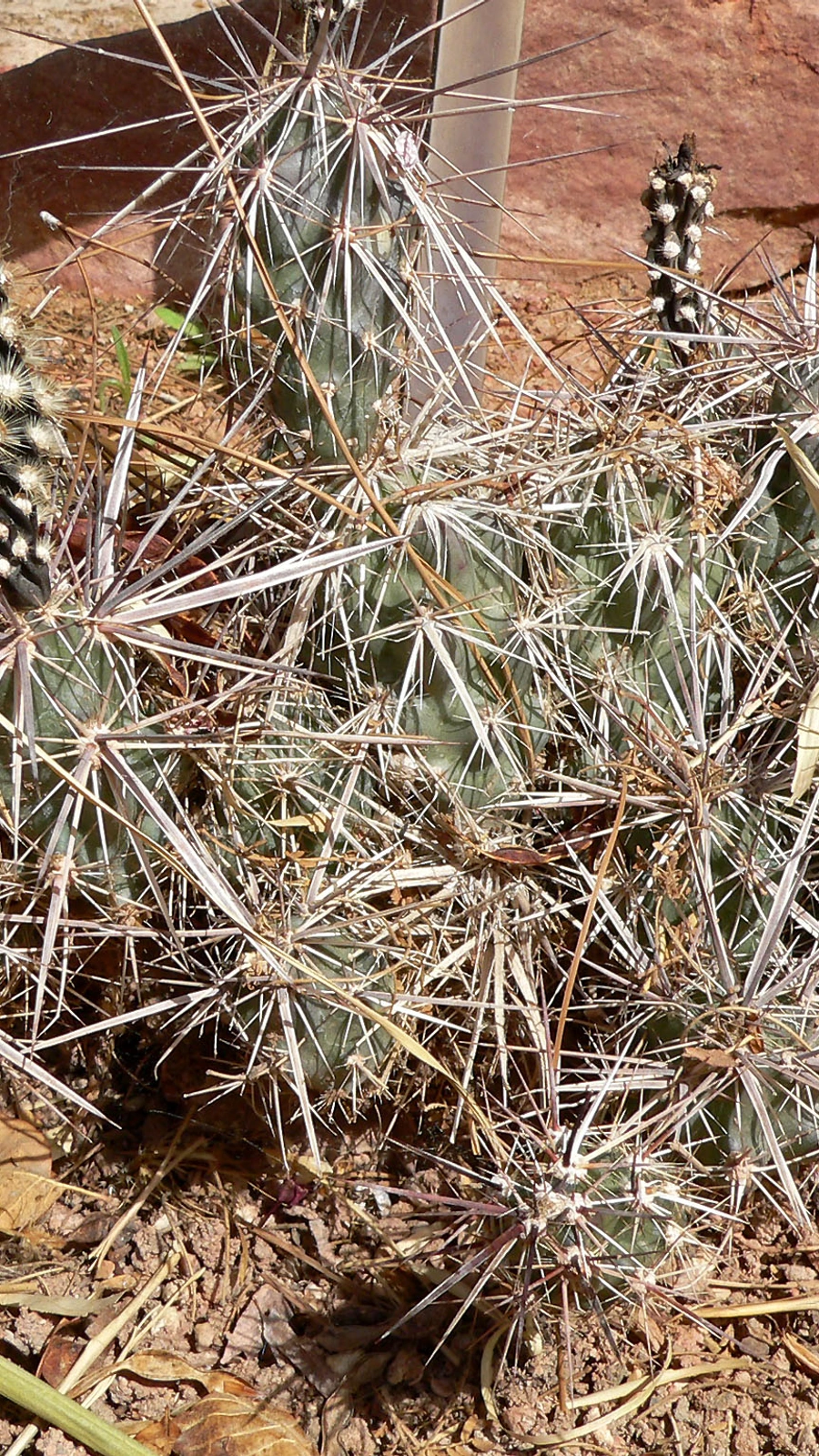
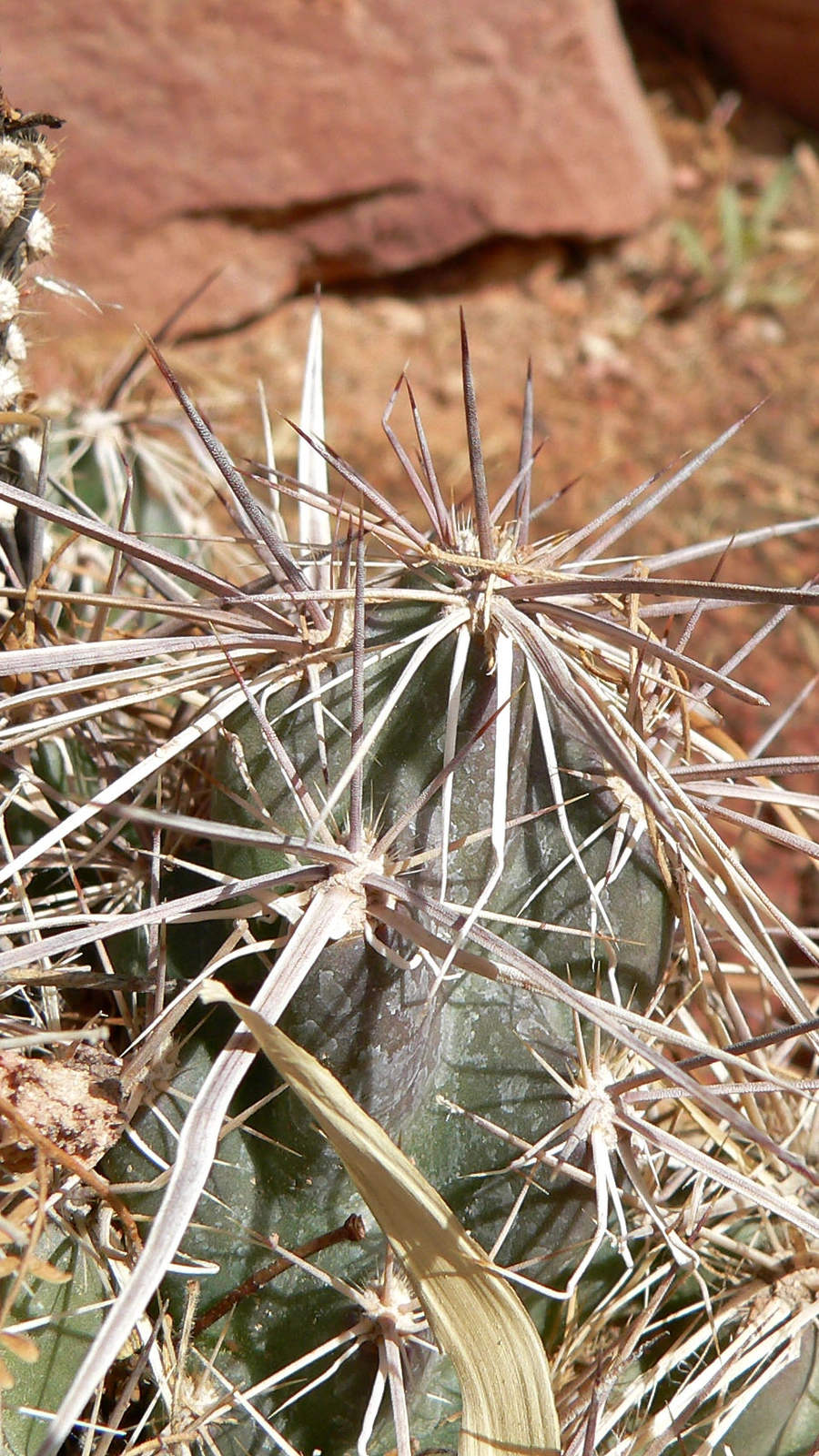
The plant forms dense, spreading mats. The stems are short, club-shaped or cylindrical, and highly tuberculated. Each areole features several heavy, flattened, yellow-brown to greyish spines that can cause severe punctures. Bright yellow flowers emerge in late spring or early summer at the stem tips, followed by fleshy, yellow-green fruits.
This desert native requires excellent drainage and thrives in dry, mineral-heavy soils with minimal organic matter. It demands full sun to maintain dense spination and prevent etiolation. Watering should be deep but infrequent, only when the substrate is completely dry 2.
Overwatering and using heavy clay soils are the leading causes of cultivation failure. Excessive moisture in the winter months leads to rapid root rot. Standard potting soil must be heavily amended with coarse grit.
Requires full sun, ideally 6 to 8 hours of direct sunlight daily for healthy growth.
Water deeply but sparingly during the growing season. Keep completely dry in winter.
Use a specialized cactus mix heavily amended with pumice, perlite, and coarse sand.
Armed with extremely sharp, stiff, and painful spines. Handle only with thick leather gloves or tongs.
Requires careful watering discipline and safe handling, making it a moderate difficulty plant.
Inhabits the arid Chihuahuan Desert, rocky flats, gravelly slopes, and dry shrublands across Texas, New Mexico, Arizona, and northern Mexican states.
