
Light
Full Sun
Requires full sun, ideally 6+ hours of direct sunlight daily on a south-facing windowsill.
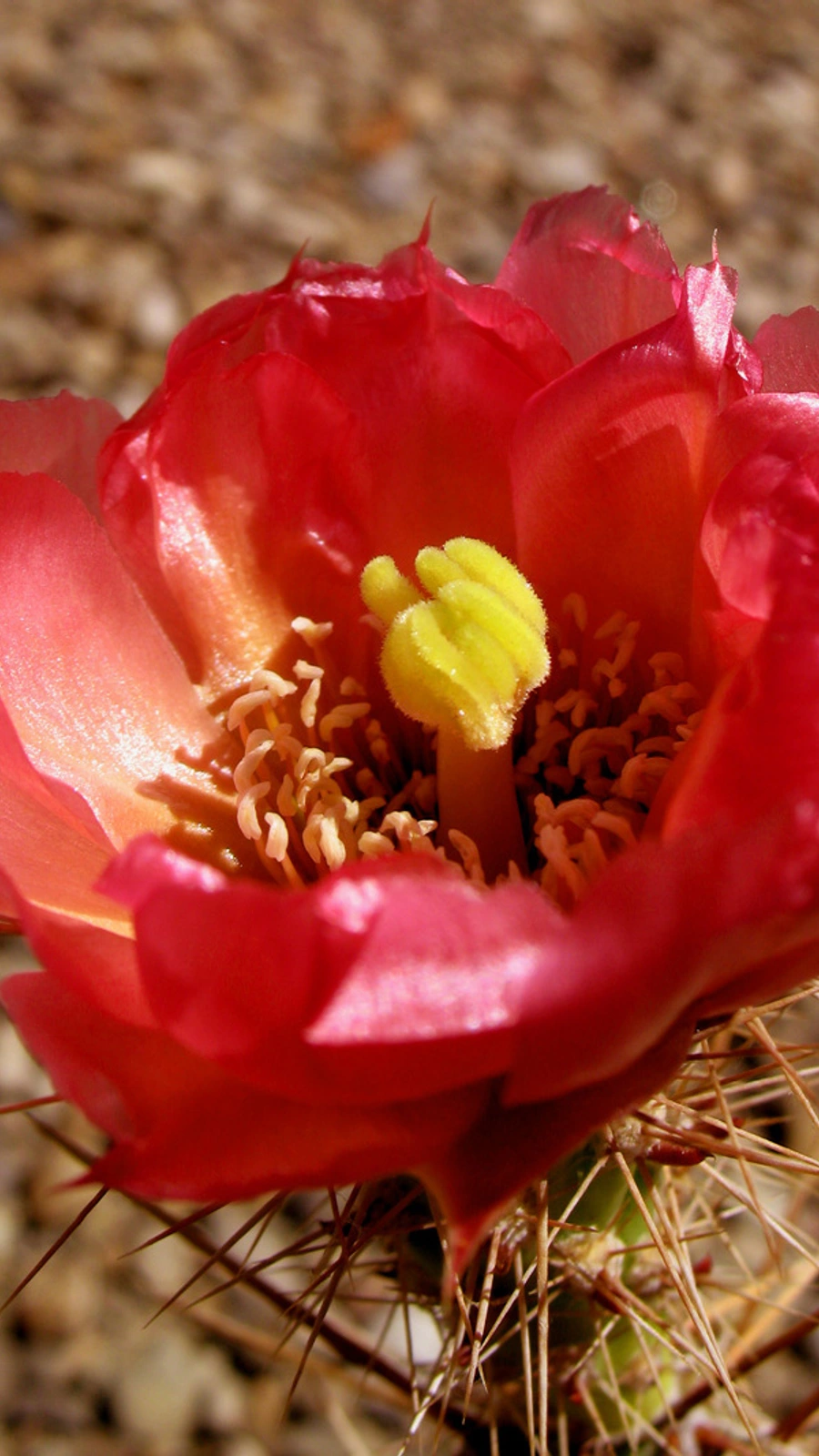 Reference image
Guccini's Club Cholla
Grusonia guccinii is a highly specialized, low-growing succulent subshrub belonging to the Cactaceae family. This rare species is adapted to survive in some of the most arid environments of North America, featuring segmented, heavily armed stems 1.
Classified under the genus Grusonia (often associated with the club chollas or Corynopuntia group), this species represents the diverse evolutionary branch of the Opuntioideae subfamily. The specific epithet "guccinii" honors Italian cultural figures or botanical contributors associated with its discovery 2.
This cactus is native to Northern Mexico, including the states of Durango and Coahuila. It thrives in desert shrublands and matorral biomes, growing in rocky limestone soils, alluvial plains, and dry slopes under intense solar exposure 1.
The plant consists of short, cylindrical, club-shaped jointed segments with prominent tubercles. From the areoles, sharp, flattened central spines project outwards, accompanied by dense clusters of tiny, irritating glochids. It produces pale yellow or greenish-yellow flowers at the stem tips during late spring.
In cultivation, Grusonia guccinii requires replica desert conditions: maximum direct sunlight, low atmospheric humidity, and a highly porous, gritty mineral substrate 2. Water should be applied sparingly in summer and completely withheld during the cold winter dormancy.
Overwatering and placing the plant in poorly ventilated, low-light indoor areas are the primary causes of failure. Wet feet quickly lead to irreversible basal stem rot.
Requires full sun, ideally 6+ hours of direct sunlight daily on a south-facing windowsill.
Let soil dry out completely between waterings. Suspend watering entirely during winter cold.
Use an ultra-draining mineral mix with pumice, perlite, and sand; avoid organic peat.
Non-toxic, but armed with sharp spines and microscopic glochids that cause severe skin irritation.
Moderate. Requires strict watering discipline and intense light to prevent etiolation.
Naturally distributed across the high-exposure limestone hills and arid desert flats of Durango and Coahuila in Northern Mexico.
