
Light
Full Sun
Requires full, direct sun. Indoors, place it on the sunniest south-facing windowsill.
 Reference image
 Reference image
Reflexed-Spine Club-Cholla
Grusonia reflexispina is a unique, low-growing succulent subshrub belonging to the Cactaceae family. Highly adapted to hyper-arid desert environments, this cactus is prized by collectors for its distinctive architectural growth form and protective armor 1.
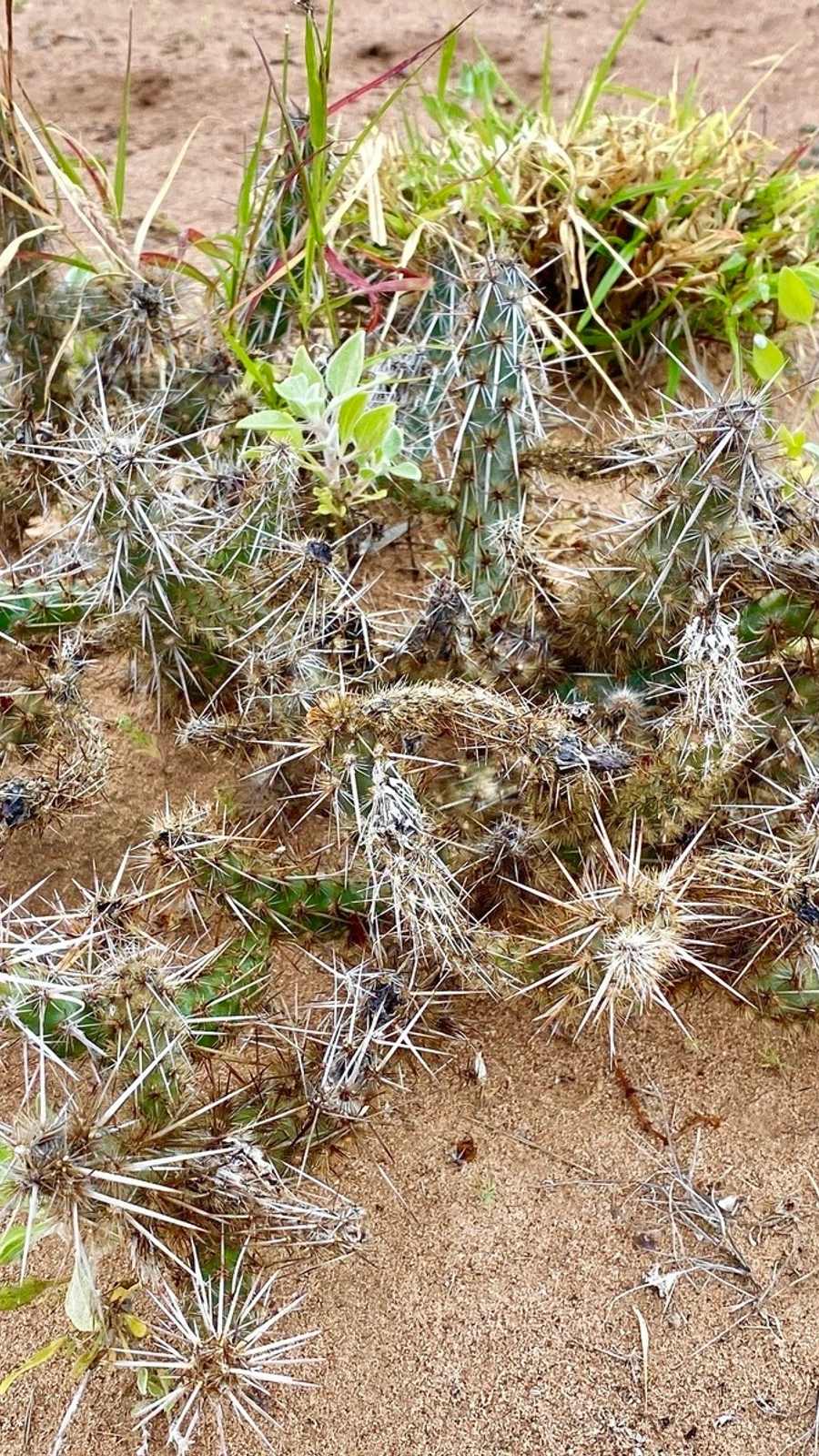
Formerly grouped under the genus Corynopuntia, it is now accepted within Grusonia. The specific epithet "reflexispina" derives from Latin, meaning "backward-bent spines," which describes how its defensive needles hug and point back toward the jointed stems 2.
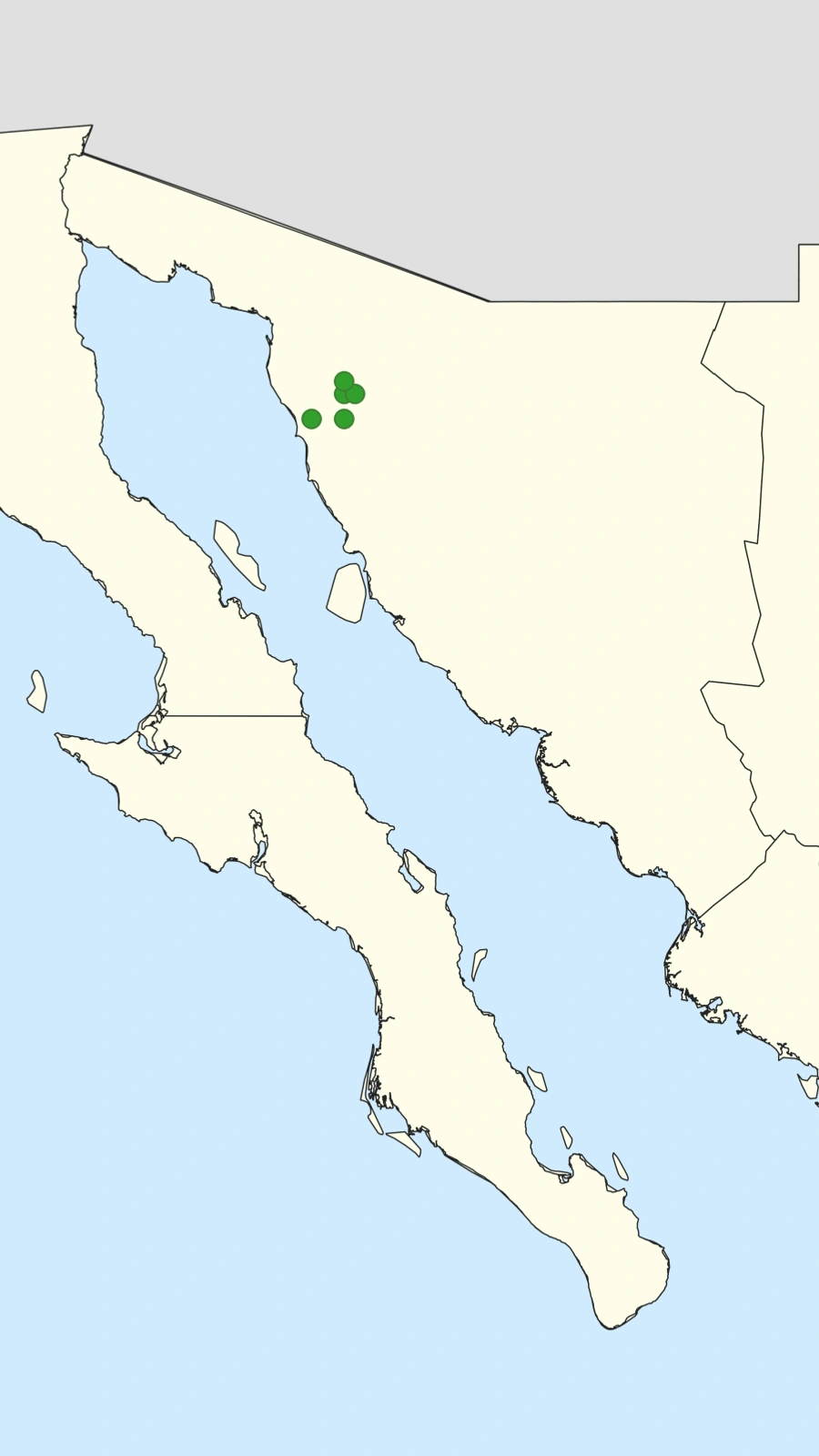
This species is native to northwestern Mexico, including the states of Sonora, Baja California, and Baja California Sur. It thrives in desert flats, rocky hillsides, and coastal scrub zones, growing in sandy, nutrient-poor, mineral-dense soils 3.
Grusonia reflexispina forms low, sprawling mats of club-shaped or cylindrical jointed segments, usually 5 to 10 cm in length. The tuberous joints are heavily armed with central spines that are reflexed (curved backward). It produces pale yellow or greenish-yellow flowers at the stem tips during late spring or summer.
In cultivation, this cactus requires maximum light exposure and an extremely porous substrate. Standard potting soils will hold too much water, causing rot. Keep the plant bone-dry during winter dormancy to prevent cold-wet damage.
The most frequent failures result from overwatering in low-light conditions and using peat-heavy organic soils that do not allow rapid drainage 2.
Requires full, direct sun. Indoors, place it on the sunniest south-facing windowsill.
Let soil dry out completely between waterings. Keep dry in winter.
Highly porous, mineral-based cactus mix with plenty of pumice and coarse grit.
Sharp, backward-curved spines can cause injury. Keep away from pets and children.
Moderate. Easy if you avoid overwatering and provide sufficient light.
Native to the arid desert regions of northwestern Mexico, specifically throughout the Sonoran Desert and rocky coastal plains of the Baja California peninsula.
