
Light
Filtered Sun
Requires bright, filtered sunlight; shield from intense midday summer sun.
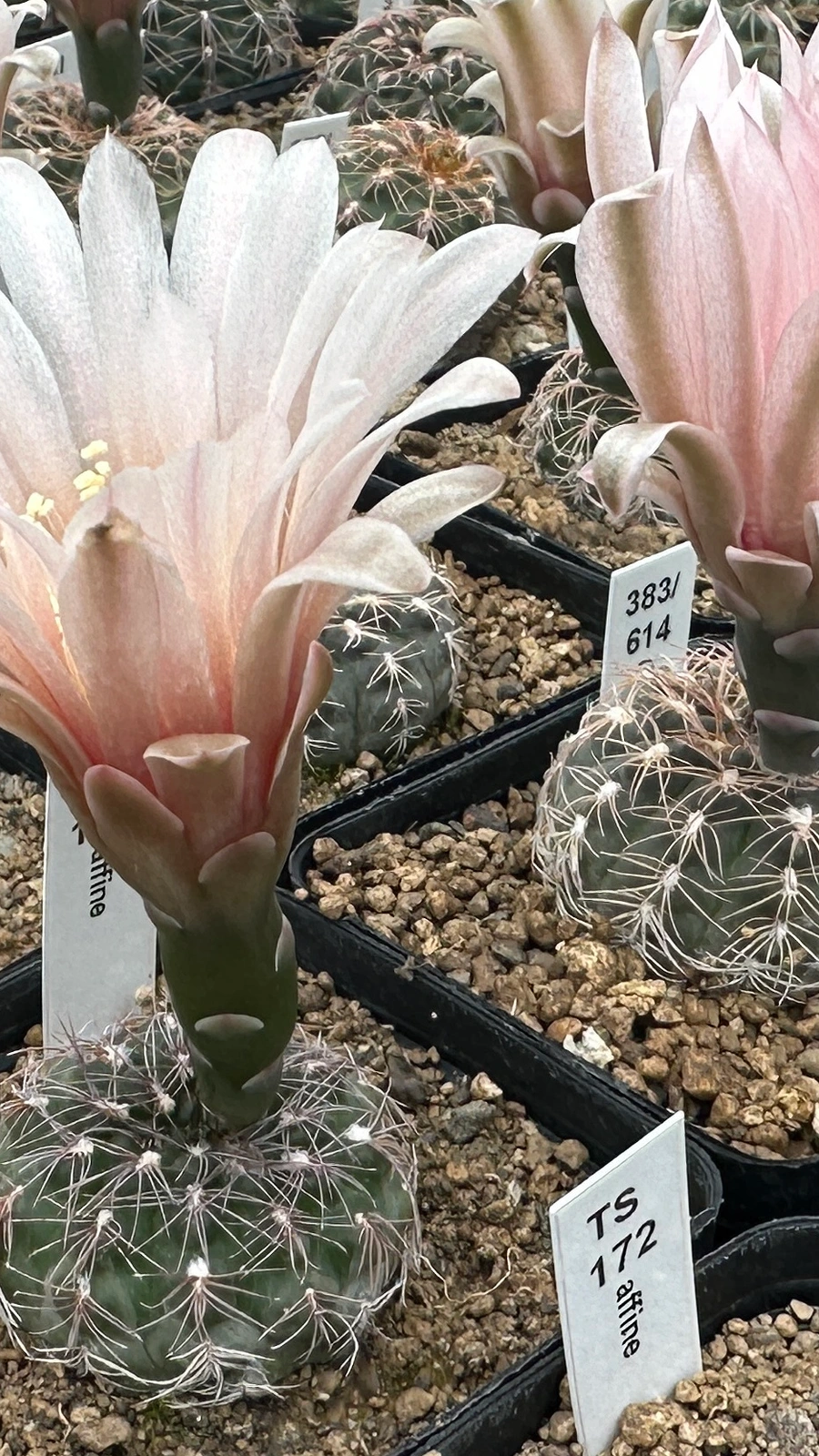 Reference image
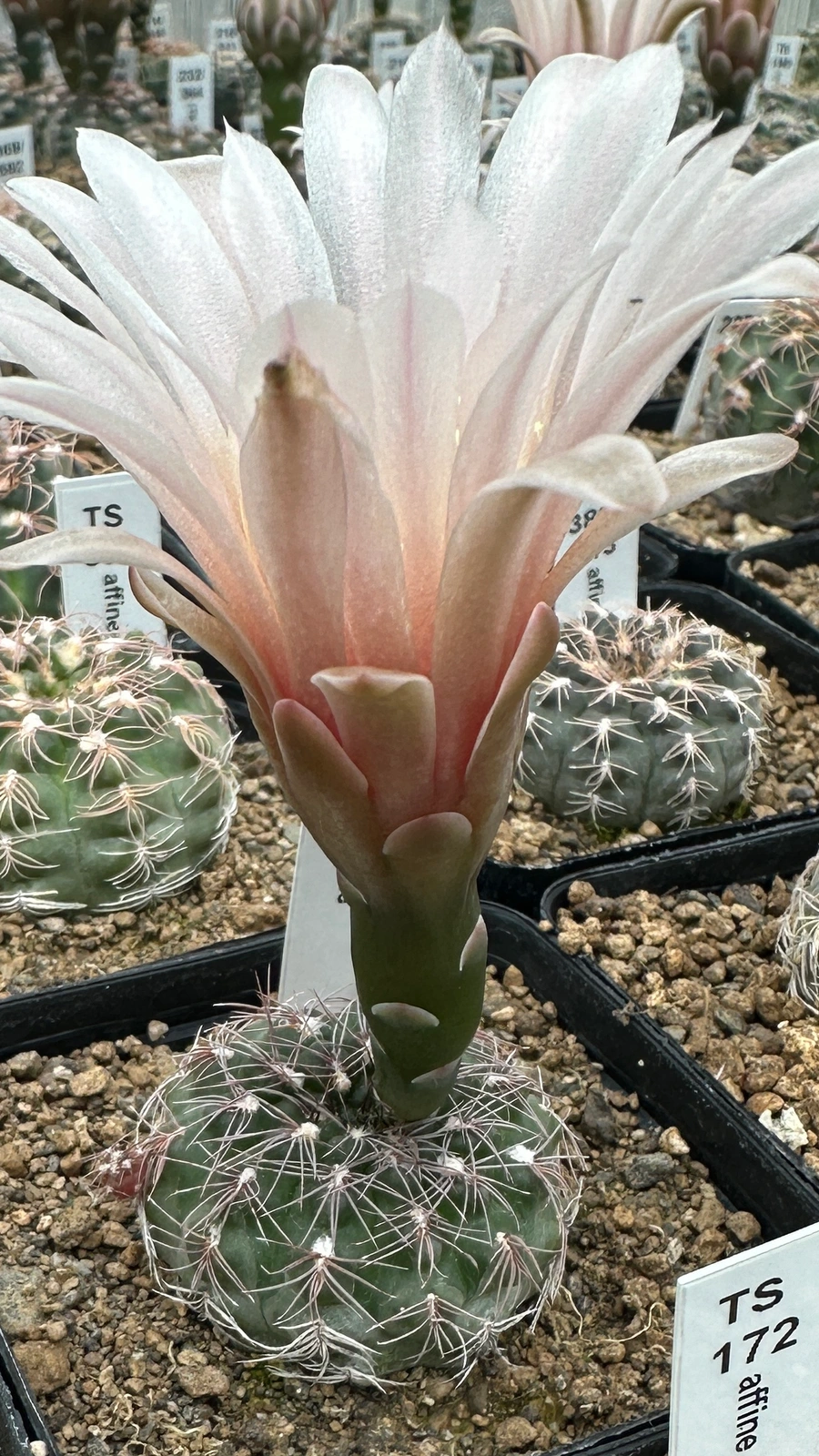 Reference image
Gymnocalycium Affine
Gymnocalycium affine is a highly sought-after, flattened-globose cactus species belonging to the family Cactaceae, admired by collectors for its geometric ribbing and elegant spination 1.
The genus name Gymnocalycium is derived from the Greek words 'gymnos' (naked) and 'kalyx' (bud), referencing the hairless and spineless flower buds. The specific epithet affine signifies its close morphological affinity or relationship to other species in the genus 2.
This species is native to central Argentina, primarily distributed throughout the rocky grasslands and gravelly hills of Córdoba province 1. It thrives in well-drained soils, often seeking refuge under low shrubs or nestled between rocks to escape the harshest sun.
The stem is solitary, grayish-green, and divided into prominent ribs with distinct chin-like tubercles. Areoles bear stout, slightly curved radial spines that age from yellowish-brown to a dusty gray. The funnelform flowers are pale pinkish-white and emerge from the apex of the stem during late spring.
In cultivation, it requires a mineral-rich, extremely free-draining substrate. During the active growing season (spring to autumn), it should be watered thoroughly but only after the soil has dried completely. A dry, cold winter dormancy is essential for healthy growth 2.
Overwatering in compacted soil is the primary cause of root rot. Another frequent mistake is keeping the plant warm and watered during winter, which leads to etiolation (stretching) and prevents the development of flower buds for the next season.
Requires bright, filtered sunlight; shield from intense midday summer sun.
Allow substrate to dry out completely between waterings; keep dry in winter.
Use a mineral-heavy, porous mix with plenty of pumice or perlite.
Non-toxic to pets, but has sharp spines that require careful handling.
Very easy to care for if overwatering and winter warmth are avoided.
Native to the rocky terrains and grassy hillsides of central Argentina, specifically within Córdoba, where it grows tucked away under sparse vegetation to avoid direct scorched exposures.
