
Light
Bright Indirect Light
Thrives in bright filtered light; avoid intense, direct afternoon sun.
 Reference image
 Reference image
White-Areoled Chin Cactus
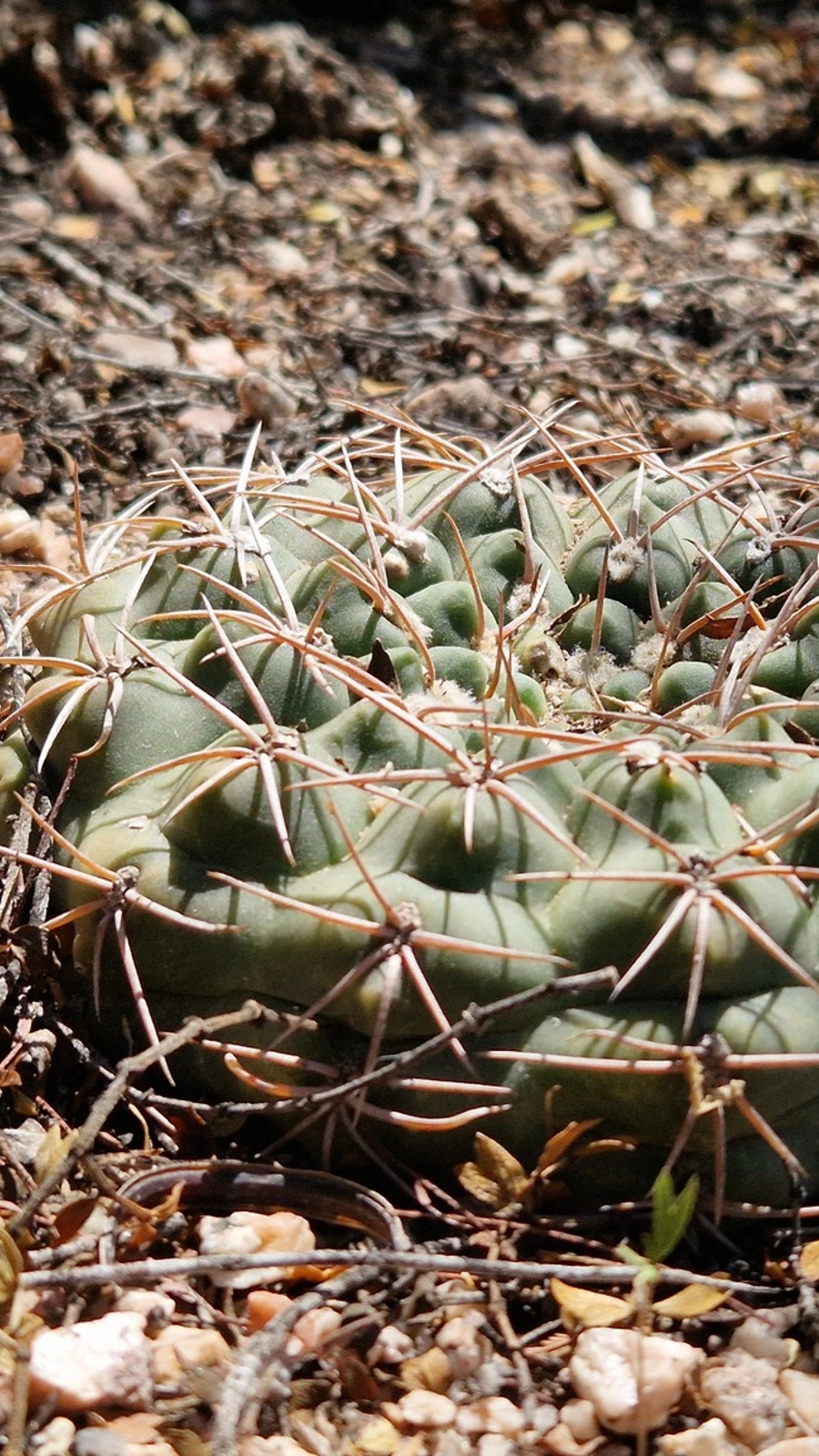
Gymnocalycium alboareolatum is a highly sought-after, rare succulent subshrub belonging to the Cactaceae family. It is distinguished by its prominent, woolly white areoles from which its scientific epithet is derived.
Described initially by Walter Rausch, the species name combines the Latin 'albus' (white) and 'areola' (areole) 1. As a member of the Gymnocalycium genus, it is commonly known as a 'chin cactus' due to the chin-like protrusions below the areoles.
This species is native to northwestern Argentina, particularly localized in provinces like La Rioja 2. It thrives in subtropical, dry, gravelly or rocky slopes, often growing under the protective shade of nurse bushes or crevice microhabitats.
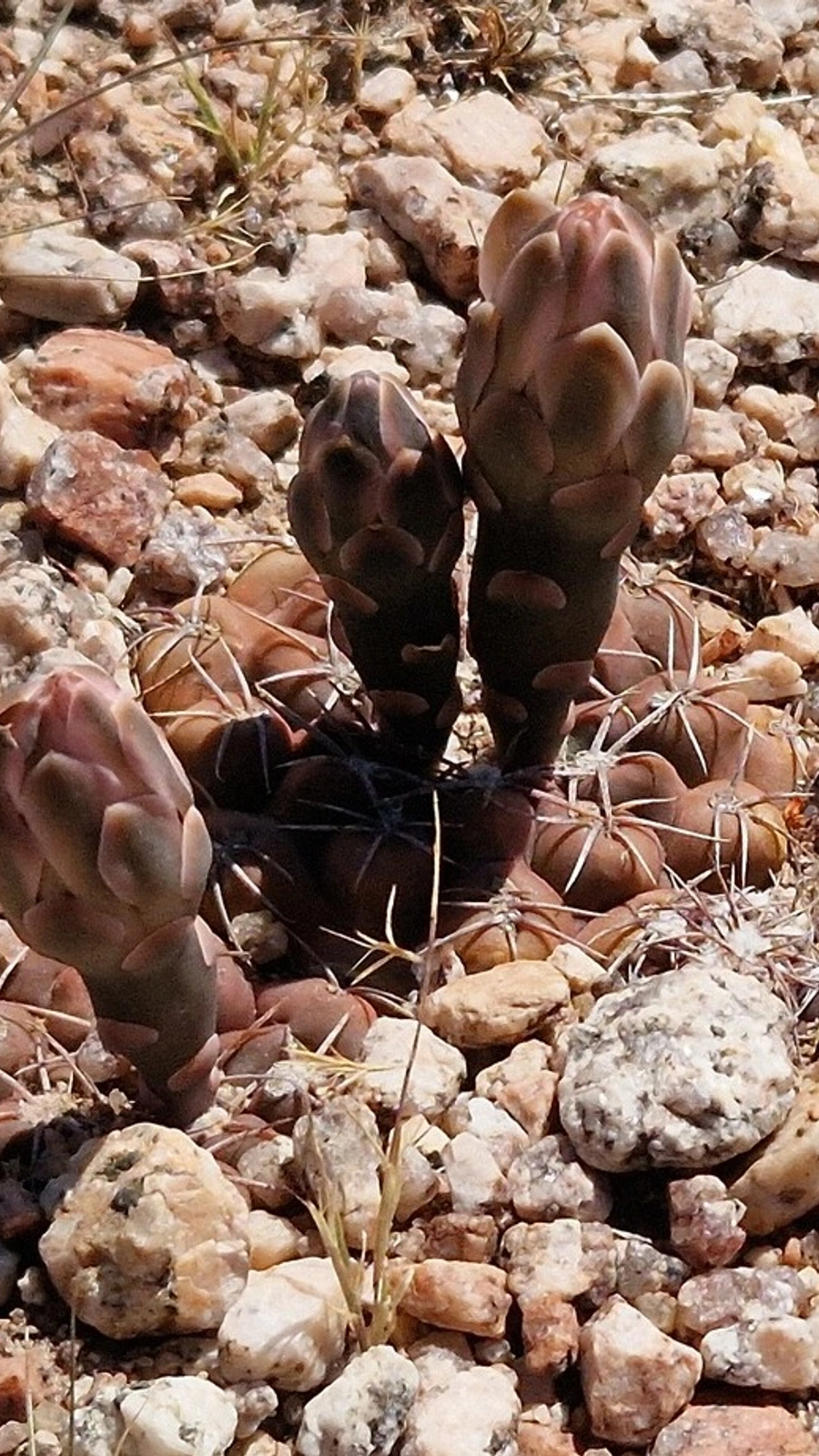
The stem is solitary, globose to flattened-globose, with a grey-green to olive-green epidermis that can blush bronze under high light. The woolly white areoles contrast beautifully with the dark body and bear light brown to greyish radial spines. Large, elegant white to pale pink flowers bloom from the apical meristem in late spring.
In cultivation, this plant is resilient and slow-growing. It prefers coarse, purely mineral soils that offer rapid drainage 3. Bright, filtered sunlight is optimal, along with a dry, cool winter dormancy to promote healthy spring blooming.
Overwatering remains the primary cause of failure, leading to root rot. Lack of sufficient winter cooling can prevent the cactus from setting flower buds for the next growing season.
Thrives in bright filtered light; avoid intense, direct afternoon sun.
Water thoroughly only when the soil is dry. Keep completely dry in winter.
Requires highly porous mineral substrate rich in pumice and sand.
Non-toxic, but handle with care due to its sharp radial spines.
Very easy to care for, making it ideal for beginner cactus enthusiasts.
Endemic to the arid, subtropical rocky slopes and shrublands of northwestern Argentina, where it grows protected by sparse xerophytic vegetation.
