
Light
Bright Indirect Light
Bright indirect light or filtered sun. Protect from scorching mid-day sun.
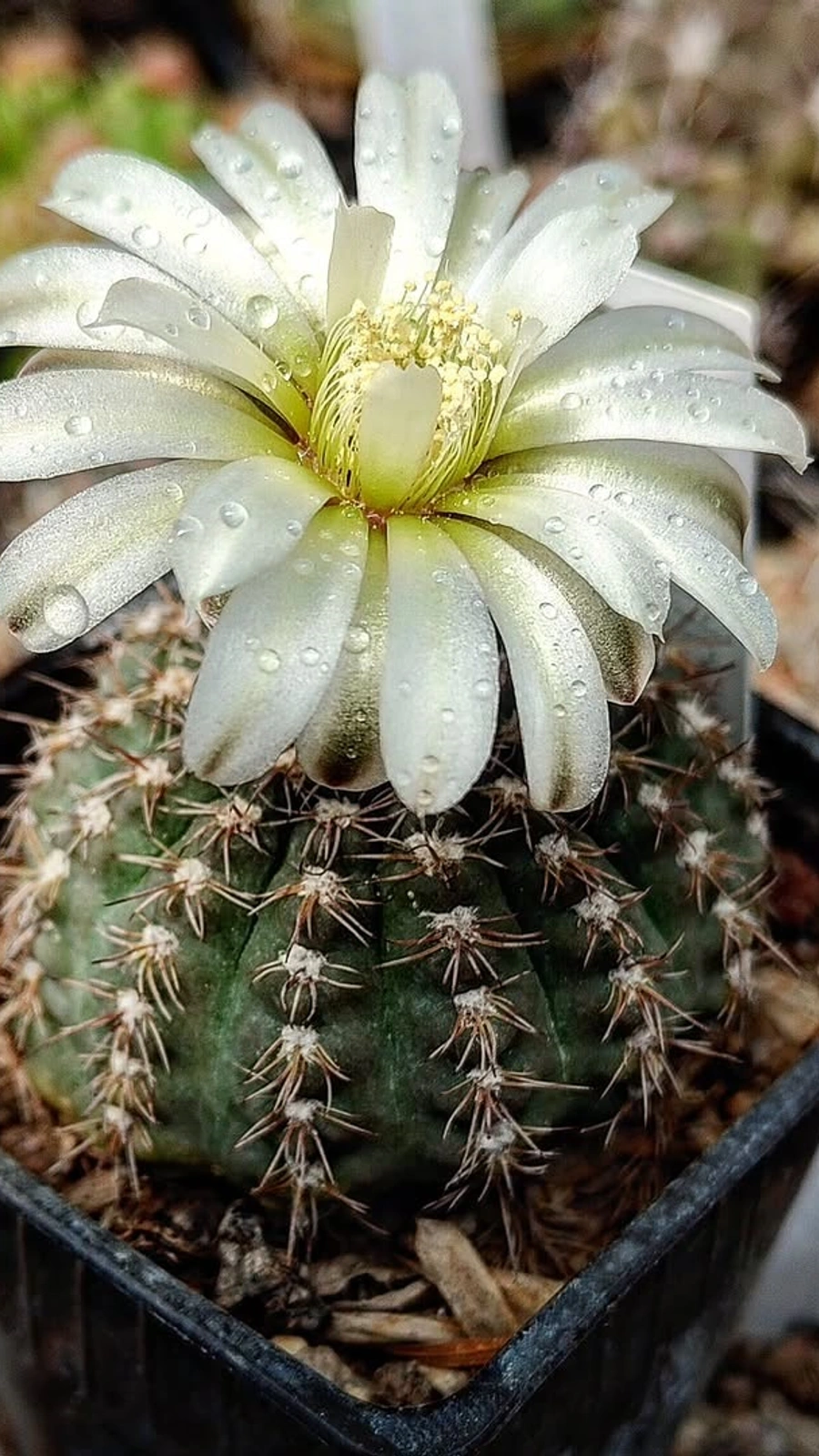 Reference image
Alena's Chin Cactus
Gymnocalycium alenae is a small-bodied, highly decorative, and resilient cactus species belonging to the Cactaceae family 1. It is well-regarded among succulent collectors for its charming symmetrical ribs and elegant summer flowers.
Part of the tribe Trichocereeae, the genus name Gymnocalycium derives from the Greek for 'naked calyx', referring to the hairless, scale-free flower buds 2. Gymnocalycium alenae represents a distinct botanical entity within this diverse South American group.
This species is native to central Argentina, primarily occurring in semi-arid regions such as Córdoba. It thrives in gravelly soils, rock crevices, and under the protective shade of scrub vegetation in dry shrublands 1.
The stem is globose, slightly flattened, and deep dull green. It features prominent ribs with neat aeroles bearing curved, grayish, spine-like structures. In summer, large, funnel-shaped flowers of white, cream, or soft pink bloom beautifully from the crown.
In cultivation, Gymnocalycium alenae prefers bright, indirect light and highly porous soil. Water thoroughly during the active growing season only when the substrate is fully dry, and keep the plant dry and cool during winter 2.
Overwatering during the winter dormancy period is the most common cause of failure, leading to root and stem rot. Placing the cactus in dense, peat-heavy soil or exposing it to intense, unacclimated afternoon sun can also cause severe damage.
Bright indirect light or filtered sun. Protect from scorching mid-day sun.
Allow soil dry out fully before watering. Keep completely dry in winter.
Requires excellent drainage. Use coarse sand, pumice, and grit mix.
Non-toxic to pets, but has sharp spines. Handle with care.
Very easy to care for, provided it is not overwatered.
Native to the dry, stony landscapes and rocky slopes of central Argentina. It survives in environments characterized by dry winter seasons and summer rainfall.
