
Light
Filtered Sun
Enjoys partial shade or filtered, bright light rather than scorching direct sun.
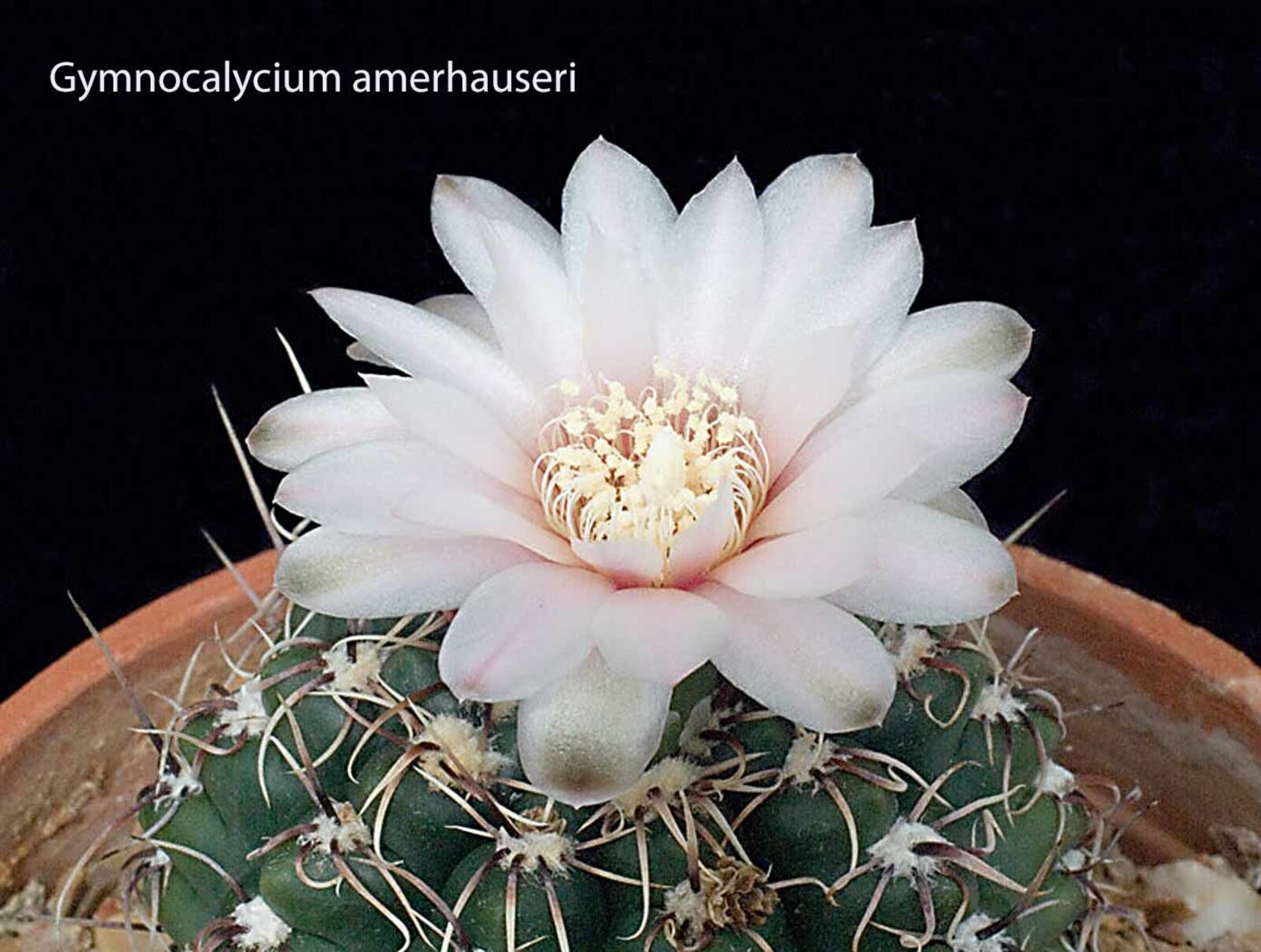 Reference image
Amerhauser's Chin Cactus
Gymnocalycium amerhauseri is a small, globose, slow-growing cactus species in the family Cactaceae. It is highly sought after by collectors for its beautiful symmetry and attractive white-to-pink blossoms 1.
The species is named in honor of the Austrian cactus expert Helmut Amerhauser. It was formally described in 1994 by the botanist Hans Till, placing it firmly within the diverse Gymnocalycium genus 2.
This species is endemic to the Córdoba province of Argentina. It grows at elevations of 800 to 1,450 meters above sea level, typically sheltered under grasses and shrubs 1. This natural microhabitat protects it from intense midday sun.
The stem is solitary, flattened-globose, and dark green to bluish-green. It features slightly curved, grayish-white radial spines emerging from its prominent woolly areoles. The funnel-shaped flowers are white to pale pink, blooming from the plant's crown.
In cultivation, Gymnocalycium amerhauseri requires a very porous, mineral-rich substrate. Water thoroughly during the summer growing season, allowing the soil to dry completely between waterings, and keep dry in winter 2. It prefers bright, filtered light.
Overwatering during the winter dormancy is the most common cause of root rot and plant loss. Direct, intense midday summer sun can also scorch its sensitive epidermis.
Enjoys partial shade or filtered, bright light rather than scorching direct sun.
Water only when the substrate is fully dry; keep dry in winter.
Highly porous mineral mix with pumice, grit, and minimal organic matter.
Non-toxic to pets, but handle with care due to its spines.
Very easy to maintain if you avoid waterlogged soil.
Endemic to the Córdoba province of Argentina, where it thrives in semi-arid rocky hillsides sheltered under native grasses and low shrubs.
