
Light
Bright Indirect Light
Bright indirect or filtered sunlight. Protect from harsh afternoon sun.
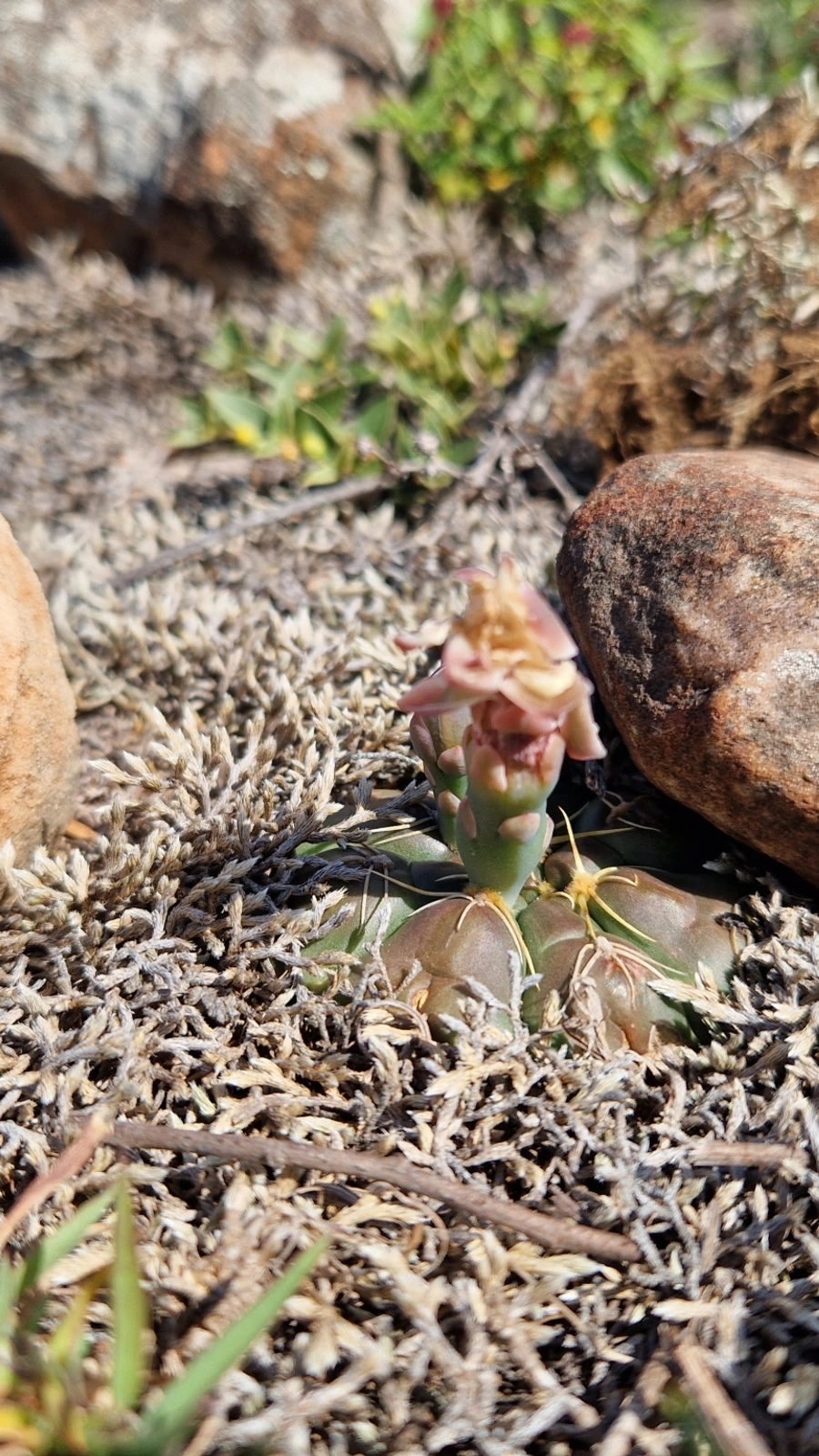 Reference image
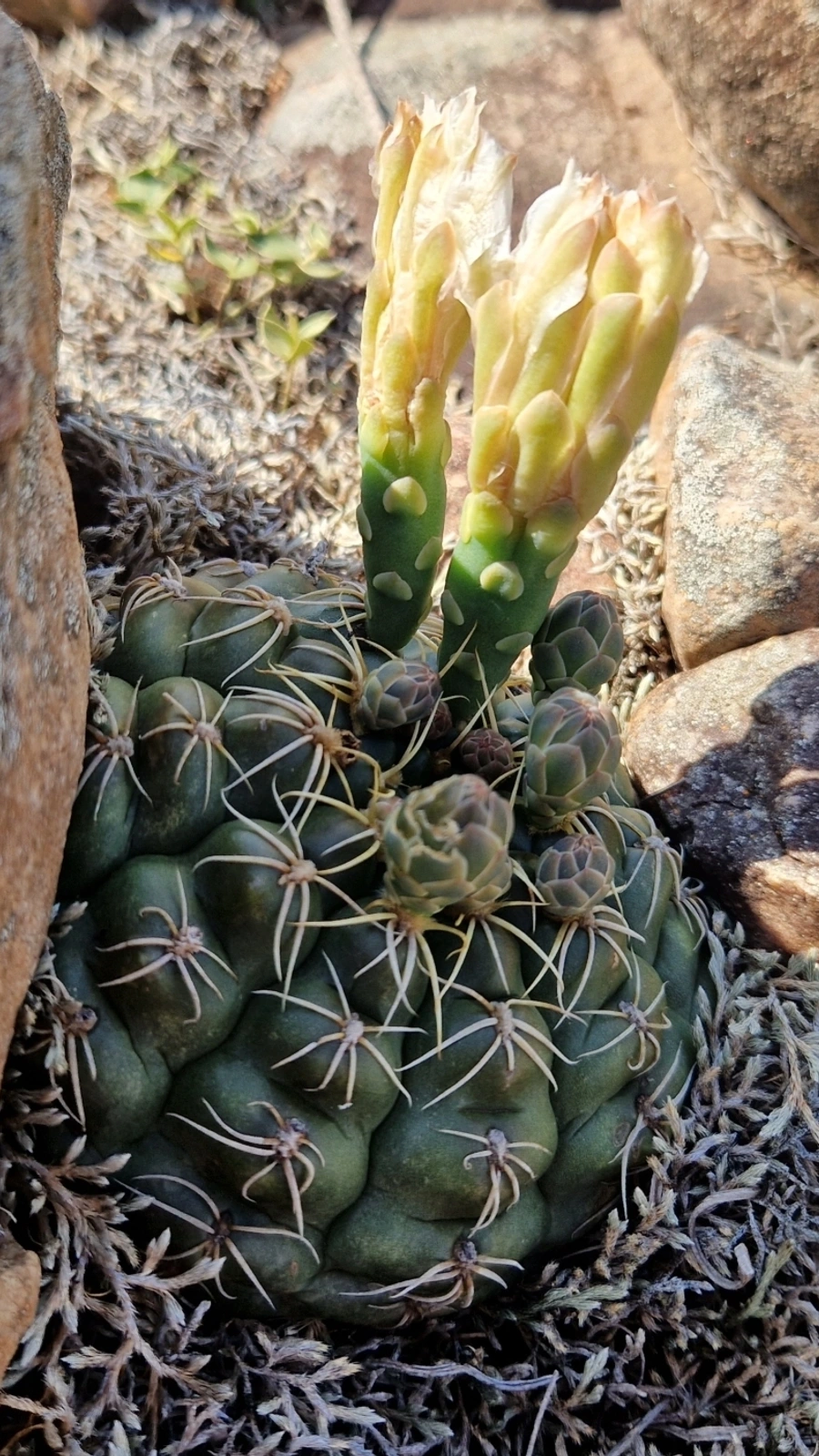 Reference image
Angela's Chin Cactus
Gymnocalycium angelae is a highly sought-after, rare, and slow-growing solitary cactus of the family Cactaceae 1. Famous for its flattened globose stem and gorgeous, large cream-white blossoms, it makes an outstanding specimen for indoor cactus collectors worldwide.
The species was named after Angela M. Lazier, a dedicated succulent enthusiast 2. The genus name, Gymnocalycium, originates from the Greek words for 'naked calyx' (gymnos and calyx), reflecting the lack of hairs, spines, or wool on the flower buds, which is a key distinguishing feature of this genus.
Gymnocalycium angelae is endemic to a very restricted geographic area within the Corrientes province of northeastern Argentina 1. It typically grows in subtropical grasslands, partially shaded by stones or low shrubs, surviving in well-drained, sandy-loamy soil enriched with organic humus.
This plant has a flattened spherical, dark green stem that can grow up to 8-10 cm in diameter. It has 8 to 10 low, rounded ribs decorated with small areoles. From these areoles, about 7 thin, yellowish-brown radial spines emerge, hugging the stem surface closely. In summer, it produces stunning, funnel-shaped cream-white flowers with a soft pinkish throat.
Gymnocalycium angelae prefers bright, indirect sunlight or filtered light. Direct midday sun can scorch its dark green skin 2. During the active growth season (spring to autumn), water deeply but only after the potting substrate has dried out completely. In winter, keep the soil dry and store it in a cool room.
The most prevalent issue is root rot, triggered by overwatering during the cold, dormant winter months or using potting soils that lack proper porous drainage components.
Bright indirect or filtered sunlight. Protect from harsh afternoon sun.
Allow soil to dry fully before watering. Keep almost dry in winter.
Highly porous cactus soil mix with pumice, perlite, and coarse sand.
Non-toxic to pets, but has sharp spines requiring cautious handling.
Very easy to care for if overwatering is strictly avoided.
Naturally occurs in a tiny micro-habitat in Corrientes, Argentina, growing in sandy soils amidst subtropical grasslands.
