
Light
Bright Indirect Light
A very bright position, morning or filtered direct sun, and good air movement support compact growth.
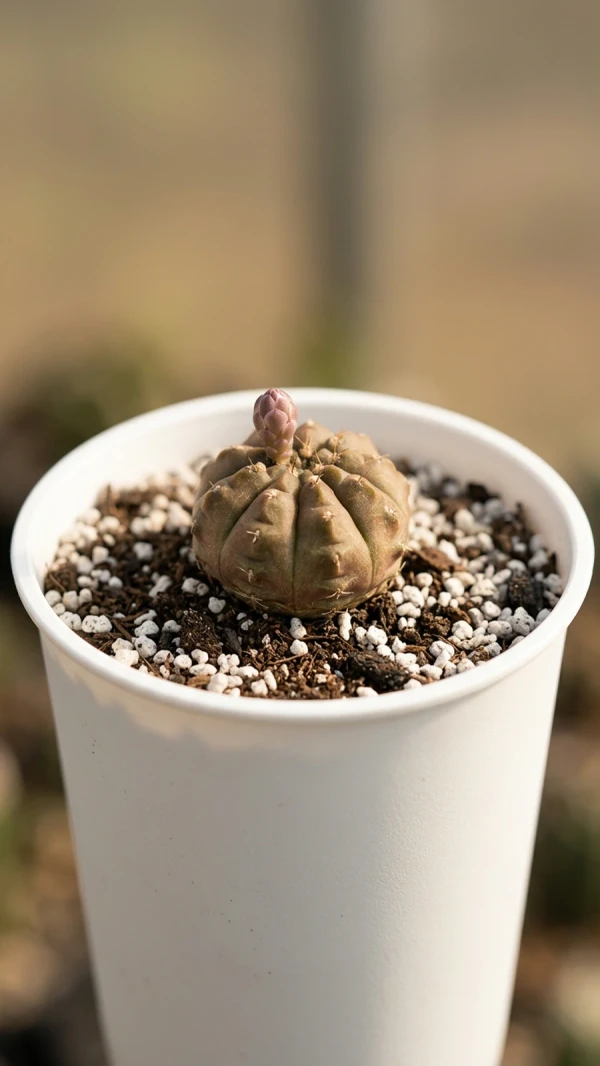
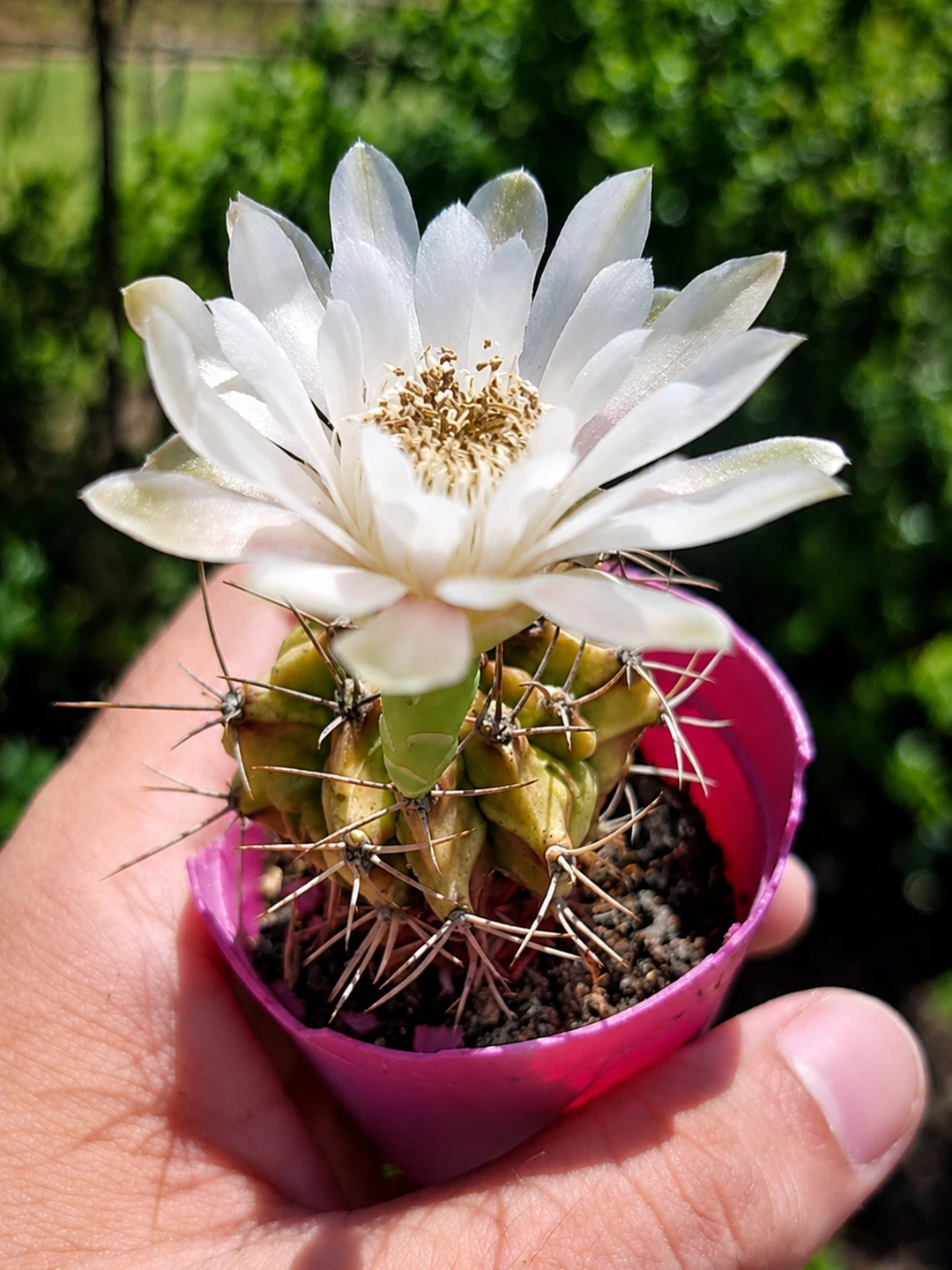
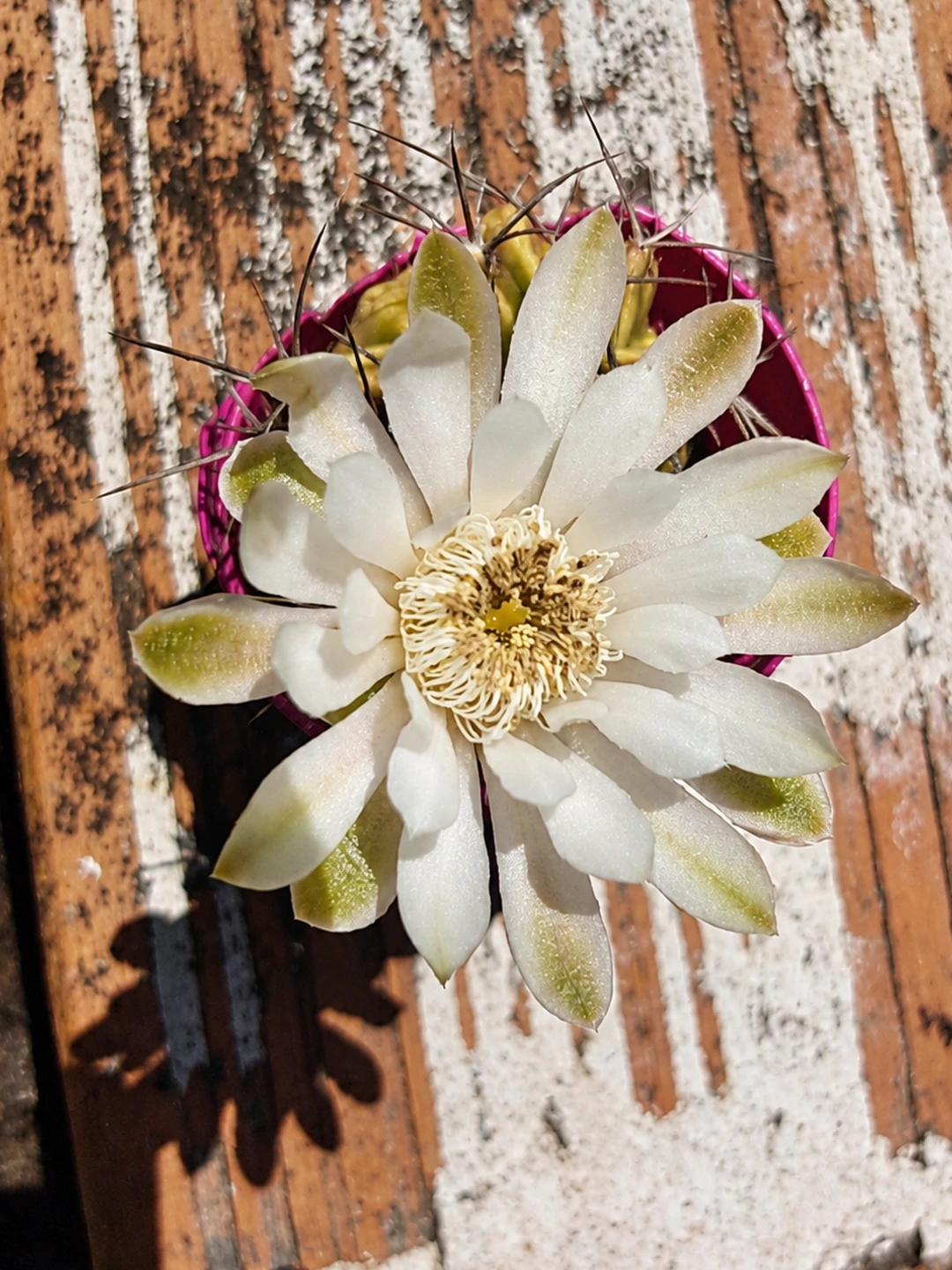
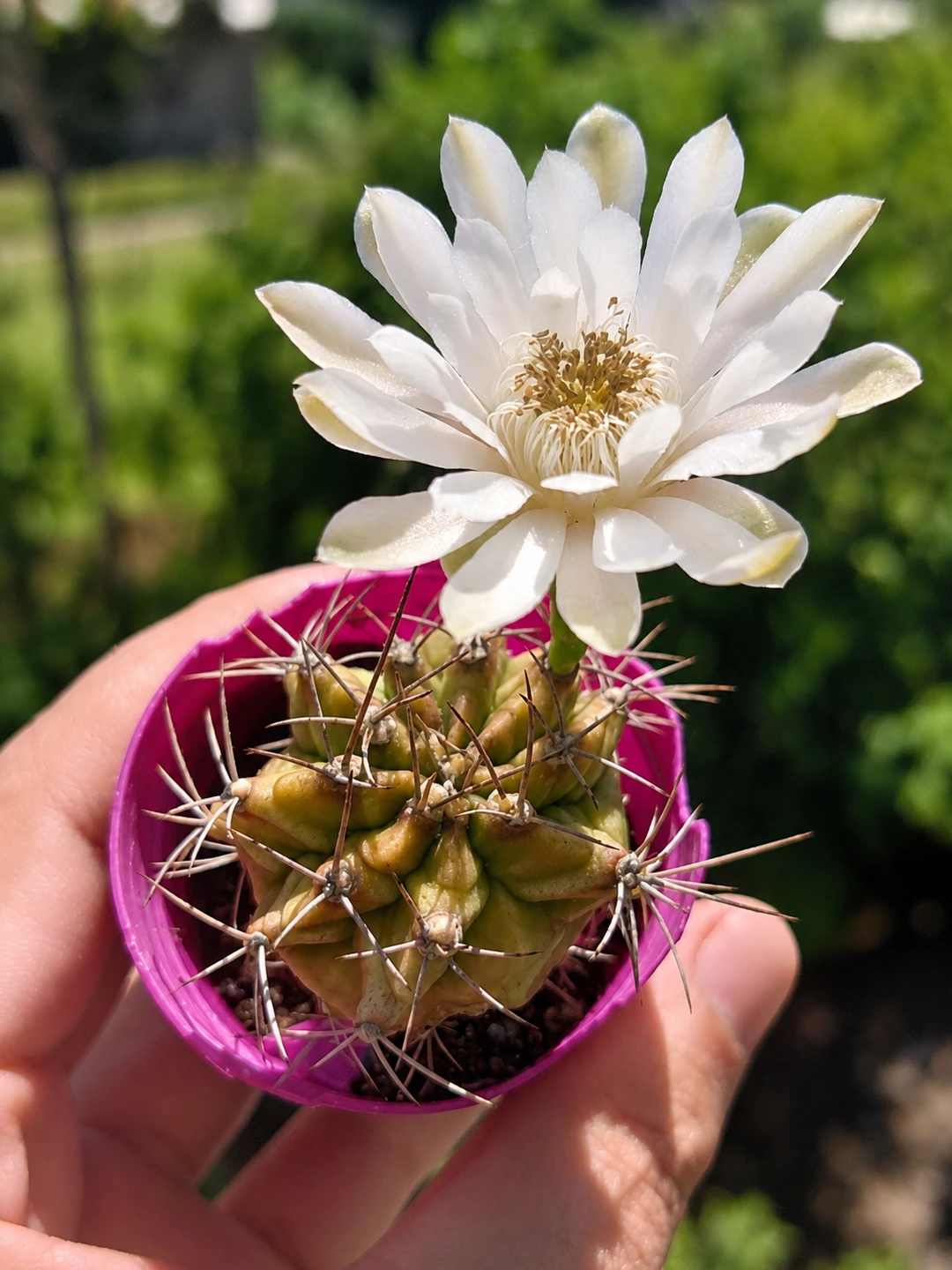
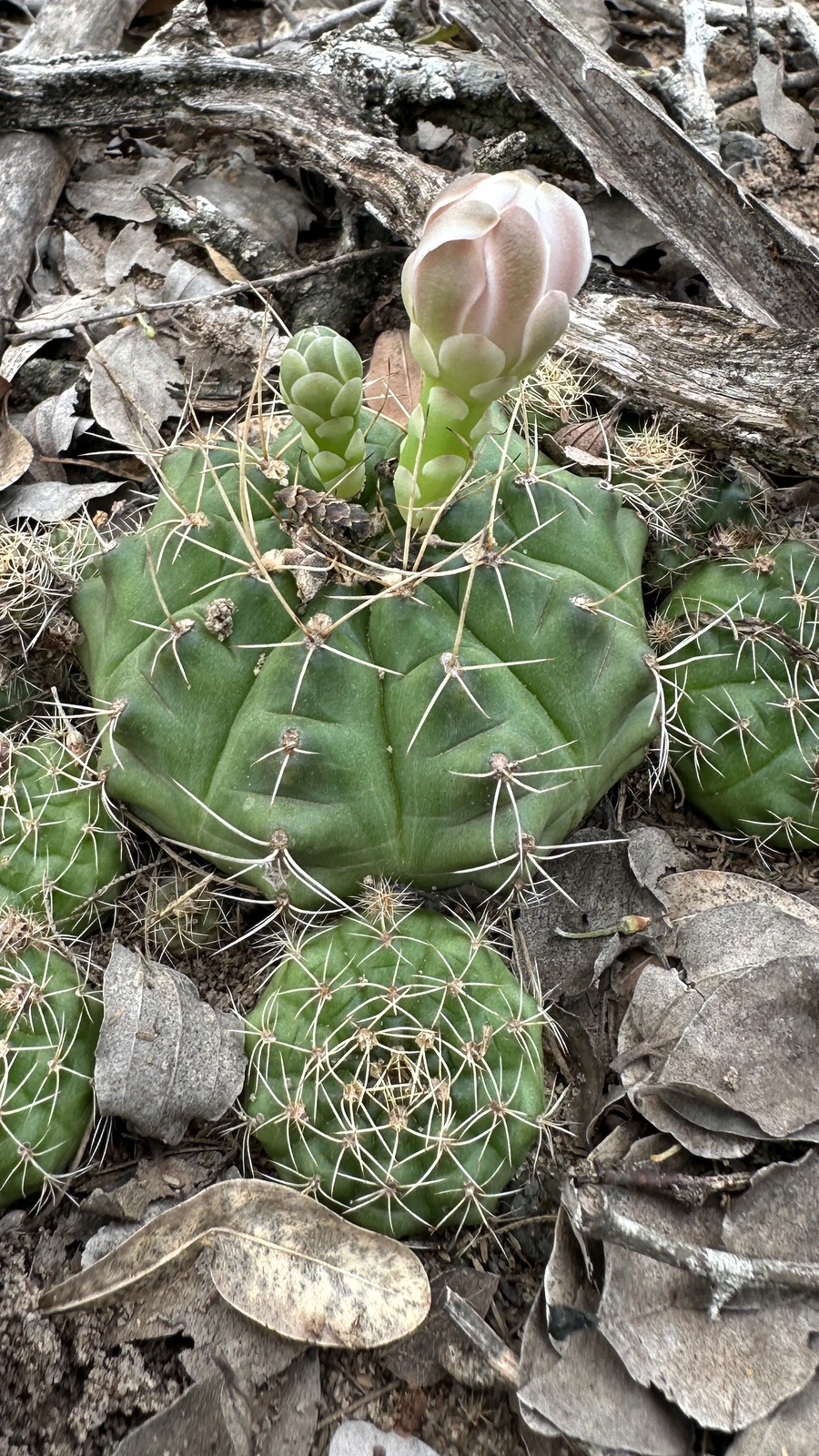 Reference image
Gymnocalycium Anisitsii
Gymnocalycium anisitsii is a variable species native from Bolivia through west-central Brazil to Paraguay. A stem varying from depressed-globose to short-cylindrical, green to olive-brown epidermis, ribs divided into chin-like projections, and usually pale flowers are evaluated within a broad species concept. Unlike the taxonomy article, the botanical-dictionary layer explains the living plant's morphology, habitat context, and cultivation requirements.
The verified native range is Bolivia, west-central Brazil, and Paraguay.1 Its broad subtropical range produces population-level variation in stem colour and spination, helping explain the historical proliferation of subspecies and varietal names. Cultivation should not imitate a landscape as decoration; it should provide fast oxygen return to the root zone, a controlled wet-dry cycle, and sufficient light.
A very bright position, morning or filtered direct sun, and good air movement support compact growth. A plant raised under lower light should not be moved abruptly into harsh sun; increase exposure over several weeks. Wet roots during cool weather are generally more dangerous than controlled dry coolness.
Do not use a fixed-day calendar. During active growth, water thoroughly only after the mix has dried throughout and let every excess drain away. Drying slows during cool or low-light periods, so watering naturally becomes less frequent. Use a mineral-forward, airy, fast-draining mix; subtropical origin does not mean that persistently wet soil is tolerated.
Subsp. damsii is accepted by Kew; older species-level uses should not be inserted directly as synonyms of the parent species. Stem colour, spine density, and flowering time vary among living specimens; a product photograph alone is neither a scientific diagnosis nor a record of a wild population.
The best-supported household concern is mechanical injury from the spines rather than a claim of chemical toxicity. Restrict access for children and pets. The WFO/IUCN layer reports Least Concern. This is a global category for a broadly distributed species; it does not imply that local habitat loss or illegal collection is absent.
A very bright position, morning or filtered direct sun, and good air movement support compact growth.
Do not use a fixed calendar. Water deeply after complete drying and reduce frequency during cool or low-light periods.
A mineral-forward, airy, fast-draining cactus mix.
Spines present a mechanical injury risk. The WFO/IUCN layer reports Least Concern. This is a global category for a broadly distributed species; it does not imply that local habitat loss or illegal collection is absent.
It is generally manageable; compacted soil and overly frequent watering are the main risks.
Bolivia, west-central Brazil, and Paraguay.[^1] [^1]: Plants of the World Online. “Gymnocalycium anisitsii.” Accessed: 2026-08-04. https://powo.science.kew.org/taxon/urn:lsid:ipni.org:names:133295-1
