
Light
Filtered Sun
Prefers bright, filtered light; protect from scorching direct midday sun.
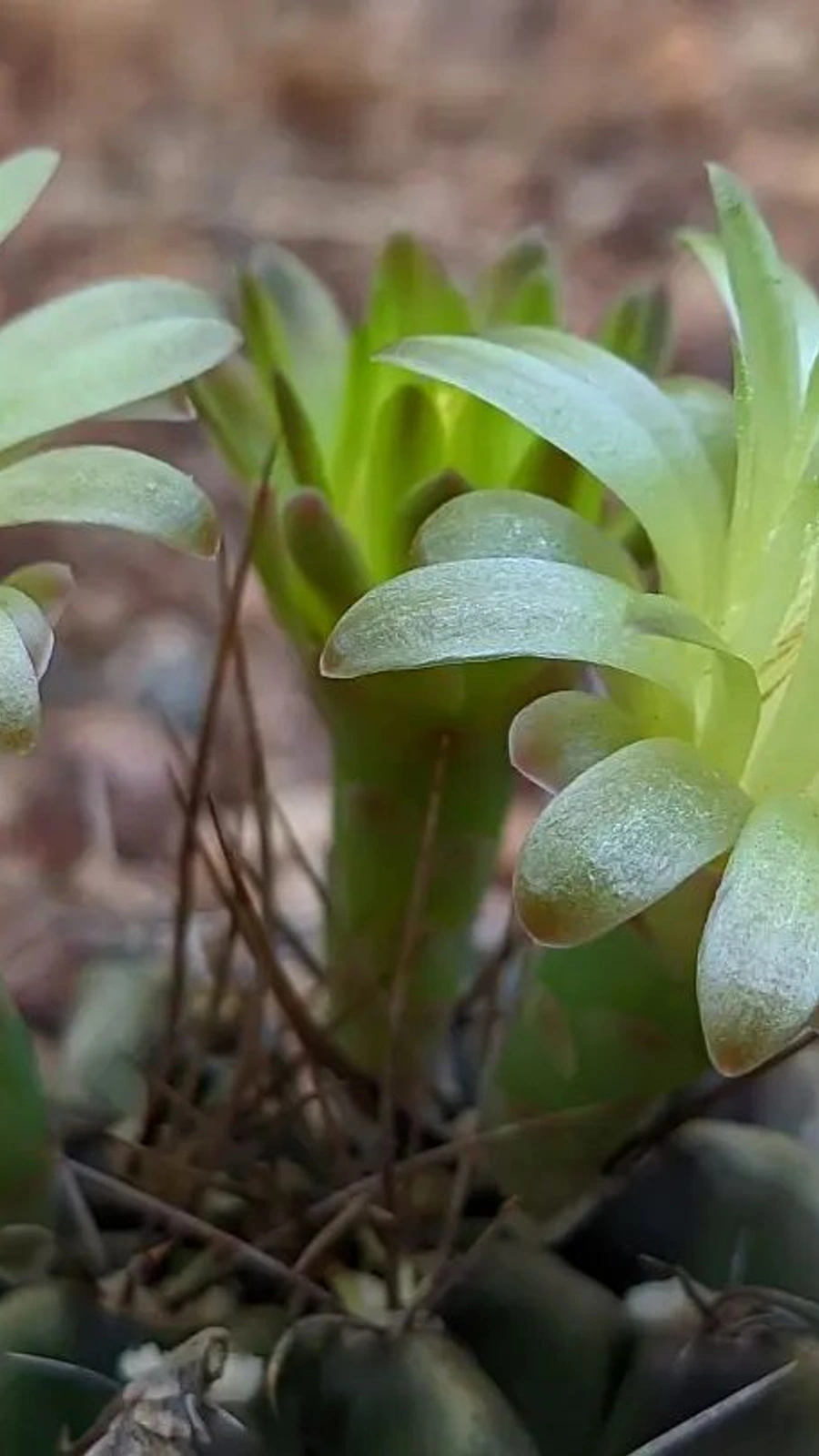 Reference image
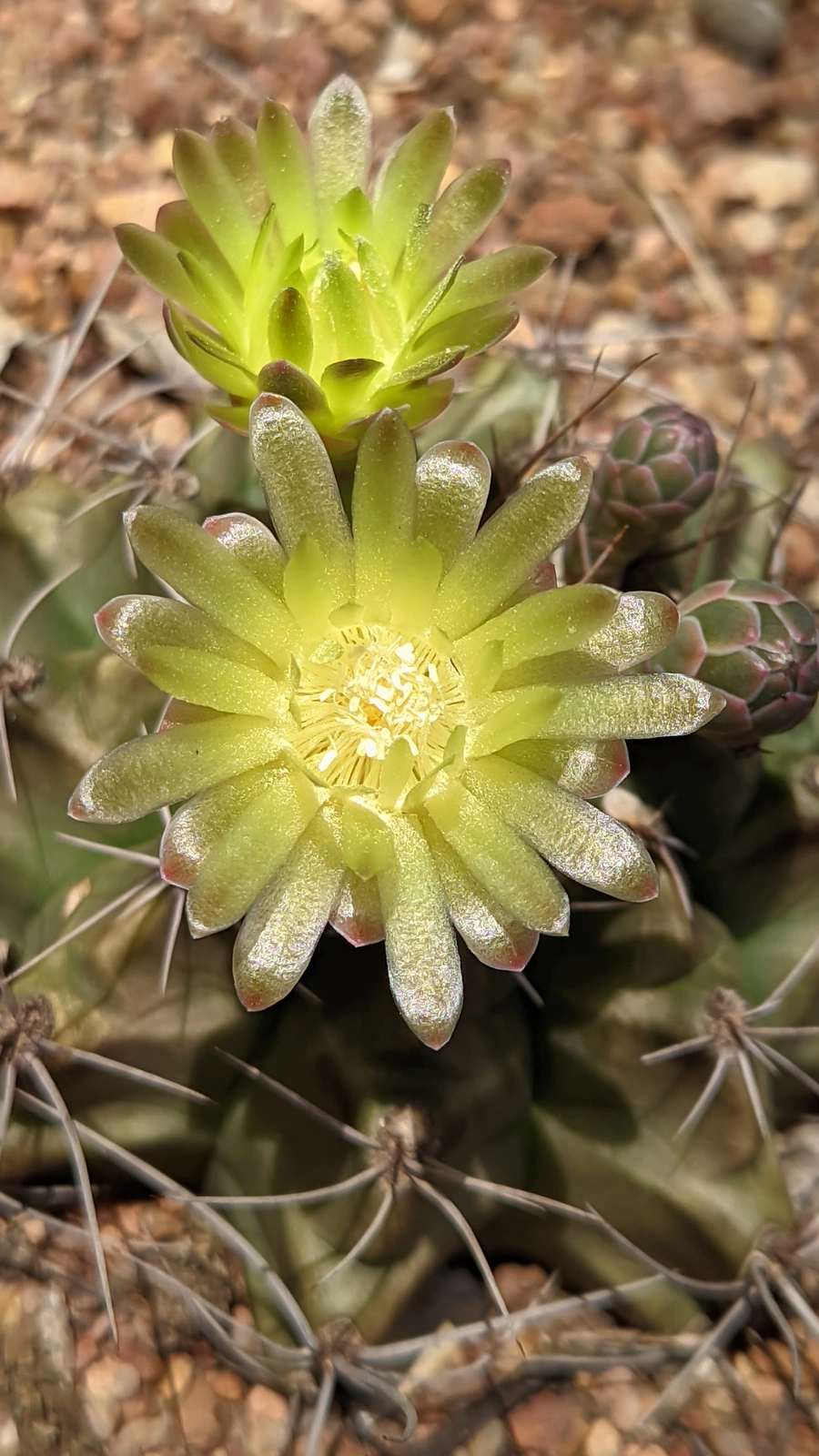 Reference image
Gymnocalycium arzbergeri is a highly sought-after, succulent subshrub in the family Cactaceae. Native to the seasonally dry tropical environments of Paraguay, this cactus is prized by collectors for its beautiful dark, olive-green to brownish globose stem and delicate spination 1.
Classified under the genus Gymnocalycium within the tribe Trichocereeae, the genus name derives from the Greek words "gymnos" (naked) and "calyx" (bud), referring to the spineless flower buds. The specific epithet honors regional botanical research contributions in the Chaco region 2.
This species is native to Paraguay, specifically within the dry Chaco forests (Alto Paraguay). It grows in sandy, loamy, well-drained soils, often sheltered under the canopy of deciduous shrubs and low trees, adapting well to marked wet and dry seasons 1.
The stem is solitary, globose to slightly flattened, transitioning to short-cylindrical with age. The epidermis is dark green to brownish-purple depending on light exposure. It features pronounced tubercled ribs with small, slightly recurved greyish spines. The bell-shaped flowers bloom near the apex, displaying creamy-white to pale pink hues.
In cultivation, Gymnocalycium arzbergeri requires a highly mineralized substrate with excellent drainage. It thrives under filtered bright light or partial shade, avoiding intense midday direct sun. Watering should be thorough but only after the medium dries out completely, with minimal to no water during winter dormancy 2.
The most prevalent issue is root rot triggered by overwatering or compacted soil. Keeping the cactus in damp, cold environments during winter will quickly lead to fungal infections and decline.
Prefers bright, filtered light; protect from scorching direct midday sun.
Allow soil to dry out completely between waterings; keep dry in winter.
Requires extremely porous, mineral-rich gritty cactus soil.
Non-toxic, but sharp spines require careful handling to avoid injury.
Easy to care for, provided you do not overwater or let it sit in soggy soil.
Native to the dry, hot Chaco plains and scrublands of Paraguay, growing in the protective shade of deciduous desert vegetation.
