
Light
Bright Indirect Light
Bright, indirect or filtered sunlight. Avoid harsh, direct afternoon sun.
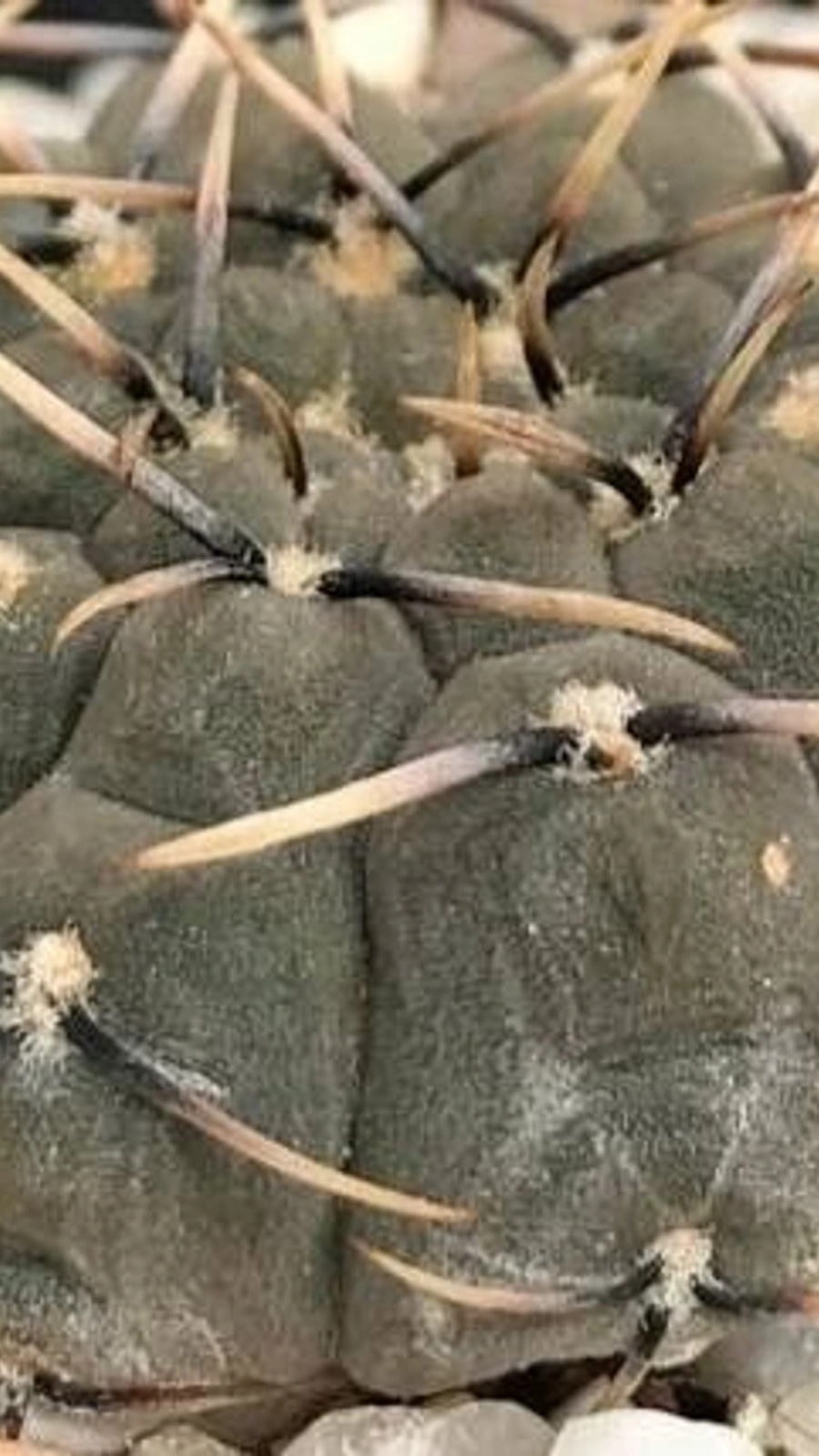 Reference image
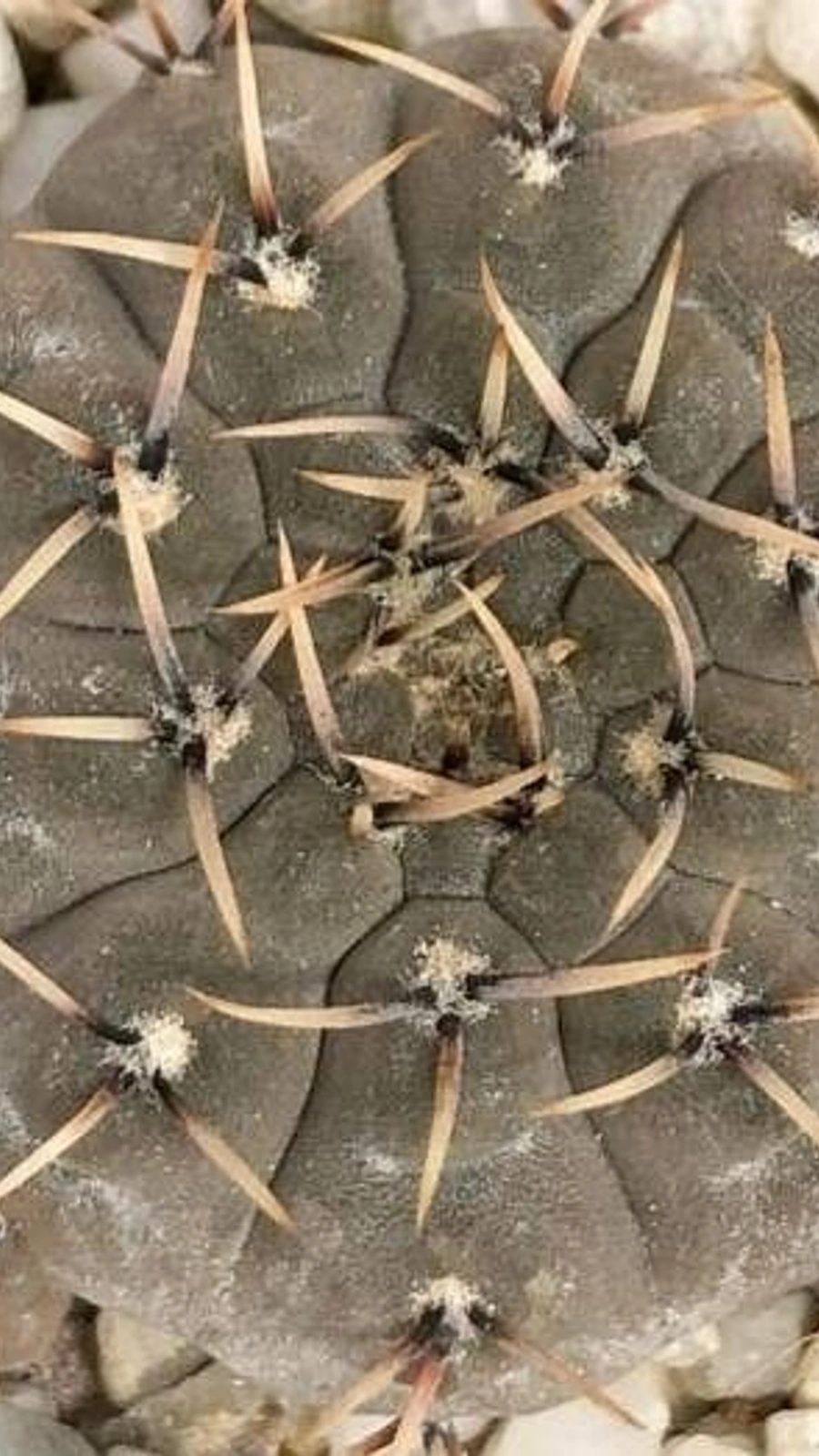 Reference image
Red-based Chin Cactus
Gymnocalycium basiatrum is a slow-growing, globose succulent subshrub belonging to the Cactaceae family 1. It is highly prized by collectors for its compact growth and beautiful apical flowers.
Within the family Cactaceae and tribe Trichocereeae, the genus Gymnocalycium derives its name from the Greek for 'naked calyx'. The specific epithet 'basiatrum' refers to the dark red or dark-colored base of its spines 2.
Native to the subtropical regions of Argentina, this species thrives on rocky slopes, grasslands, and under the protective shade of larger shrubs 1. This natural shelter shields it from extreme direct sunlight.
The stem is grayish-green to olive-green, turning slightly cylindrical with age. It features distinct ribs with woolly areoles. The spines are strong, radiating, and darker at their attachment points. The flowers are cream-white or pale pink, opening wide at the top of the plant 2.
It requires a highly porous, mineral-based substrate with excellent drainage. Water thoroughly during the summer only when the soil is completely dry, and maintain dry conditions throughout the cold winter months. It prefers bright, filtered light.
Overwatering and the use of heavy, non-porous soils are the main causes of root rot. Keeping the plant in warm, humid conditions during winter stops flowering and promotes fungal issues.
Bright, indirect or filtered sunlight. Avoid harsh, direct afternoon sun.
Water thoroughly only when soil is 100% dry. Keep dry in winter.
Highly porous, fast-draining mineral mix with plenty of pumice.
Non-toxic, but sharp spines require careful handling and safe placement.
Very easy to care for as long as overwatering is strictly avoided.
Native to the subtropical arid regions of Argentina, growing under sparse vegetation in rocky and gravelly soils.
