
Light
Bright Indirect Light
Prefers bright, indirect light or filtered sun. Protect from scorching afternoon sun.
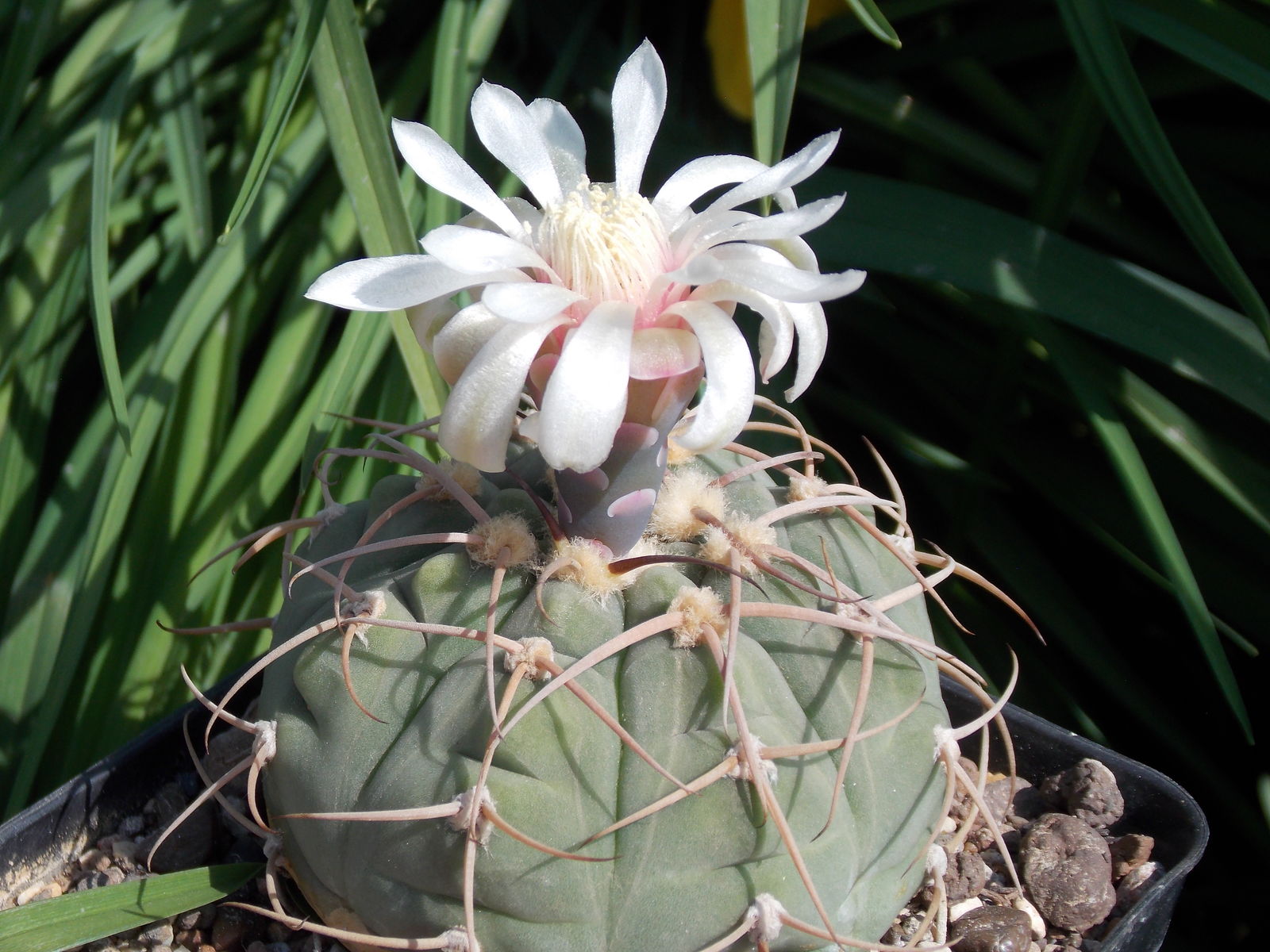 Reference image
Bayrianum Chin Cactus
Gymnocalycium bayrianum is a slow-growing, solitary succulent subshrub in the family Cactaceae. Highly prized by succulent collectors, it is appreciated for its neat, symmetrical spine formation and beautiful bell-shaped flowers 1.
The species name honors the Austrian cactus enthusiast Alfred Bayr. It was formally described in 1967 by Hans Till. The genus name Gymnocalycium derives from the Greek for 'naked calyx', referring to the characteristic hairless and spineless flower buds 2.
This species is native to northwestern Argentina, primarily found in the provinces of Tucumán and Salta. It typically inhabits rocky slopes and gravelly soils at elevations between 1,000 and 1,500 meters, growing under the shelter of low shrubs 1.
The stem is solitary, flattened-globose to globose, dull bluish-green or greyish-green, and grows up to 10 cm in diameter. It features 6 to 10 broad, rounded ribs. The stout, slightly recurved, claw-like spines arise from woolly areoles and range in color from yellowish-grey to dark brown. In summer, it produces beautiful funnel-shaped, creamy-white to pale pink flowers from the apical meristem 2.
In cultivation, Gymnocalycium bayrianum requires a very porous, mineral-based substrate to prevent waterlogging. It prefers bright, indirect light or filtered morning sun, as intense direct midday sun can scorch its epidermis. Water thoroughly but allow the medium to dry out completely between waterings 3.
The most frequent issue is root rot caused by overwatering or poorly draining soil. Keeping the soil damp during its winter dormancy at low temperatures can quickly destroy the plant. Inadequate light results in pale, elongated stems.
Prefers bright, indirect light or filtered sun. Protect from scorching afternoon sun.
Water thoroughly only when the soil is completely dry. Keep dry in winter.
Requires highly porous, gritty, mineral-rich cactus soil with plenty of pumice.
Non-toxic, but has sharp, curved spines; keep away from children and pets.
Very easy to care for, provided you do not overwater or let it sit in soggy soil.
Endemic to the mountainous and rocky areas of northwestern Argentina, including Tucumán and Salta, where it grows in dry shrublands among gravel and rocks.
