
Light
Filtered Sun
Prefers bright, filtered light; harsh afternoon sun can cause epidermal scorching.
 Reference image
 Reference image
Bercht's Chin Cactus
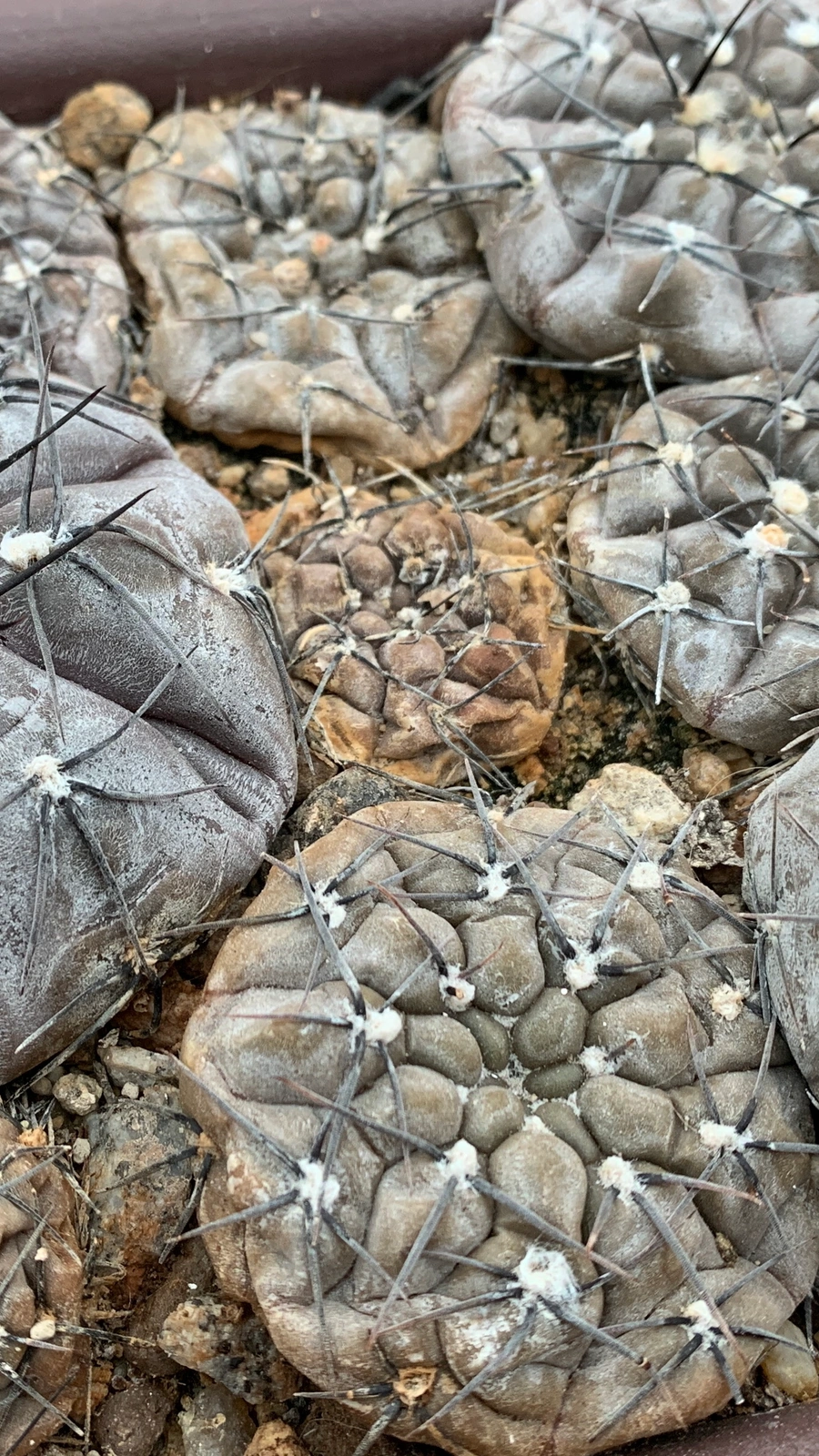
Gymnocalycium berchtii is a highly sought-after, small, solitary cactus belonging to the Cactaceae family. It is distinct for its extremely dark, matte epidermis and compact growth 1.
Named in honor of the Dutch cactus enthusiast Ludwig Bercht, this species was formally described in 1997 by the Austrian botanist Gert Neuhuber 2. The genus name refers to the naked flower buds characteristic of these plants.
This species is micro-endemic to the northern regions of San Luis Province in Argentina. It grows at elevations of 600 to 700 meters above sea level, typically in gravelly soil containing quartz under the light shelter of sparse shrubs 1.
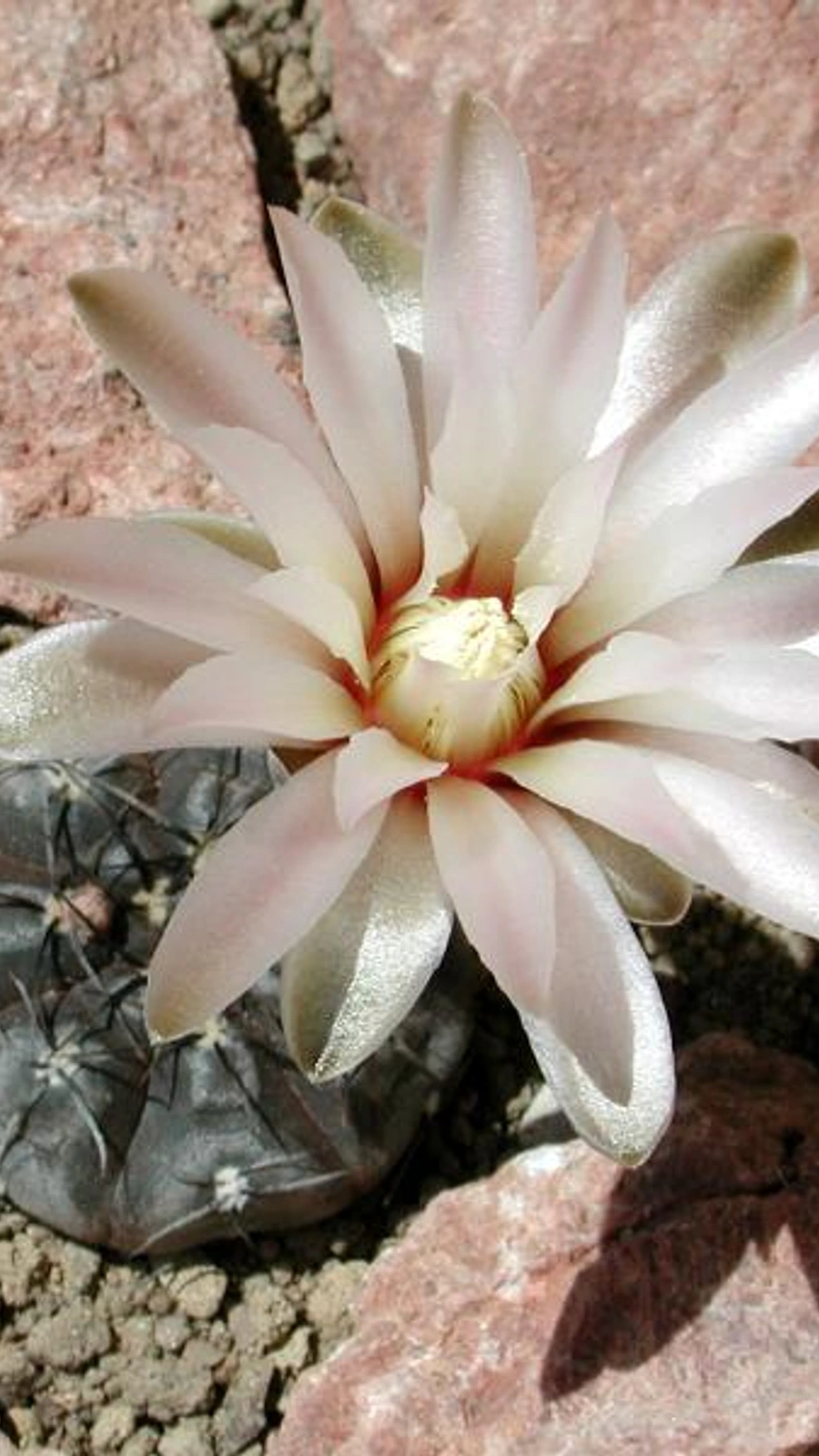
The stem is subglobose to flattened, reaching a diameter of about 4-6 cm. Its color ranges from a deep grey-green to dark brownish-black. Radial spines are short, dark-colored, and closely appressed to the stem. The flowers are funnel-shaped, displaying pale pinkish-white hues.
Gymnocalycium berchtii thrives in bright, indirect light or filtered sunlight. During the active growing season (spring and summer), it requires thorough watering only after the substrate has dried completely. A cool, dry winter dormancy is crucial 2.
Overwatering and using heavy clay soils are the primary causes of failure, leading to rapid root rot. Keeping the cactus in warm conditions during winter prevents it from setting flower buds in spring.
Prefers bright, filtered light; harsh afternoon sun can cause epidermal scorching.
Water only when the substrate is completely dry. Keep dry in winter.
Requires an extremely porous mineral mix high in pumice and coarse sand.
Non-toxic, but handle with care due to its short, sharp spines.
Very easy to maintain if you avoid overwatering and provide a cold winter rest.
Native to the rocky plains of northern San Luis in Argentina, where it is adapted to subtropical dry climates.
